Federal Reserve 2026: GDP Growth & Economic Outlook Explained
The Federal Reserve’s 2026 Economic Outlook: Unpacking GDP Growth and Future Projections
As we navigate the complexities of the global economy, eyes are increasingly turning towards future projections to anticipate market shifts, policy changes, and investment opportunities. Central to this forward-looking analysis is the Federal Reserve’s economic outlook, particularly its expectations for 2026. Understanding the Federal Reserve Outlook on GDP growth, inflation, and interest rates is crucial for businesses, investors, and policymakers alike. This comprehensive article delves into the Federal Reserve’s latest insights, examining the factors shaping its 2026 forecasts and what they might mean for the broader economic landscape.
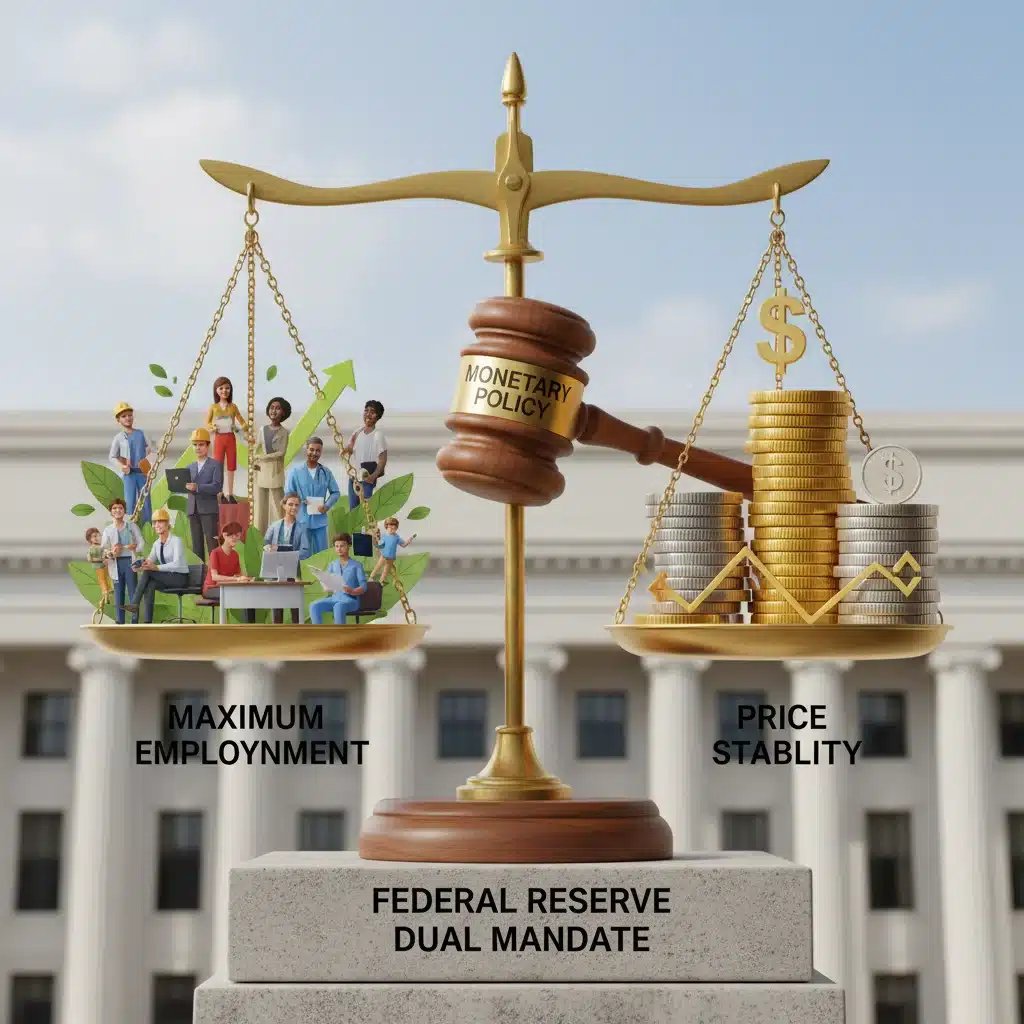
The Federal Reserve, often referred to as ‘the Fed,’ plays a pivotal role in shaping the U.S. economy through its monetary policy decisions. Its dual mandate—to achieve maximum employment and price stability—guides its actions, which in turn influence everything from borrowing costs to investment decisions. The projections for 2026 are not just academic exercises; they represent the collective wisdom of the Fed’s economists and policymakers, offering a roadmap for the coming years.
Our focus will primarily be on the projected GDP growth, a key indicator of economic health and expansion. However, to fully appreciate the nuances of the Federal Reserve Outlook, we must also consider the interconnected variables of inflation, unemployment, and the trajectory of the federal funds rate. These elements interact in complex ways, and a holistic understanding is essential for grasping the Fed’s strategic positioning.
Understanding the Federal Reserve’s Forecasting Process
Before diving into the specific numbers, it’s important to understand how the Federal Reserve arrives at its economic projections. The Fed’s forecasts are not static predictions but rather dynamic assessments based on a wide array of economic data, models, and expert judgment. Each quarter, members of the Federal Open Market Committee (FOMC) and Federal Reserve Bank presidents submit their projections for key economic variables over the next few years and in the longer run. These are then summarized in the Summary of Economic Projections (SEP).
The SEP provides a median forecast, along with ranges, for GDP growth, inflation (PCE and core PCE), unemployment, and the federal funds rate. These projections are informed by a rigorous process that includes:
- Economic Data Analysis: The Fed constantly monitors a vast amount of economic data, including employment reports, inflation metrics, consumer spending, business investment, and international trade figures.
- Econometric Models: Sophisticated statistical models are used to identify relationships between economic variables and to forecast future trends.
- Qualitative Assessments: Beyond the numbers, policymakers incorporate their qualitative assessments of current economic conditions, potential risks, and the likely impact of various policy choices.
- Consensus Building: The projections reflect a consensus view, though individual participants may hold differing opinions. The range of projections often highlights the uncertainty inherent in economic forecasting.
This meticulous process ensures that the Federal Reserve Outlook is as robust and comprehensive as possible, even as external shocks and unforeseen events can always alter the economic trajectory.
2026 GDP Growth Projections: A Closer Look
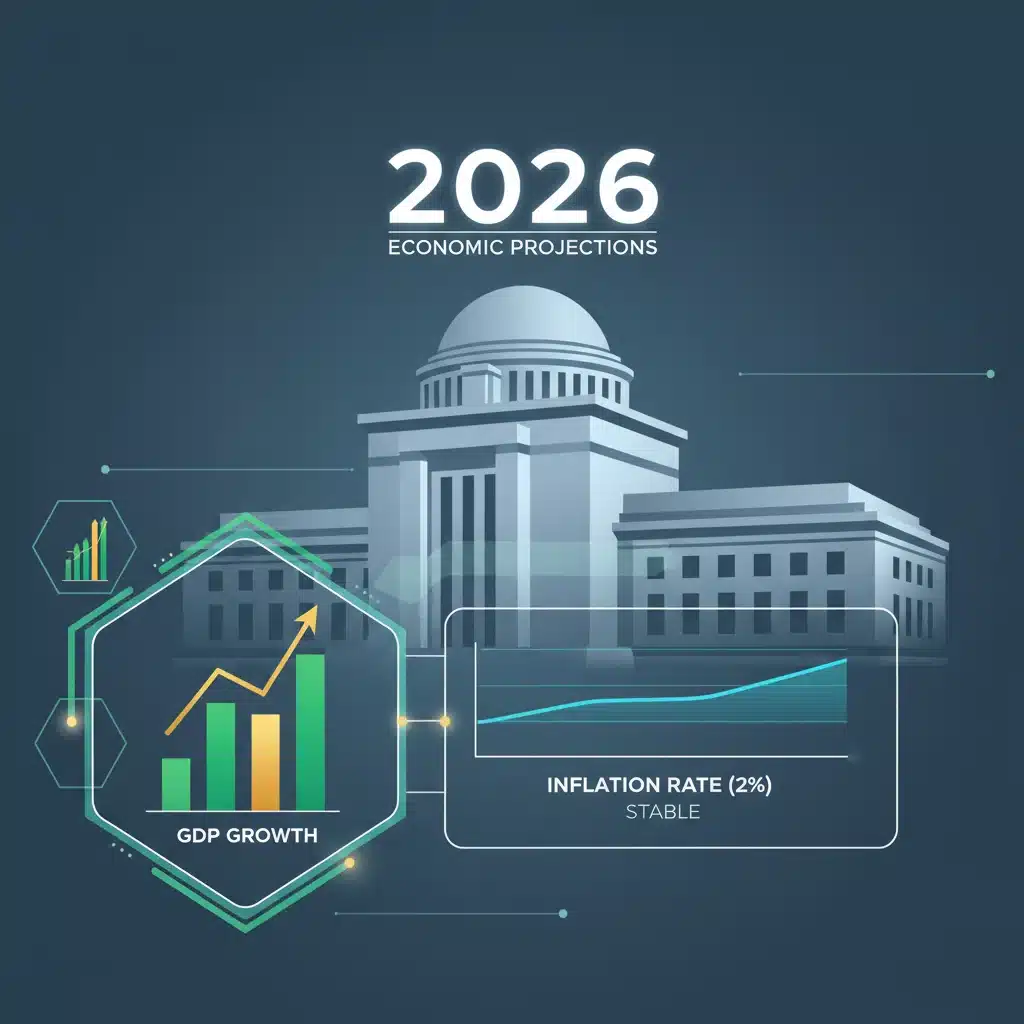
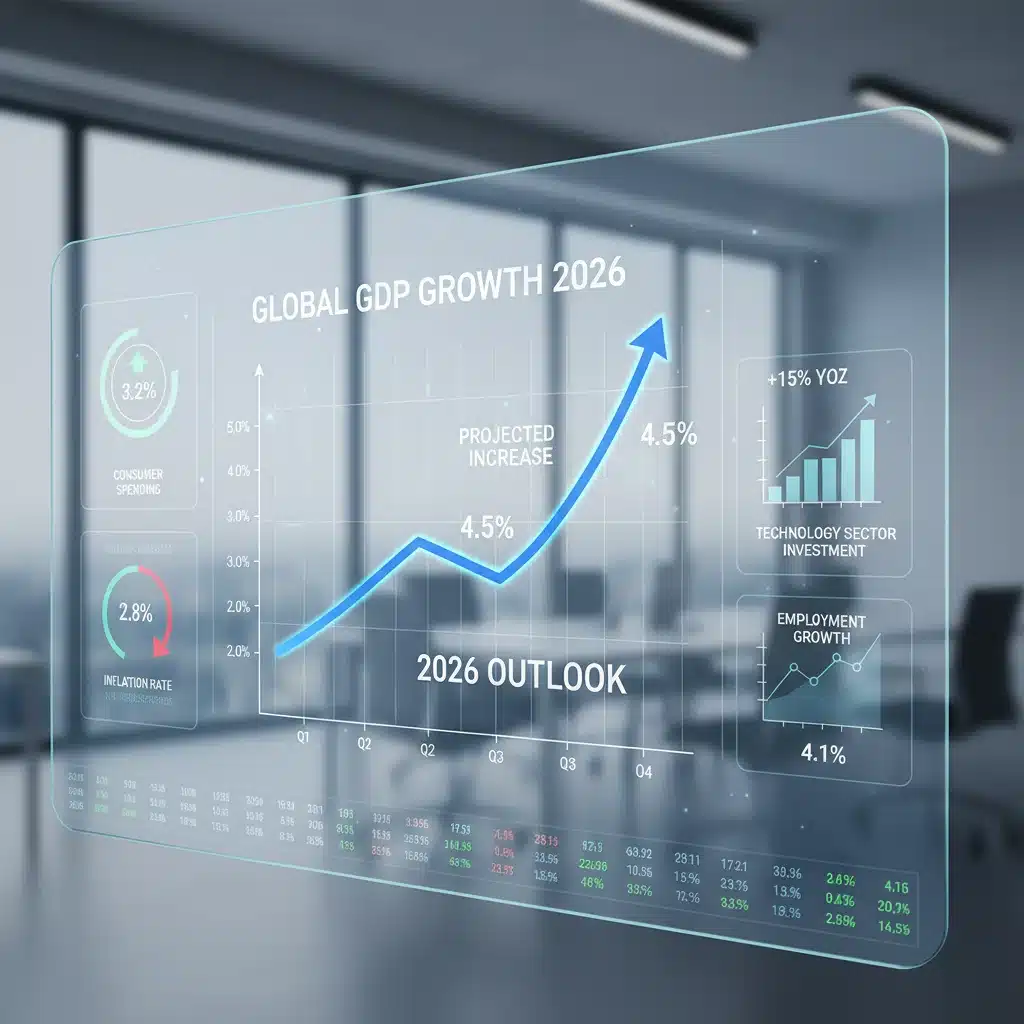
The headline figure many are eager to understand is the projected GDP growth for 2026. While specific numbers can fluctuate with each SEP release, the general trend indicates the Fed’s confidence in the economy’s ability to sustain growth. For 2026, the Federal Reserve has projected a GDP growth rate of approximately 2.8%. This projection is a testament to the resilience of the U.S. economy and reflects several underlying assumptions about future economic conditions.
A 2.8% GDP growth rate for 2026 suggests a healthy expansion, moving beyond the immediate post-pandemic recovery and into a more normalized, yet robust, growth phase. This level of growth is generally considered sustainable and conducive to job creation without necessarily fueling excessive inflationary pressures. Several factors contribute to this optimistic Federal Reserve Outlook:
- Continued Strength in Labor Market: A strong labor market, characterized by low unemployment and steady wage growth, supports consumer spending, which is a significant driver of GDP.
- Business Investment: Anticipated increases in business investment, driven by technological advancements and favorable economic conditions, are expected to boost productivity and output.
- Innovation and Productivity: Ongoing innovation across various sectors, particularly in technology and green energy, is poised to enhance productivity, allowing for more output with the same or fewer inputs.
- Global Economic Stability: A relatively stable global economic environment, with major trading partners experiencing steady growth, would support U.S. exports and overall economic activity.
U.S. Inflation Rate Holds Steady at 3.2% in February 2026: Expert Analysis on Consumer Spending.
However, it’s crucial to remember that these are projections, not guarantees. The path to 2.8% GDP growth in 2026 is subject to various domestic and international developments. The Federal Reserve Outlook always includes a degree of uncertainty, and understanding these potential risks is just as important as understanding the baseline forecast.
Inflation Targets and the Path to Price Stability
Hand-in-hand with GDP growth, inflation remains a paramount concern for the Federal Reserve. The Fed’s long-run goal for inflation, as measured by the annual change in the Personal Consumption Expenditures (PCE) price index, is 2%. Achieving and maintaining this target is central to its mandate of price stability. The Federal Reserve Outlook for 2026 anticipates that inflation will be moving closer to, or at, this target.
The journey to 2% inflation involves a careful balancing act. After periods of elevated inflation, the Fed has been employing monetary policy tools, primarily interest rate adjustments, to bring price increases under control. For 2026, the expectation is that these efforts will have largely succeeded, allowing for a more stable pricing environment.
Key considerations in the inflation outlook include:
- Supply Chain Normalization: Continued easing of global supply chain disruptions is expected to reduce cost pressures on businesses, leading to more stable consumer prices.
- Moderation in Demand: While GDP growth is projected to be robust, the pace of demand growth is expected to moderate compared to the immediate post-pandemic surge, helping to cool inflationary pressures.
- Wage Growth Alignment: Wage growth is anticipated to align more closely with productivity gains, preventing a wage-price spiral.
- Energy and Commodity Prices: Assumptions about the stability of global energy and commodity prices play a significant role. Disruptions in these markets can quickly alter the inflation trajectory.
The Federal Reserve Outlook on inflation is critical because persistent high inflation erodes purchasing power and creates economic uncertainty. Conversely, deflation (a sustained decrease in prices) can also be detrimental, leading to deferred spending and investment. The 2% target represents a sweet spot that fosters healthy economic activity.
Interest Rate Forecasts: What to Expect from Monetary Policy
The federal funds rate, the benchmark interest rate set by the Fed, is a primary tool for influencing economic activity. Its trajectory is closely watched as it impacts everything from mortgage rates to business loans. The Federal Reserve Outlook for 2026 suggests a more normalized interest rate environment, following a period of significant adjustments.
While the Fed does not provide explicit forward guidance for the federal funds rate years in advance, the SEP does include participants’ projections for the appropriate level of the federal funds rate. For 2026, these projections generally indicate a stabilization of rates, potentially at a level consistent with long-run economic equilibrium, often referred to as the ‘neutral rate.’
Factors influencing the interest rate forecast include:
- Inflation Trajectory: If inflation continues to moderate towards the 2% target, the Fed will have less impetus to maintain restrictive monetary policy.
- Labor Market Conditions: A healthy labor market, with unemployment at or near its natural rate, allows the Fed to focus more on inflation stability.
- Economic Growth: A stable and sustainable GDP growth rate provides the backdrop for a predictable interest rate path.
- Global Economic Developments: International economic conditions and central bank actions in other major economies can also indirectly influence the Fed’s decisions.
The shift towards a stable interest rate environment, as implied by the Federal Reserve Outlook, would provide greater certainty for businesses and consumers, facilitating long-term planning and investment. However, the Fed’s approach remains data-dependent, meaning any significant deviation from the anticipated economic path could lead to adjustments in policy.
Unemployment Projections: A Stable Labor Market
Maximum employment is the other half of the Federal Reserve’s dual mandate. For 2026, the Federal Reserve Outlook anticipates a continued strong and stable labor market, with unemployment rates remaining at historically low levels, consistent with full employment.
A low unemployment rate, often projected to be around 4.0% or slightly below, indicates that nearly everyone who wants a job can find one. This is a crucial indicator of economic health and societal well-being. The Fed’s projections for unemployment are based on:
- GDP Growth: Sustained GDP growth directly translates into demand for labor as businesses expand and produce more goods and services.
- Labor Force Participation: Trends in labor force participation, including demographic shifts and changes in worker preferences, are factored in.
- Productivity Growth: Higher productivity can allow for more output with fewer workers, but it can also lead to higher wages and increased demand for goods and services, ultimately supporting employment.
- Sectoral Shifts: The evolution of industries and the emergence of new sectors can create new job opportunities, offsetting declines in others.
Unemployment Figures January 2026: Impact on Job Seekers.
A stable and low unemployment rate, as envisioned in the Federal Reserve Outlook, is not just about numbers; it reflects economic opportunity, wage growth, and improved living standards for many Americans. It also reduces the risk of social instability and ensures a broad distribution of economic benefits.
Factors Influencing the Federal Reserve Outlook for 2026
The Federal Reserve’s projections are not made in a vacuum. A multitude of factors, both domestic and international, can influence the economic trajectory and, consequently, the Federal Reserve Outlook for 2026. Understanding these influences provides a more nuanced picture of the potential challenges and opportunities ahead.
Domestic Factors:
- Fiscal Policy: Government spending, taxation, and debt management can significantly impact aggregate demand and economic growth. Future fiscal decisions will play a role.
2026 Federal Tax Code Changes: How They Could Affect Your Returns by 5% This Year. - Consumer Behavior: Consumer confidence, spending patterns, and savings rates are major drivers of the U.S. economy. Changes in these behaviors can alter the growth path.
- Business Investment and Innovation: The willingness of businesses to invest in new technologies, expand capacity, and innovate is crucial for productivity growth and long-term economic health.
- Housing Market: The health of the housing market, including housing starts, sales, and prices, has broad implications for consumer wealth and spending.
Breaking: New Federal Housing Initiatives for 2026 Aim to Reduce Costs by 10% for First-Time Buyers. (RECENT UPDATES). - Financial Market Stability: Stability in financial markets, including equity and bond markets, is essential for maintaining investor confidence and facilitating capital allocation.
International Factors:
- Global Economic Growth: The economic performance of major trading partners and the global economy as a whole can impact U.S. exports, supply chains, and investor sentiment.
- Geopolitical Events: Geopolitical tensions, conflicts, and trade disputes can introduce significant uncertainty and disrupt global commerce, affecting the Federal Reserve Outlook.
- Commodity Prices: Fluctuations in global commodity prices, particularly oil and gas, can have a direct impact on inflation and consumer purchasing power.
- Exchange Rates: The strength of the U.S. dollar relative to other currencies affects the competitiveness of U.S. exports and the cost of imports.
The Federal Reserve continuously monitors these factors, and its projections are subject to revision as new information becomes available and as the economic landscape evolves. This adaptability is a hallmark of effective monetary policy.
Potential Risks and Headwinds to the 2026 Outlook
While the Federal Reserve Outlook for 2026 generally paints a picture of stable growth and moderating inflation, it is also important to acknowledge the potential risks and headwinds that could derail these projections. Economic forecasting is inherently uncertain, and various factors could lead to outcomes different from the baseline scenario.
Some of the key risks include:
- Persistent Inflationary Pressures: Despite the Fed’s efforts, inflation could prove more stubborn than anticipated, requiring a more prolonged period of restrictive monetary policy, which could slow growth.
- Unexpected Economic Slowdown: A sharper-than-expected slowdown in global growth or a significant domestic shock could push the U.S. economy into a recession, impacting GDP growth and employment.
- Financial Instability: Unforeseen events in financial markets, such as a credit crunch or asset bubble burst, could have widespread economic consequences.
- Geopolitical Shocks: Major geopolitical events, such as a significant escalation of existing conflicts or the emergence of new ones, could disrupt supply chains, energy markets, and international trade, impacting the Federal Reserve Outlook.
- Policy Errors: Misjudgments in monetary or fiscal policy could lead to unintended consequences, either by being too restrictive and stifling growth or too accommodative and reigniting inflation.
- Long-Term Structural Issues: Persistent challenges such as an aging population, declining productivity growth, or rising income inequality could pose long-term headwinds to sustained economic expansion.
The Federal Reserve is acutely aware of these risks and emphasizes a data-dependent approach to policy, allowing it to adjust its stance as economic conditions evolve. This flexibility is crucial for navigating an unpredictable economic environment.
Monetary Policy Implications for Businesses and Investors
The Federal Reserve Outlook for 2026 has significant implications for businesses and investors. Understanding the Fed’s anticipated path for the economy and interest rates can inform strategic decisions and investment strategies.
For Businesses:
- Borrowing Costs: A stable interest rate environment implies more predictable borrowing costs for businesses looking to expand, invest, or manage debt. This can facilitate long-term planning.
- Demand Environment: A projected 2.8% GDP growth suggests a healthy demand environment for goods and services, which can support revenue growth and profitability.
- Labor Market: A strong labor market, while beneficial for consumer demand, might also mean continued competition for talent and potentially upward pressure on wages.
- Strategic Planning: Businesses can use the Fed’s outlook to fine-tune their strategic planning, from capital expenditure decisions to inventory management and hiring plans.
For Investors:
- Equity Markets: A stable growth environment with moderating inflation and predictable interest rates can be conducive to equity market performance, though sector-specific opportunities will vary.
- Fixed Income: The trajectory of interest rates will be key for bond investors. A stable rate environment might suggest less volatility, but investors will still need to consider inflation-adjusted returns.
- Real Estate: Interest rate stability can influence mortgage rates and the overall affordability of housing, impacting real estate investment decisions.
- Portfolio Allocation: Investors can adjust their portfolio allocation based on the Fed’s outlook, potentially favoring assets that perform well in a growth-oriented, stable-inflation environment.
Ultimately, the Federal Reserve Outlook provides a baseline scenario, but prudent decision-making for both businesses and investors requires continuous monitoring of economic data and an awareness of potential deviations from the Fed’s forecast.
Conclusion: Navigating the Future with the Federal Reserve Outlook
The Federal Reserve’s economic outlook for 2026, with its projection of robust GDP growth around 2.8%, a return to 2% inflation, and a stable labor market, offers a cautiously optimistic view of the coming years. This Federal Reserve Outlook is built upon a foundation of extensive data analysis, sophisticated modeling, and expert judgment, aiming to provide clarity in an often-unpredictable economic world.
While the path to 2026 is unlikely to be entirely smooth, the Fed’s commitment to its dual mandate of maximum employment and price stability serves as a guiding principle. The anticipated normalization of monetary policy, coupled with a resilient economy, sets the stage for a period of sustainable growth. Businesses and investors who pay close attention to these projections and the underlying factors influencing them will be better positioned to navigate the economic landscape successfully.
However, it is paramount to remember that economic forecasts are inherently dynamic. Geopolitical developments, unforeseen economic shocks, and shifts in domestic policy can all alter the trajectory. Therefore, continuous monitoring of economic indicators and an agile approach to planning will be essential. The Federal Reserve’s outlook provides a valuable framework, but flexibility and adaptability will be the true keys to thriving in the evolving economic environment of 2026 and beyond.
The Fed’s transparency in sharing its projections through the Summary of Economic Projections (SEP) empowers stakeholders to make informed decisions. As new data emerges, these projections will undoubtedly be refined, offering updated insights into the nation’s economic future. Staying abreast of these updates will be crucial for anyone with a vested interest in the health and direction of the U.S. economy.