2026 Federal Tax Code Changes: How They Could Affect Your Returns by 5% This Year
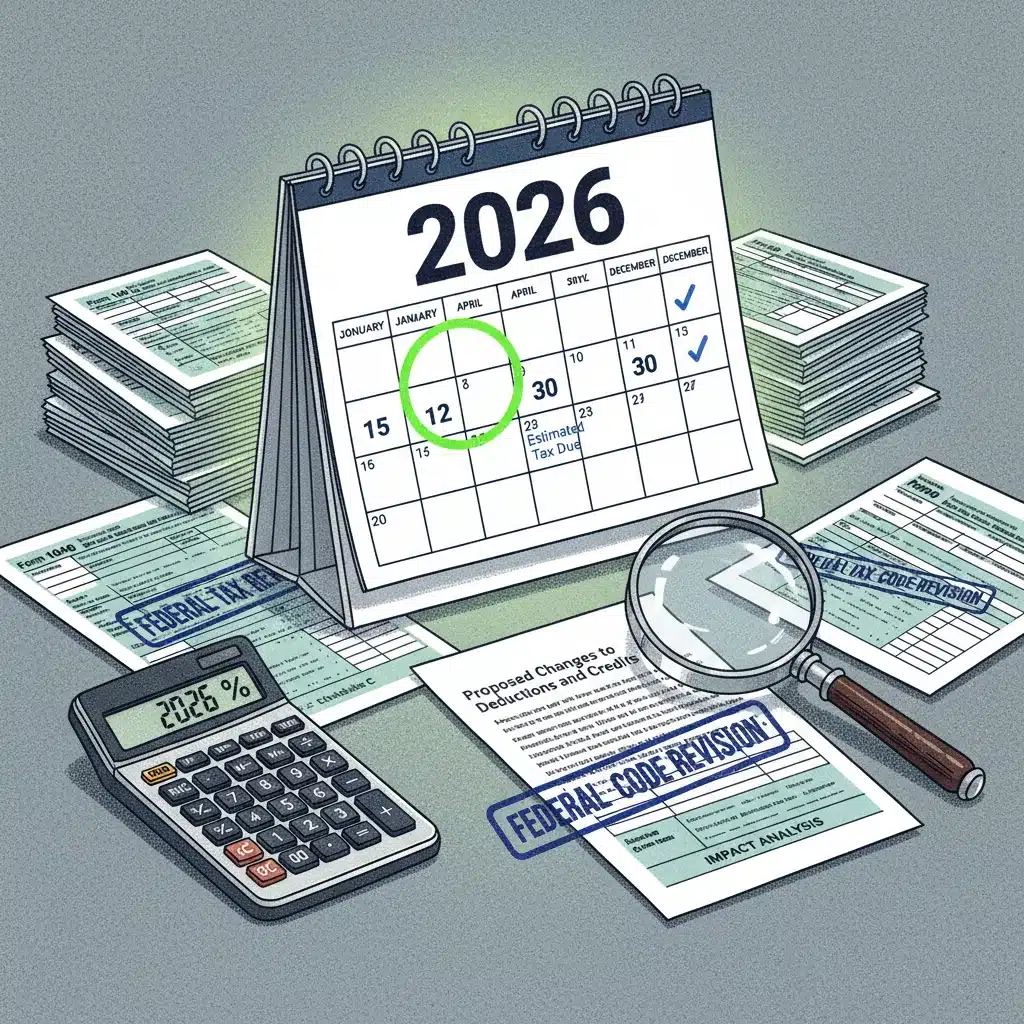
The landscape of federal taxation is in a constant state of evolution, and as we approach the mid-decade, significant shifts are on the horizon. For many, 2026 is shaping up to be a pivotal year, with anticipated federal tax changes 2026 that could have a noticeable impact on individual and business tax returns. Understanding these potential reforms is not just about staying compliant; it’s about strategic financial planning and ensuring that you are not caught off guard. This comprehensive guide delves into the projected modifications, their potential ramifications, and how you can proactively prepare for what could be a 5% swing in your tax liability or refund.
The primary driver behind many of these anticipated changes stems from the expiration of key provisions within the Tax Cuts and Jobs Act (TCJA) of 2017. While some aspects of the TCJA were permanent, a substantial portion, particularly those affecting individual taxpayers, were designed to sunset at the end of 2025. This means that without congressional action, many tax rules will revert to their pre-TCJA status, leading to what could be a significant recalibration of the tax system. This article aims to demystify these complex changes, providing clarity and actionable insights to help you navigate the future tax environment.
Understanding the Sunset Provisions: What’s Expiring?
The Tax Cuts and Jobs Act (TCJA) of 2017 was the most significant overhaul of the U.S. tax code in decades. While it introduced a range of changes for both corporations and individuals, many of the individual provisions were temporary. These provisions are set to expire on December 31, 2025, meaning that starting January 1, 2026, the tax rules will revert to what they were before the TCJA, unless Congress intervenes with new legislation. This impending expiration is the cornerstone of the federal tax changes 2026.
Key expiring provisions include:
- Individual Income Tax Rates: The current lower income tax rates for individuals are scheduled to revert to higher pre-TCJA rates. This means that many taxpayers could see their marginal tax rates increase across various income brackets. For instance, the 10%, 12%, 22%, 24%, 32%, 35%, and 37% rates will likely revert to 10%, 15%, 25%, 28%, 33%, 35%, and 39.6%, respectively. This change alone could significantly impact your take-home pay and overall tax burden.
- Standard Deduction Amounts: The TCJA significantly increased the standard deduction, simplifying tax filing for many. These higher amounts are set to expire, returning to their lower pre-TCJA levels (adjusted for inflation). For example, a married couple filing jointly who claimed the increased standard deduction might find themselves itemizing again, or paying more in taxes if their itemized deductions don’t exceed the lower standard deduction amount.
- State and Local Tax (SALT) Deduction Cap: The TCJA imposed a $10,000 cap on the deduction for state and local taxes. This cap was particularly impactful for taxpayers in high-tax states. Upon expiration, the SALT deduction cap would be lifted, potentially offering significant tax relief to those who previously exceeded the limit. However, the political landscape around the SALT cap is complex, and its future remains a hot topic of debate.
- Child Tax Credit (CTC): While the TCJA expanded the Child Tax Credit, increasing it to $2,000 per qualifying child with up to $1,400 refundable, the credit is scheduled to revert to $1,000 per child, with more restrictive refundability rules. This change could mean a substantial reduction in tax benefits for families with children, directly affecting their overall tax refund or liability.
- Qualified Business Income (QBI) Deduction (Section 199A): The TCJA introduced a deduction for up to 20% of qualified business income for eligible pass-through entities. This deduction has been a significant benefit for small business owners and self-employed individuals. Its expiration would remove this valuable tax break, potentially increasing the tax burden on these entities.
- Estate and Gift Tax Exemption: The TCJA significantly increased the estate and gift tax exemption amounts. These higher exemption levels are also scheduled to revert to pre-TCJA levels (adjusted for inflation). This change primarily affects high-net-worth individuals and could necessitate a review of estate planning strategies.
- Miscellaneous Itemized Deductions: The TCJA eliminated various miscellaneous itemized deductions that were subject to the 2% adjusted gross income (AGI) floor, such as unreimbursed employee expenses and tax preparation fees. These deductions are set to return, offering new opportunities for some taxpayers to reduce their taxable income.
The reversion of these provisions represents a significant shift that taxpayers must be aware of. The cumulative effect of these changes could easily lead to the projected 5% impact on your returns, whether through increased tax liability or a reduced refund.
Potential 5% Financial Impact on Your Returns: What Does It Mean?
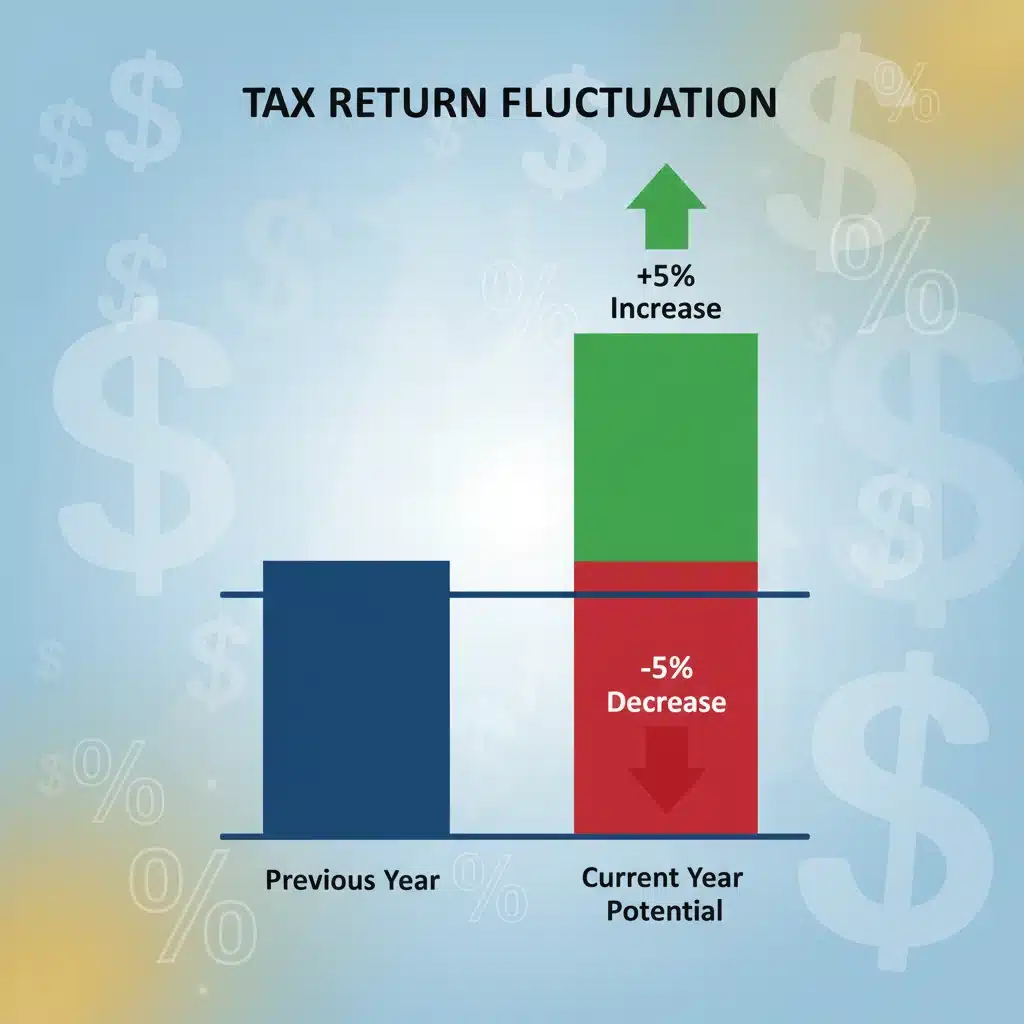
When we talk about a ‘5% impact’ on your returns, it’s crucial to understand that this is an average, and the actual effect can vary significantly based on your individual financial situation, income level, filing status, and deductions. For some, it might mean a 5% increase in their overall tax bill; for others, it could be a 5% decrease in their expected refund. The federal tax changes 2026 are not a one-size-fits-all scenario.
Increased Taxable Income and Higher Tax Bills
For many, the most direct impact will come from the reversion of individual income tax rates and the standard deduction. If your income falls into a bracket that reverts to a higher rate, a larger portion of your income will be taxed at that higher percentage. Simultaneously, if you relied on the increased standard deduction and your itemized deductions do not exceed the lower, pre-TCJA standard deduction, your taxable income will effectively increase. This dual effect can lead to a noticeable rise in your overall tax liability.
Consider a hypothetical family: under current TCJA provisions, they might be in the 22% tax bracket and claim a standard deduction of around $29,200 (for 2025, adjusted for inflation). If the rates revert and their income pushes them into the 25% bracket, and their standard deduction drops to, say, $15,000 (pre-TCJA equivalent, adjusted for inflation), their taxable income increases, and a larger portion of it is taxed at a higher rate. The combined effect could easily result in a 5% or more increase in their tax bill.
Reduced Refunds or Unexpected Payments
For those who typically receive a refund, the federal tax changes 2026 could mean a smaller refund than anticipated. The reduction in the Child Tax Credit is a prime example. A family that currently receives a $2,000 credit per child might only receive $1,000, effectively reducing their refund by $1,000 per child. If they have multiple children, this reduction can quickly add up, leading to a significantly smaller refund or even an unexpected tax payment if their withholding isn’t adjusted.
Similarly, small business owners who benefited from the Section 199A QBI deduction will see that benefit disappear. This could mean a substantial increase in their taxable business income, leading to higher self-employment taxes and income taxes, potentially turning a projected refund into a payment due.
Impact on Financial Planning and Investment Strategies
The potential 5% shift isn’t just about the immediate tax bill; it also has broader implications for financial planning. For individuals, a higher tax burden might mean less disposable income for savings, investments, or discretionary spending. For businesses, increased tax liabilities could affect cash flow, profitability, and decisions regarding expansion or hiring.
Investment strategies might also need a re-evaluation. Changes in capital gains rates (though not directly part of the TCJA sunset, they are always subject to legislative review) or the reintroduction of certain itemized deductions could influence decisions on when to sell assets or how to structure investments. Estate planning will certainly require attention for high-net-worth individuals due to the reverting estate tax exemption.
Key Areas to Watch for Federal Tax Changes 2026
Beyond the sunsetting provisions, other areas of the tax code are always under scrutiny and could see modifications. While the expiration of the TCJA provisions is the most certain aspect of the federal tax changes 2026, other legislative efforts could also introduce new rules or alter existing ones.
Healthcare-Related Tax Provisions
Healthcare legislation often includes various tax credits and deductions. Any major healthcare reform could introduce new tax benefits or modify existing ones, such as those related to health savings accounts (HSAs) or premium tax credits under the Affordable Care Act (ACA). Keeping an eye on healthcare policy debates is essential, as these can have direct tax implications.
Energy and Environmental Tax Incentives
There’s a growing focus on green initiatives, and it’s likely that tax incentives for renewable energy, energy-efficient home improvements, and electric vehicles will continue to evolve. These credits and deductions can offer significant savings for individuals and businesses investing in sustainable practices. Any new legislation in this area could create new opportunities for tax savings.
Social Security and Medicare Taxes
While not typically subject to annual legislative changes in the same way income tax rates are, discussions around the long-term solvency of Social Security and Medicare are ongoing. Any significant reforms to these programs could involve adjustments to the payroll tax wage base or tax rates, which would affect nearly all working Americans.
Corporate Tax Rate Adjustments
While the corporate tax rate was permanently reduced by the TCJA to 21%, there is always political pressure to adjust it. Depending on the political climate and economic conditions, there could be proposals to increase or decrease the corporate tax rate, which, while directly impacting businesses, can also have indirect effects on individual investors and the broader economy.
Proactive Strategies to Prepare for 2026 Tax Reforms
Given the potential for significant federal tax changes 2026, proactive planning is not just advisable; it’s essential. By taking steps now, you can mitigate negative impacts and potentially capitalize on new opportunities.
Review Your Withholding and Estimated Payments
One of the most immediate actions you can take is to review your W-4 form with your employer or adjust your estimated tax payments if you are self-employed. If you anticipate a higher tax liability in 2026, increasing your withholding or estimated payments can help you avoid an unexpected tax bill or underpayment penalties. Use the IRS Tax Withholding Estimator tool to help determine the appropriate amounts.
Assess Your Deductions and Credits
As the standard deduction potentially reverts to lower levels, it’s crucial to evaluate whether itemizing deductions will become more beneficial for you. Start tracking all potential itemized deductions, such as medical expenses, mortgage interest, state and local taxes (if the cap is lifted), and charitable contributions. Understanding your potential itemized deductions versus the new standard deduction will be key.
For families, understanding the changes to the Child Tax Credit is paramount. Factor in the potential reduction when planning your household budget and financial goals for 2026 and beyond.
Maximize Tax-Advantaged Accounts
Continue to maximize contributions to tax-advantaged retirement accounts like 401(k)s, IRAs, and HSAs. These accounts offer tax deductions for contributions (in many cases) and tax-deferred or tax-free growth, which can be invaluable regardless of changes in tax rates. Increasing your contributions now can help reduce your taxable income in the coming years.

Consider Tax Loss Harvesting
If you have investments, consider tax loss harvesting before the end of 2025. This strategy involves selling investments at a loss to offset capital gains and potentially a limited amount of ordinary income. While capital gains rates aren’t directly part of the TCJA sunset, managing your investment portfolio proactively can help reduce your overall tax burden.
Consult with a Tax Professional
The most effective strategy for navigating the federal tax changes 2026 is to consult with a qualified tax professional. They can provide personalized advice based on your specific financial situation, help you understand the nuances of the new rules, and assist in developing a tailored tax plan. A tax professional can help you identify opportunities for tax savings and ensure you remain compliant.
Stay Informed and Adapt
Tax legislation is dynamic. While we can anticipate many changes based on current law, Congress can always act to extend some provisions, modify others, or introduce entirely new legislation. Staying informed about legislative developments and being prepared to adapt your financial strategies accordingly is crucial. Follow reputable financial news sources, government announcements, and updates from your tax advisor.
Long-Term Implications and Economic Outlook
The federal tax changes 2026 will not only affect individual taxpayers but also have broader economic implications. The reversion to pre-TCJA tax rates and rules could impact consumer spending, business investment, and overall economic growth. Understanding these larger trends can also inform your personal financial decisions.
Impact on Economic Growth
Some economists argue that higher individual tax rates could dampen consumer spending and investment, potentially slowing economic growth. Conversely, proponents of higher rates suggest they could lead to increased government revenue for public services, which could also stimulate certain sectors of the economy. The actual impact will depend on the specific final legislation and the prevailing economic conditions at the time.
Budgetary Considerations
The expiration of the TCJA provisions is also a significant factor in federal budget projections. Allowing these provisions to sunset would likely increase government revenue, which could help address the national debt or fund new government programs. However, the political will to let all provisions expire without modification is uncertain, as many politicians may seek to extend popular tax breaks.
Market Reactions
Financial markets typically react to significant legislative changes. Anticipated shifts in tax policy can influence investor sentiment, stock prices, and bond yields. While it’s impossible to predict market movements with certainty, being aware of the potential for volatility around major tax reform discussions is prudent for investors.
Conclusion: Navigating the Future of Federal Taxation
The federal tax changes 2026 represent a critical juncture for taxpayers across the United States. With the sunsetting of key TCJA provisions, many individuals and businesses could experience a 5% or more shift in their tax liability or refund. From altered income tax rates and standard deductions to changes in the Child Tax Credit and QBI deduction, the scope of these reforms is broad and impactful.
The key to successfully navigating this evolving tax landscape lies in early awareness and proactive planning. By understanding what’s set to expire, assessing the potential financial impact on your unique situation, and implementing strategic adjustments to your financial plan, you can minimize adverse effects and potentially uncover new opportunities for tax efficiency. Engaging with a knowledgeable tax professional will be an invaluable step in this process, providing tailored guidance and helping you make informed decisions.
As 2026 draws nearer, staying informed about legislative developments will be paramount. The tax code is a living document, constantly subject to political discourse and economic realities. By remaining vigilant and adaptable, you can ensure that you are well-prepared for whatever the future of federal taxation holds, safeguarding your financial well-being in the process.