2026 US Housing Market: Affordability, Trends, and Investment Insights

Anúncios
The 2026 US Housing Market: A Deep Dive into National Affordability and Investment Trends
The landscape of the United States housing market is in a constant state of flux, shaped by an intricate dance of economic indicators, demographic shifts, and evolving societal preferences. As we cast our gaze forward to the US Housing Market 2026, a comprehensive understanding of these underlying forces becomes paramount for homeowners, prospective buyers, and astute investors alike. This article will embark on a detailed exploration, unraveling the complexities of national affordability, dissecting key investment trends, and offering insights into what the future may hold for real estate across the nation. Understanding the trajectory of the US Housing Market 2026 is not merely an academic exercise; it’s a critical tool for strategic planning and informed decision-making in one of the most significant sectors of the American economy.
The journey to 2026 promises to be a dynamic one, influenced by a confluence of factors ranging from interest rate policies and inflation to supply chain dynamics and population migration. We will delve into how these elements are expected to converge, painting a clearer picture of the housing environment. For anyone looking to buy, sell, or invest, having a robust grasp of the projected conditions in the US Housing Market 2026 will be invaluable. Our analysis aims to provide a beacon of clarity amidst the often-turbulent waters of real estate predictions, equipping you with the knowledge to navigate the challenges and capitalize on the opportunities that lie ahead.
Anúncios
Understanding the Current State: Precursors to the US Housing Market 2026
Before we can accurately forecast the US Housing Market 2026, it’s essential to contextualize the present and recent past. The housing market has experienced significant volatility in recent years, characterized by unprecedented price surges, intense bidding wars, and a subsequent recalibration. The COVID-19 pandemic, while initially causing uncertainty, ultimately ignited a housing boom fueled by low interest rates, remote work capabilities, and a desire for more living space. This period saw a dramatic appreciation in home values, leading to a widening gap between housing costs and median incomes.
However, the latter half of the current decade has witnessed a shift. Rising interest rates, implemented by the Federal Reserve to combat inflation, have cooled demand, tempering the frenetic pace of price growth. Inventory levels, while still historically low in many areas, have shown signs of improvement. Construction bottlenecks and labor shortages have gradually eased, though the supply of new homes continues to lag behind demographic demand. These foundational elements—the legacy of rapid appreciation, the impact of higher borrowing costs, and the persistent supply-demand imbalance—will be critical determinants shaping the US Housing Market 2026.
Moreover, demographic shifts continue to play a pivotal role. Millennials, now in their prime home-buying years, represent a substantial cohort with significant purchasing power, albeit often constrained by affordability challenges. Generation Z is also beginning to enter the market, albeit at a slower pace. The aging Baby Boomer generation, conversely, is influencing the market through downsizing and legacy planning. These generational dynamics, combined with evolving preferences for urban versus suburban living and the increasing importance of sustainability, will undoubtedly leave their mark on the US Housing Market 2026. A thorough understanding of these preceding conditions is the bedrock upon which our future projections are built.
Anúncios
National Affordability in 2026: A Critical Examination
One of the most pressing concerns as we look towards the US Housing Market 2026 is the issue of national affordability. The surge in home prices over recent years has pushed homeownership out of reach for a significant portion of the population, particularly first-time buyers and those in lower to middle-income brackets. While some markets have seen price corrections, the fundamental challenge of aligning housing costs with income levels remains. Several factors will influence affordability in 2026, including mortgage interest rates, wage growth, and the ongoing supply of housing units.
Mortgage rates, heavily influenced by Federal Reserve policy and broader economic conditions, will be a key determinant. Should rates remain elevated or even increase, the monthly cost of homeownership will continue to strain household budgets, thereby exacerbating affordability issues. Conversely, a moderation in rates could provide some relief, making home loans more accessible. However, even with stable rates, significant wage growth is necessary to bridge the gap that has formed. The pace at which average wages increase relative to housing costs will be a crucial indicator of improving or worsening affordability in the US Housing Market 2026.
Furthermore, the supply side of the equation is equally critical. A persistent shortage of housing units, particularly entry-level and affordable homes, will continue to exert upward pressure on prices. Local zoning regulations, construction costs, and labor availability all contribute to the pace of new home construction. Addressing these systemic issues will be vital for improving affordability. Without a concerted effort to increase housing stock, especially in high-demand areas, the dream of homeownership will remain elusive for many in the US Housing Market 2026. We must also consider the impact of inflation on building materials and labor, which directly translates to higher new home prices.
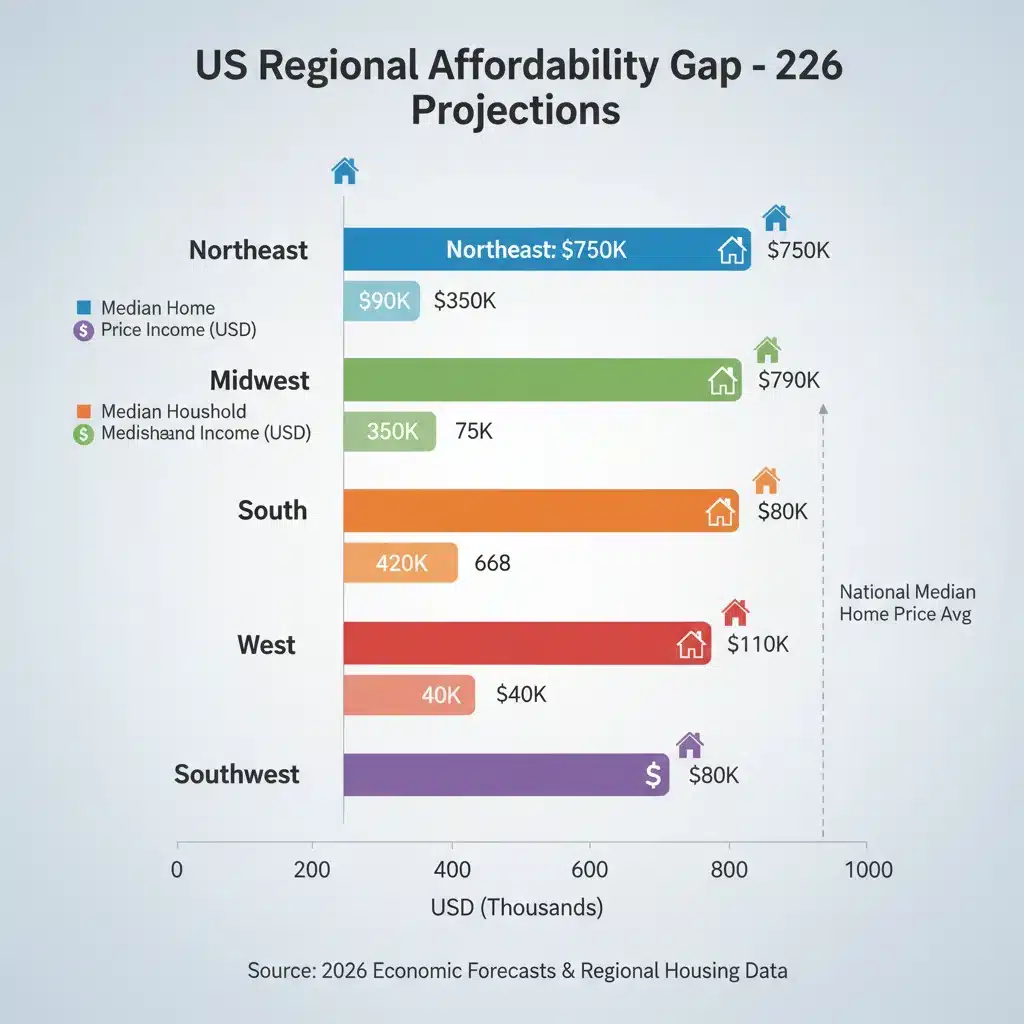
The geographical disparities in affordability will also remain pronounced. While some regions may experience a softening of prices, others, particularly those with robust job markets and limited land availability, are likely to continue seeing strong demand and higher costs. Understanding these regional nuances will be essential for both policymakers and individuals navigating the US Housing Market 2026. Solutions may need to be localized, ranging from incentives for affordable housing development to innovative financing options. The discussion around affordability is not just about home prices; it encompasses property taxes, insurance costs, and maintenance expenses, all of which contribute to the total cost of homeownership. These ancillary costs, often overlooked, can significantly impact a household’s ability to sustain homeownership, making a holistic view of affordability crucial for the US Housing Market 2026.
Key Investment Trends to Watch in the US Housing Market 2026
For investors, the US Housing Market 2026 presents a landscape of evolving opportunities and challenges. The strategies that proved successful in the past few years may need significant adjustment to align with the anticipated market conditions. Several key trends are expected to shape investment decisions, moving beyond simple appreciation plays to more nuanced approaches focusing on value, sustainability, and demographic shifts.
One prominent trend will likely be the continued emphasis on rental properties. With affordability challenges persisting, a larger segment of the population may remain in the rental market for longer, driving demand for both single-family and multi-family rental units. Investors focusing on areas with strong job growth and lower cost of living, where rental yields are more favorable, could find significant opportunities. The build-to-rent sector, which has seen considerable growth, is also expected to mature further, offering institutional and individual investors a stable income stream in the US Housing Market 2026.
Another area of increasing interest will be properties that offer value through renovation and modernization. As new construction costs remain high, older homes in desirable locations that can be updated to meet contemporary standards of energy efficiency and smart home technology will attract savvy investors. This trend aligns with a broader push towards sustainability, where properties with lower carbon footprints and reduced utility costs become more appealing. Investing in green upgrades and energy-efficient features will not only enhance property value but also attract environmentally conscious tenants and buyers in the US Housing Market 2026.
Furthermore, the impact of technological advancements on real estate investment cannot be overstated. From AI-driven market analytics that identify undervalued properties to virtual reality tours that broaden the reach of listings, technology will continue to streamline the investment process. The rise of real estate crowdfunding platforms also democratizes access to larger investment opportunities, allowing more individuals to participate in the US Housing Market 2026. Investors who leverage these technological tools will gain a competitive edge in identifying and securing profitable ventures.
Finally, understanding demographic migration patterns will be crucial. The continued shift of populations from expensive coastal cities to more affordable inland areas, often driven by remote work flexibility, will create new pockets of demand. Investors who can identify these emerging growth markets before they become saturated will be well-positioned. This involves looking beyond traditional hotbeds and exploring secondary and tertiary cities with strong economic fundamentals and quality of life. The ability to adapt to these evolving investment trends will be key to success in the dynamic US Housing Market 2026.
The Role of Technology and Sustainability in 2026 Housing
The interplay of technology and sustainability is set to profoundly reshape the US Housing Market 2026, influencing everything from construction methods to homeowner preferences and property values. These two forces are not merely trends; they are foundational shifts that will redefine what constitutes a desirable and valuable property in the coming years.
On the technological front, smart home integration will move from a luxury feature to a standard expectation. Homes equipped with advanced automation systems for lighting, climate control, security, and entertainment will be highly sought after. These systems not only offer convenience but also contribute to energy efficiency, directly linking technology with sustainability goals. The Internet of Things (IoT) will enable seamless connectivity between various devices, creating truly intelligent living spaces. Furthermore, advancements in construction technology, such as modular building and 3D printing, hold the potential to address supply shortages by accelerating construction timelines and reducing costs, thereby impacting affordability in the US Housing Market 2026.
Sustainability, meanwhile, will become an even more dominant factor. Growing environmental awareness, coupled with increasing utility costs, will drive demand for energy-efficient homes. Features like solar panels, high-efficiency HVAC systems, superior insulation, and smart thermostats will be non-negotiable for many buyers. Water conservation technologies, such as rainwater harvesting and greywater recycling systems, will also gain traction, particularly in regions prone to drought. Properties with certifications like LEED or Energy Star will command a premium, reflecting their long-term cost savings and environmental benefits. This focus on green building practices will not only be driven by consumer demand but also by evolving building codes and government incentives, making sustainable features a core component of the US Housing Market 2026.
The convergence of these trends means that properties in 2026 will be judged not only on their location and size but also on their technological sophistication and environmental footprint. Developers and homeowners who embrace these innovations will be better positioned to attract buyers and renters, ensuring higher property values and faster sales. For investors, understanding the return on investment for smart home upgrades and sustainable features will be crucial for maximizing profitability. The long-term viability and appeal of a property in the US Housing Market 2026 will increasingly depend on its ability to offer a modern, efficient, and environmentally responsible living experience.
Regional Outlook: Hotspots and Challenges in the US Housing Market 2026
While discussing the US Housing Market 2026 at a national level provides a broad overview, it’s crucial to acknowledge the significant regional variations that will continue to define local markets. What might be true for one state or metropolitan area could be entirely different for another, making a localized perspective indispensable for both buyers and investors.
Certain regions are projected to remain hotspots, driven by robust job growth, inward migration, and a high quality of life. Areas in the Sun Belt, particularly in states like Texas, Florida, and parts of the Carolinas, are likely to continue experiencing strong demand, albeit potentially with moderating price appreciation compared to the frenzied pace of previous years. These regions often benefit from lower taxes, more affordable living costs (relative to coastal giants), and a warmer climate, attracting both remote workers and retirees. However, even within these hotspots, affordability challenges could intensify if supply doesn’t keep pace with demand, leading to continued competition among buyers in the US Housing Market 2026.
Conversely, some traditionally expensive coastal markets, such as parts of California and the Northeast, may continue to face challenges related to out-migration and persistent affordability issues. While these areas will always have a baseline of demand due to their economic engines and cultural attractions, the high cost of living and housing could push more residents to seek opportunities elsewhere. This doesn’t necessarily mean price collapses, but rather a more subdued growth trajectory or even slight corrections in some segments. Urban cores, which saw a temporary dip during the pandemic, are expected to continue their recovery, but their long-term growth will depend on a renewed commitment to urban amenities and public safety, critical factors for the health of the US Housing Market 2026.

Emerging markets, often characterized by a lower cost of living, growing tech sectors, and revitalized downtowns, could offer intriguing opportunities. Cities in the Midwest and Mountain West, for example, are increasingly attracting attention from both businesses and residents. These areas might offer a better balance of affordability and opportunity, making them attractive for first-time homebuyers and investors looking for higher yields. However, investors in these markets will need to conduct thorough due diligence, as rapid growth can also lead to infrastructure strains and potential overvaluation if not managed carefully. Understanding these distinct regional dynamics is paramount for anyone engaging with the US Housing Market 2026, as a one-size-fits-all approach will undoubtedly fall short.
Government Policies and Economic Factors Shaping the US Housing Market 2026
The trajectory of the US Housing Market 2026 will be significantly influenced by both government policies and broader economic factors. These external forces can either stimulate growth and improve affordability or impose constraints that exacerbate existing challenges. A keen eye on these macro-level determinants is essential for anticipating market shifts.
Government policies, at federal, state, and local levels, play a critical role. Federal Reserve interest rate decisions are perhaps the most immediate and impactful, directly affecting mortgage rates and, consequently, buyer demand and affordability. Any shifts in monetary policy, driven by inflation targets or economic growth concerns, will send ripples throughout the housing market. Beyond interest rates, government initiatives aimed at increasing housing supply, such as zoning reform, tax incentives for affordable housing development, or infrastructure investments, could have a profound effect on the US Housing Market 2026. Conversely, restrictive policies or a lack of proactive measures could perpetuate supply shortages and high costs. Additionally, first-time homebuyer programs and down payment assistance initiatives, if expanded, could provide crucial support to those struggling to enter the market.
On the economic front, factors such as inflation, employment rates, and GDP growth will continue to be pivotal. Persistent inflation can erode purchasing power and increase the cost of building materials, indirectly impacting housing prices. A strong labor market with consistent wage growth is fundamental for sustaining housing demand and improving affordability. Conversely, an economic downturn or rising unemployment could dampen buyer confidence and lead to a softening of prices. Global economic events, geopolitical tensions, and supply chain disruptions also have the potential to influence the US Housing Market 2026, often through their impact on interest rates, material costs, and investor sentiment.
Moreover, regulatory changes in lending practices, environmental standards, and property taxation can create new landscapes for homeowners and investors. For instance, stricter environmental regulations might increase construction costs but also drive demand for more sustainable homes. Changes in property tax laws can significantly alter the total cost of homeownership, affecting both affordability and investment returns. Understanding the interplay between these complex governmental and economic forces is not just an academic exercise; it’s a practical necessity for anyone looking to make informed decisions in the US Housing Market 2026. The ability to anticipate and adapt to these shifts will be a hallmark of successful participants in the real estate sector.
Preparing for the US Housing Market 2026: Advice for Buyers, Sellers, and Investors
Navigating the US Housing Market 2026 effectively requires proactive planning and a clear understanding of one’s goals, whether you are a prospective buyer, a current homeowner considering selling, or an astute investor. The market is expected to demand flexibility and strategic thinking.
For prospective homebuyers, the emphasis should be on financial preparedness. This means diligently saving for a substantial down payment, improving credit scores to secure the best possible interest rates, and getting pre-approved for a mortgage to understand your budget. In a market where affordability remains a concern, being financially ready can give you a significant advantage. It’s also wise to research local markets thoroughly, understanding the specific dynamics of your desired area rather than relying solely on national trends. Consider working with a knowledgeable real estate agent who specializes in your target neighborhoods and can provide insights into local inventory and pricing in the US Housing Market 2026. Flexibility on property type or location might also be necessary to achieve homeownership goals.
Sellers in 2026 will likely face a more balanced market than the highly competitive seller’s market of recent years. This means focusing on presenting a well-maintained property, making necessary repairs or upgrades to enhance appeal, and pricing competitively. Professional staging and high-quality photography can make a significant difference in attracting buyers. Understanding the local market conditions, including average days on market and comparable sales, will be crucial for setting realistic expectations. For those considering selling and then buying, careful coordination of timelines will be essential to avoid being caught between transactions in the US Housing Market 2026. Consulting with a real estate professional to develop a tailored selling strategy is highly recommended.
Investors should adopt a long-term perspective and diversify their portfolios. While short-term gains might be harder to come by, strategic investments in rental properties, value-add renovations, or emerging growth markets can yield substantial returns over time. Due diligence, including thorough market analysis, financial projections, and risk assessment, becomes even more critical. Exploring different investment vehicles, such as REITs or real estate crowdfunding, might also offer opportunities for diversification. Staying informed about economic forecasts, demographic shifts, and technological advancements will be key to identifying profitable ventures in the US Housing Market 2026. Regardless of your role, continuous education and adaptability will be your greatest assets.
Conclusion: Navigating the Future of the US Housing Market 2026
The US Housing Market 2026 is poised to be a complex yet fascinating environment, characterized by ongoing affordability challenges, evolving investment trends, and the transformative influence of technology and sustainability. While the extreme volatility of recent years may give way to a more normalized pace, significant hurdles and exciting opportunities will undoubtedly emerge. For homeowners, prospective buyers, and investors, a deep understanding of these dynamics is not just beneficial; it is absolutely essential for making informed and successful decisions.
National affordability will remain a central theme, with the interplay of interest rates, wage growth, and housing supply determining the accessibility of homeownership for many. Regional disparities will persist, highlighting the importance of localized analysis. Investment strategies will need to adapt, favoring long-term value, sustainable properties, and a keen eye on demographic shifts. The integration of smart home technology and green building practices will increasingly define property appeal and value. Furthermore, government policies and broader economic indicators will continue to exert a powerful influence, necessitating constant vigilance.
Ultimately, navigating the US Housing Market 2026 successfully will require a blend of financial prudence, market insight, and adaptability. By staying informed, planning strategically, and seeking expert advice, individuals and entities can position themselves to thrive in this dynamic landscape. The future of US housing is not merely a forecast; it is a canvas upon which countless individual decisions will be painted, shaping communities and economies for years to come. The insights provided here serve as a foundational guide to help you confidently step into that future.