US Inflation Trends: What a 4.5% Annual Rate Means for Consumer Spending in 2026
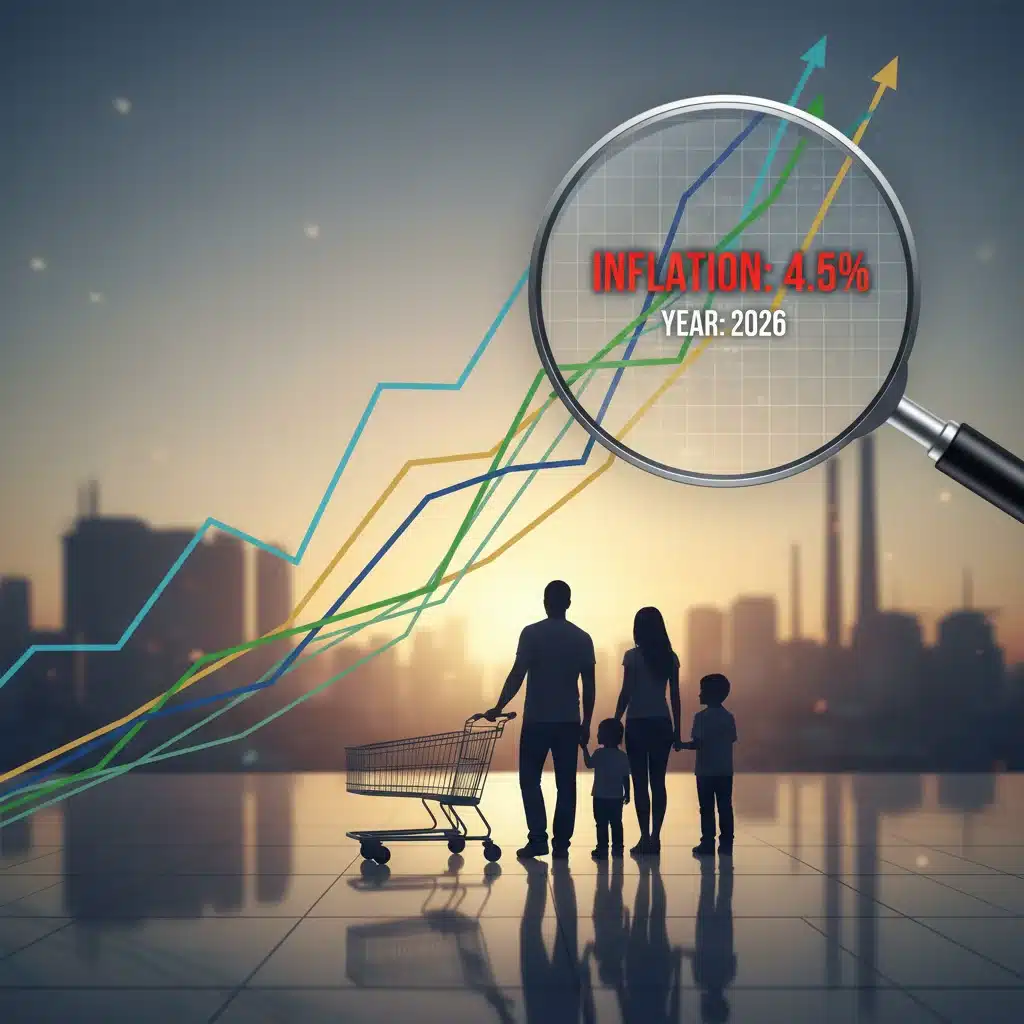
US Inflation Trends: What a 4.5% Annual Rate Means for Consumer Spending in 2026
The economic landscape is a dynamic tapestry woven from countless threads of data, policy decisions, and global events. Among the most critical indicators influencing this landscape is inflation. As we look towards 2026, understanding the potential implications of a 4.5% annual US inflation outlook becomes paramount for individuals, businesses, and policymakers alike. This article delves deep into what such a rate could signify for consumer spending, the broader economy, and how various sectors might adapt to these evolving conditions.
Understanding the US Inflation Outlook
Before we project into 2026, it’s crucial to grasp the fundamentals of inflation. Inflation refers to the rate at which the general level of prices for goods and services is rising, and subsequently, purchasing power is falling. A 4.5% annual inflation rate means that, on average, goods and services that cost $100 today would cost $104.50 a year from now. While this might seem like a modest increase, its cumulative effect over time can significantly erode the value of savings and income.
Historical Context and Recent Trends
The US economy has experienced varying inflation rates throughout its history. Post-pandemic, we witnessed a surge in inflation driven by supply chain disruptions, robust consumer demand fueled by fiscal stimulus, and geopolitical tensions. While central banks have worked to bring inflation down from its peak, the journey back to the long-term target of around 2% is complex and fraught with potential headwinds. Factors such as ongoing supply-side constraints, wage growth pressures, and global commodity price fluctuations could contribute to a sustained elevated US inflation outlook.
Key Drivers of Inflation in the Mid-2020s
Several factors could contribute to a 4.5% US inflation outlook in 2026. Understanding these drivers is essential for comprehending the potential economic shifts:
- Supply Chain Resilience and Geopolitical Events: While some supply chain issues have eased, new disruptions can emerge from geopolitical conflicts, natural disasters, or trade policy shifts. These can restrict the availability of goods and raw materials, pushing prices higher.
- Labor Market Dynamics and Wage Growth: A tight labor market, where demand for workers outstrips supply, can lead to higher wages. While beneficial for workers, significant wage increases, if not matched by productivity gains, can translate into higher production costs for businesses, which are then passed on to consumers.
- Energy Prices: Global energy markets are notoriously volatile. Fluctuations in oil and gas prices, driven by supply cuts, increased demand, or geopolitical instability, have a cascading effect across the economy, impacting transportation, manufacturing, and utility costs.
- Fiscal and Monetary Policy: Government spending and central bank interest rate decisions play a crucial role. Expansionary fiscal policies (increased government spending or tax cuts) can stimulate demand, potentially fueling inflation. Similarly, accommodative monetary policies (low interest rates) can encourage borrowing and spending.
- Housing Market Trends: Housing costs, including rent and home prices, are significant components of the Consumer Price Index (CPI). Continued upward pressure in the housing market can exert substantial influence on the overall US inflation outlook.
- Global Economic Conditions: The US economy does not operate in a vacuum. Economic growth or slowdowns in major trading partners, currency fluctuations, and global demand for commodities can all impact domestic prices.
Impact on Consumer Spending: A Detailed Analysis
A 4.5% annual US inflation outlook in 2026 would have a profound and multifaceted impact on consumer spending patterns. Consumers, facing higher prices for everyday goods and services, would likely adjust their behaviors in several key areas.
Erosion of Purchasing Power
The most immediate effect of persistent inflation is the erosion of purchasing power. A dollar in 2026 would buy less than a dollar in 2025. This means that for households whose incomes do not keep pace with inflation, their real income effectively decreases, forcing them to make difficult choices about their spending.
Shifts in Discretionary vs. Essential Spending
With a higher cost of living, consumers typically prioritize essential spending over discretionary purchases. This means:
- Essentials (Food, Housing, Utilities, Healthcare): These categories will likely see sustained or even increased spending, simply because they are non-negotiable. However, consumers may trade down to less expensive brands, seek out sales, or reduce consumption where possible (e.g., cutting back on heating/cooling).
- Discretionary Spending (Travel, Entertainment, Dining Out, Luxury Goods): These sectors are most vulnerable. Consumers might defer vacations, choose cheaper entertainment options, cook more at home, or postpone large purchases like new electronics or vehicles. Businesses in these sectors would need to innovate, offer value, or target specific demographics less affected by inflation.
Impact on Savings and Investments
Inflation erodes the real value of savings. If inflation is 4.5% and a savings account yields 1%, savers are effectively losing 3.5% of their purchasing power annually. This encourages consumers to seek investments that offer returns higher than the inflation rate, potentially shifting funds from low-yield savings into assets like real estate, stocks, or inflation-indexed bonds, which carry their own risks.

Debt and Borrowing
The relationship between inflation and debt is complex. For existing fixed-rate debt (like a mortgage), inflation can effectively reduce the real value of future payments, benefiting borrowers. However, new borrowing often comes with higher interest rates as lenders seek to compensate for the erosion of their returns due to inflation. This can make new loans for homes, cars, or business expansion more expensive, potentially dampening big-ticket consumer purchases and business investment.
Consumer Confidence and Behavior
Sustained high inflation can negatively impact consumer confidence. Uncertainty about future prices and economic stability can lead to a more cautious approach to spending, with consumers holding onto cash or deferring purchases until they feel more secure. This cautious sentiment can, in turn, slow down overall economic growth.
Sector-Specific Implications of a 4.5% US Inflation Outlook
Different sectors of the economy will experience the effects of a 4.5% US inflation outlook in 2026 in unique ways.
Retail Sector
Retailers will face a dual challenge: managing rising input costs (raw materials, labor, transportation) and navigating changing consumer spending habits. Those selling essential goods might see stable demand but face pressure to keep prices competitive. Discretionary retailers will need to focus on value propositions, promotions, and inventory management to avoid being stuck with unsold goods as consumer demand softens.
Housing and Real Estate
The housing market is particularly sensitive to inflation and interest rates. A 4.5% inflation rate could lead to higher mortgage rates as the Federal Reserve might continue to tighten monetary policy to combat inflation. This would increase the cost of homeownership, potentially cooling demand and moderating home price appreciation. Rental markets could also see continued upward pressure if property owners pass on increased costs.
Automotive Industry
New car purchases, often financed, would become more expensive due to higher interest rates and potentially elevated manufacturing costs. Consumers might extend the life of their current vehicles, opt for used cars, or choose more fuel-efficient models to offset higher gasoline prices. This would put pressure on auto manufacturers and dealerships to offer competitive financing and incentives.
Food and Beverage
Food prices are a significant component of inflation and directly impact every household. A 4.5% US inflation outlook would mean continued increases in grocery bills. Consumers would likely adapt by cooking more at home, buying store brands, reducing food waste, and seeking out sales. Restaurants might face challenges with ingredient costs and consumer willingness to pay higher menu prices.
Technology and Services
While some technology goods might see price increases due to manufacturing costs, the services sector (e.g., internet, streaming, professional services) might experience different dynamics. Wage growth could drive up the cost of labor-intensive services, but competitive pressures in subscription-based models might limit price hikes. Consumers might re-evaluate their subscription stacks to cut unnecessary expenses.
Strategies for Consumers and Businesses
Navigating a period of sustained 4.5% US inflation outlook requires proactive strategies from both consumers and businesses.
For Consumers:
- Budgeting and Financial Planning: Review and adjust budgets to account for higher costs. Prioritize essential spending and identify areas for cutbacks in discretionary categories.
- Smart Shopping: Compare prices, look for sales and discounts, buy in bulk when practical, and consider store brands.
- Debt Management: Prioritize paying down high-interest variable-rate debt, as interest rates might rise. For new borrowing, carefully consider the terms and affordability.
- Investment Review: Consult with financial advisors to ensure investment portfolios are positioned to potentially outperform inflation. Diversification and considering inflation-hedging assets can be beneficial.
- Income Growth: Explore opportunities for income growth, such as negotiating salary increases that at least keep pace with inflation, taking on side gigs, or investing in skills development.
- Energy Efficiency: Invest in energy-efficient appliances or home improvements to reduce utility bills.
For Businesses:
- Cost Management and Efficiency: Identify areas to reduce operational costs, streamline supply chains, and improve productivity. This could involve automation or renegotiating supplier contracts.
- Pricing Strategies: Carefully consider pricing adjustments. While passing on costs is necessary, businesses must balance this with maintaining competitiveness and customer loyalty. Value-added services or loyalty programs can help.
- Inventory Management: Optimize inventory levels to minimize holding costs while ensuring sufficient stock to meet demand. Avoid overstocking items that might depreciate quickly in real value.
- Talent Retention and Compensation: Address wage pressures by offering competitive compensation and benefits to retain skilled employees, while also seeking ways to boost productivity.
- Diversification and Innovation: Explore new product lines, services, or market segments that are less sensitive to inflationary pressures. Innovation can create new value for customers.
- Hedging Strategies: Larger businesses might explore financial instruments to hedge against commodity price volatility or currency fluctuations.
The Role of Monetary and Fiscal Policy in Shaping the US Inflation Outlook
The Federal Reserve’s monetary policy and the government’s fiscal policy will be critical in shaping the actual US inflation outlook for 2026. The Federal Reserve uses tools like interest rates and quantitative easing/tightening to influence the money supply and credit conditions. If inflation remains elevated at 4.5%, the Fed might continue to maintain a hawkish stance, keeping interest rates higher for longer to cool demand and bring prices down. This approach, while necessary to combat inflation, carries the risk of slowing economic growth.
Fiscal policy, managed by the government, involves decisions on taxation and spending. Large government spending programs, if not offset by revenue, can inject more money into the economy, potentially exacerbating inflationary pressures. Conversely, fiscal tightening (reduced spending or increased taxes) can help cool demand but might also hinder economic growth. The coordination between monetary and fiscal policy will be essential in navigating the economic challenges presented by a sustained 4.5% US inflation outlook.
Forecasting Challenges and Uncertainties
Predicting economic outcomes, especially inflation, is inherently challenging. The 4.5% US inflation outlook for 2026 is a projection based on current trends and models, but numerous uncertainties could alter this trajectory:
- Global Events: Unforeseen geopolitical conflicts, pandemics, or natural disasters can rapidly shift supply and demand dynamics, impacting inflation.
- Technological Advancements: Rapid technological innovation can increase productivity and reduce costs, potentially acting as a disinflationary force.
- Consumer Behavior Shifts: Major shifts in consumer preferences or spending habits (e.g., a sustained move towards experiences over goods) can influence price pressures in different sectors.
- Policy Effectiveness: The effectiveness of monetary and fiscal policies in achieving their intended outcomes is not always guaranteed and can be influenced by public confidence and market reactions.
- Data Reliability and Lags: Economic data often has lags, meaning policymakers are always reacting to past conditions, which can make real-time adjustments difficult.
Given these complexities, a 4.5% US inflation outlook in 2026 should be viewed as a plausible scenario that requires careful monitoring and flexible planning, rather than a certainty. The actual rate could be higher or lower depending on how these various factors unfold.
Conclusion: Preparing for the Future US Inflation Outlook
The prospect of a 4.5% annual US inflation outlook in 2026 presents both challenges and opportunities. For consumers, it underscores the importance of prudent financial planning, smart spending, and seeking ways to grow real income. For businesses, it demands agility, efficiency, and a focus on delivering value in an environment of rising costs and evolving consumer preferences.
Policymakers, meanwhile, will face the delicate task of balancing inflation control with economic growth, using monetary and fiscal tools judiciously. While the future is never entirely predictable, understanding the potential implications of various economic scenarios, such as a sustained 4.5% inflation rate, allows for better preparation and more resilient strategies. By staying informed, adapting to changing conditions, and making proactive decisions, individuals and organizations can better navigate the economic currents of 2026 and beyond.