Global Alliances 2026: Shifts in US Foreign Policy
Anúncios
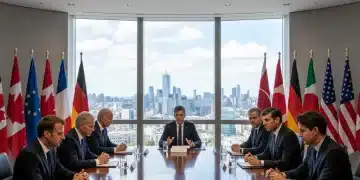
The geopolitical landscape is in a constant state of flux, a dynamic tapestry woven with threads of national interests, economic pressures, technological advancements, and shifting power balances. As we look towards 2026, the notion of Global Alliances 2026 becomes a critical lens through which to examine the evolving U.S. foreign policy. The world is witnessing profound transformations, moving beyond traditional bipolar or unipolar frameworks into a more complex, multipolar environment. These shifts necessitate a rigorous analysis of how existing alliances will adapt, new partnerships will emerge, and the very nature of international cooperation will be redefined. Understanding these changes is not merely an academic exercise; it is crucial for policymakers, strategists, and citizens alike to navigate an increasingly interconnected yet fragmented world.
The United States, long a cornerstone of the global order, finds itself at a pivotal juncture. Its foreign policy, traditionally anchored in a network of robust alliances forged during the Cold War and expanded in its aftermath, is now being tested by a confluence of factors. The rise of new economic and military powers, the proliferation of non-state actors, the accelerating pace of technological disruption, and the pressing urgency of global challenges like climate change and pandemics are all reshaping the calculus of international relations. This article will delve into three major shifts that are poised to significantly affect U.S. foreign policy concerning Global Alliances 2026, offering a comprehensive overview of the challenges and opportunities that lie ahead.
Anúncios
From the recalibration of economic partnerships to the strategic implications of technological competition and the evolving nature of security threats, each shift presents a unique set of considerations. The ability of the U.S. to adapt its foreign policy to these new realities will determine its influence and effectiveness on the global stage. By analyzing these shifts, we aim to provide a clearer picture of the future of Global Alliances 2026 and the strategic adjustments required to maintain stability and advance U.S. interests in a rapidly changing world.
Shift 1: The Reshaping of Economic Alliances and Multipolarity
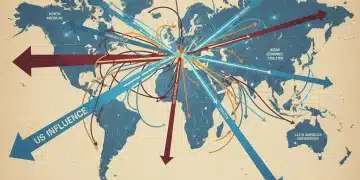
The first major shift impacting Global Alliances 2026 is the profound reshaping of economic alliances and the accelerating trend towards multipolarity. For decades, the global economic order was largely defined by a U.S.-led framework, characterized by institutions like the World Bank, the International Monetary Fund (IMF), and the World Trade Organization (WTO). While these institutions remain influential, their unchallenged dominance is being increasingly questioned by the rise of new economic powerhouses, particularly in Asia. China’s economic ascent, coupled with the growing influence of other emerging economies like India, Brazil, and various ASEAN nations, has created a more diversified economic landscape.
This multipolar economic environment presents both challenges and opportunities for U.S. foreign policy. On one hand, it challenges the traditional leverage the U.S. has held through its economic might. Countries are no longer solely reliant on U.S. markets or investment, offering them greater autonomy in their foreign policy decisions. This diversification can lead to a more complex web of economic partnerships, where nations balance their relationships with multiple major powers rather than aligning exclusively with one. For instance, many European nations find themselves navigating intricate trade relationships with both the U.S. and China, often seeking to avoid being forced to choose sides.
Anúncios
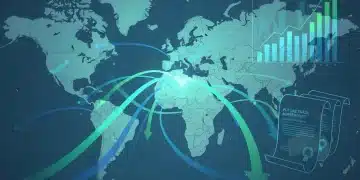
On the other hand, this shift also opens avenues for new forms of economic cooperation. The U.S. can leverage its existing alliances to foster collective economic resilience, promote fair trade practices, and counter predatory economic behavior. Initiatives like the Indo-Pacific Economic Framework for Prosperity (IPEF) are examples of how the U.S. is attempting to build economic coalitions that reflect its values and strategic interests in this new landscape. The focus here is not just on traditional trade agreements but also on supply chain resilience, clean energy, and digital trade standards, recognizing the interconnectedness of these areas in modern economic power.
The rise of regional economic blocs further complicates the picture for Global Alliances 2026. Groups like the European Union (EU), ASEAN, and the African Continental Free Trade Area (AfCFTA) are consolidating their internal markets and asserting their collective economic weight on the global stage. This means that U.S. foreign policy must increasingly engage with these blocs as unified entities, understanding their collective interests and negotiating accordingly. The challenge lies in ensuring that these regional blocs do not inadvertently undermine broader multilateral efforts or create exclusionary trade practices that disadvantage U.S. businesses or allies.
Moreover, the weaponization of economic tools, such as sanctions and export controls, has become a more prominent feature of international relations. While these tools can be effective in achieving foreign policy objectives, their overuse or unilateral application can alienate allies and push adversaries closer together, potentially leading to the formation of alternative economic systems that bypass traditional U.S.-dominated structures. Therefore, a nuanced and collaborative approach to economic statecraft is essential for the U.S. to maintain its influence and shape the future of Global Alliances 2026. The emphasis must be on building inclusive economic frameworks that benefit a wide range of partners, rather than solely focusing on punitive measures.
The implications for U.S. foreign policy are clear: a need for greater flexibility, adaptability, and a willingness to engage in more complex, multi-layered economic diplomacy. The U.S. must continue to strengthen its existing economic ties with key allies while simultaneously exploring new partnerships and adapting to the reality of a world where economic power is more diffused. This involves investing in domestic competitiveness, promoting innovation, and ensuring that U.S. economic policies are aligned with its geopolitical objectives, fostering a stable and prosperous global economic environment for Global Alliances 2026.
Shift 2: The Evolution of Security Threats and Technological Competition
The second critical shift shaping Global Alliances 2026 pertains to the evolution of security threats and the intensifying technological competition. Traditional security concerns, such as interstate conflict and terrorism, remain relevant, but they are now augmented by a new generation of challenges that transcend geographical borders and conventional warfare. Cyber warfare, disinformation campaigns, hybrid threats, and the weaponization of emerging technologies are fundamentally altering the security landscape, demanding a rethinking of how alliances function and what they aim to protect.
Cyber warfare, in particular, has emerged as a pervasive and insidious threat. State-sponsored hacking, ransomware attacks, and critical infrastructure targeting can cripple economies, disrupt societies, and undermine national security without a single shot being fired. This necessitates a collective defense mechanism that goes beyond traditional military cooperation. For Global Alliances 2026, this means strengthening intelligence sharing, developing joint cyber defense capabilities, and establishing international norms and protocols for responsible state behavior in cyberspace. The U.S. must work closely with its allies to build resilient digital infrastructure and deter malicious cyber activities, recognizing that a cyberattack on one ally can have cascading effects on the entire network.
Moreover, the race for technological supremacy, particularly in areas like artificial intelligence (AI), quantum computing, biotechnology, and advanced materials, is becoming a central feature of geopolitical competition. The nation that leads in these critical technologies will likely hold a significant advantage in economic prosperity, military capabilities, and global influence. This competition has profound implications for Global Alliances 2026. Allies must collaborate on research and development, establish secure supply chains for critical components, and develop common standards and ethical frameworks for emerging technologies. The U.S. faces the challenge of balancing national security concerns with the need for open innovation and collaboration, ensuring that its allies are not left behind in this crucial technological race.
Hybrid warfare, which blends conventional military tactics with irregular warfare, cyberattacks, disinformation, and economic coercion, further complicates the security environment. Adversaries are increasingly employing these tactics to achieve their objectives below the threshold of overt conflict, making attribution and response extremely challenging. Global Alliances 2026 must develop robust strategies to counter hybrid threats, including enhanced intelligence fusion, rapid response mechanisms, and public resilience campaigns to combat disinformation. This requires a comprehensive approach that integrates military, diplomatic, economic, and informational tools.
The proliferation of advanced conventional weapons and weapons of mass destruction also remains a significant concern. The development of hypersonic missiles, advanced drones, and modernized nuclear arsenals by potential adversaries demands a continuous adaptation of defense strategies and a strengthening of collective deterrence. U.S. alliances, such as NATO and its partnerships in the Indo-Pacific, are vital for pooling resources, sharing intelligence, and conducting joint exercises to maintain a credible deterrent against these evolving threats. The interoperability of military forces and the harmonization of defense planning will be crucial for the effectiveness of Global Alliances 2026.
In response to these evolving threats, U.S. foreign policy must prioritize technological collaboration with trusted allies, establishing ‘tech alliances’ that complement traditional security pacts. This involves not only sharing technology but also co-developing next-generation capabilities and protecting intellectual property. The goal is to create a collective technological edge that ensures the security and prosperity of allied nations in an increasingly competitive world. The future of Global Alliances 2026 will heavily depend on how effectively the U.S. and its partners can integrate their technological strengths to address these complex and multifaceted security challenges.
Shift 3: The Redefinition of Multilateralism and Regional Dynamics
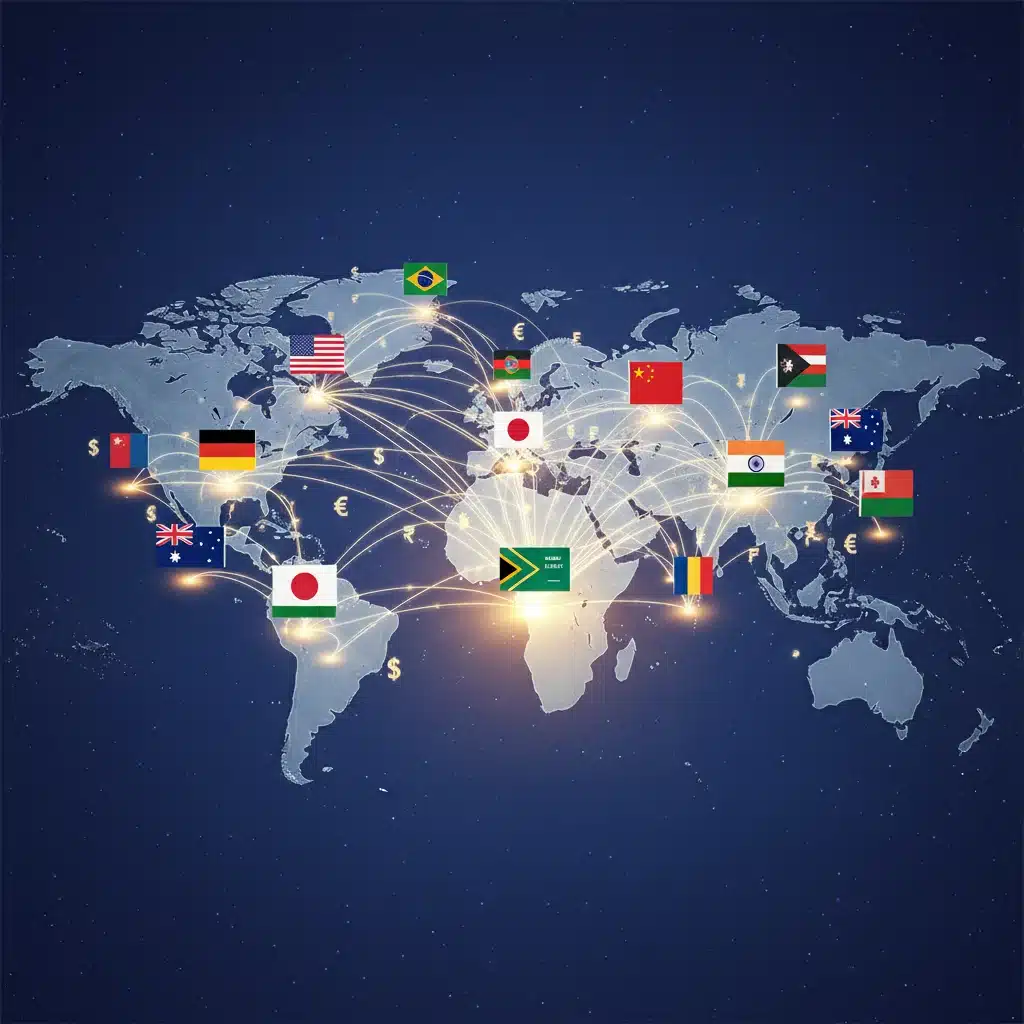
The third major shift affecting Global Alliances 2026 involves the redefinition of multilateralism and the increasing prominence of regional dynamics. While global institutions continue to play a role, their efficacy is often challenged by national interests and power politics. Simultaneously, regional organizations and ad-hoc coalitions are gaining prominence, offering more agile and focused responses to specific challenges. This trend necessitates a nuanced approach to U.S. foreign policy, balancing engagement with global bodies with strategic involvement in regional frameworks.
Traditional multilateral institutions, such as the United Nations (UN), face ongoing challenges related to consensus-building, veto powers, and the implementation of resolutions. While indispensable for addressing universal issues like climate change, human rights, and humanitarian crises, their ability to respond swiftly and decisively to geopolitical conflicts is often hampered. For Global Alliances 2026, the U.S. must continue to champion reforms within these institutions to make them more representative and effective, while also recognizing their limitations.
Concurrently, regional organizations are becoming increasingly influential. In Europe, the EU and NATO continue to be pillars of stability and cooperation, adapting to new security threats and economic realities. In the Indo-Pacific, groups like the Quad (Australia, India, Japan, U.S.) and AUKUS (Australia, UK, U.S.) represent newer, more focused security and technology partnerships designed to address specific regional challenges and balance rising powers. These regional groupings are often more agile and can achieve consensus more readily than larger global bodies, making them attractive platforms for cooperation. The U.S. must strategically engage with these regional mechanisms, tailoring its approach to the specific context and objectives of each group, to strengthen Global Alliances 2026.
The rise of ‘minilateralism’ – smaller, more flexible groupings of like-minded countries – is another key aspect of this shift. These minilateral arrangements allow nations to cooperate on specific issues without the complexities of broader multilateral forums. Examples include collaborations on vaccine development, critical mineral supply chains, or specific defense initiatives. While these can be highly effective, the challenge for U.S. foreign policy is to ensure that minilateral efforts complement, rather than undermine, broader alliance structures and global cooperation. The goal should be to create a layered approach to diplomacy, where different formats of cooperation are utilized for different purposes.
Furthermore, the domestic political landscapes within allied nations also play a crucial role in shaping Global Alliances 2026. Populist movements, nationalist sentiments, and economic protectionism can strain alliance cohesion and complicate international cooperation. U.S. foreign policy must therefore involve robust public diplomacy, engaging with civil society and fostering shared values to maintain the domestic support necessary for strong alliances. The perception of mutual benefit and shared burden is essential for the long-term viability of any alliance.
The competition for influence in key regions, such as Africa, Latin America, and the Arctic, is also intensifying. Major powers are investing in infrastructure, providing aid, and building political ties in these areas, often with strategic implications. U.S. foreign policy for Global Alliances 2026 must include proactive engagement with countries in these regions, offering viable alternatives and fostering partnerships based on transparency, mutual respect, and sustainable development. This involves not just government-to-government relations but also promoting private sector investment and people-to-people exchanges.
In essence, the future of multilateralism is not about discarding global institutions but about adapting to a more fragmented yet interconnected world where regional and minilateral approaches complement global efforts. The U.S. must be adept at navigating this complex landscape, leveraging its diplomatic resources to build flexible and resilient coalitions that can address the diverse challenges of Global Alliances 2026. This requires a foreign policy that is both strategic and pragmatic, capable of engaging on multiple levels and with various types of partners.

Conclusion: Navigating the Future of Global Alliances 2026
As we have explored, the future of Global Alliances 2026 is marked by significant transformations across economic, security, and multilateral dimensions. The reshaping of economic alliances towards multipolarity, the evolution of security threats driven by technological competition, and the redefinition of multilateralism through regional and minilateral dynamics collectively present a complex and challenging environment for U.S. foreign policy. These shifts demand a proactive, adaptable, and nuanced approach from the United States to maintain its leadership role and ensure the stability and prosperity of its allies.
The U.S. must continue to invest in its traditional alliances, reinforcing their foundations while simultaneously modernizing their mandates to address contemporary challenges. This involves not only military cooperation but also robust economic engagement, technological collaboration, and shared diplomatic initiatives. The strength of these alliances lies in their ability to evolve and adapt to new circumstances, demonstrating resilience in the face of disruption.
Furthermore, U.S. foreign policy must embrace a more flexible and inclusive approach to partnership building. This means being open to new forms of cooperation, including ad-hoc coalitions and minilateral arrangements, which can provide agile responses to specific threats or opportunities. Engaging with emerging powers and regional blocs will be crucial for fostering a more balanced and cooperative international order. The objective is not to dictate terms but to build consensus and shared responsibility among a broader range of actors.
The strategic competition in technology, particularly in areas like AI and quantum computing, underscores the urgency of collaborative innovation and secure supply chains among allies. Protecting critical infrastructure, countering disinformation, and establishing norms for responsible behavior in cyberspace are collective responsibilities that require coordinated efforts. The ability to leverage technological advantage collectively will be a defining feature of effective Global Alliances 2026.
Ultimately, the effectiveness of U.S. foreign policy in navigating these shifts will depend on its capacity for strategic foresight, diplomatic dexterity, and a renewed commitment to multilateralism, albeit in a more diversified form. The challenges are immense, but so are the opportunities for forging stronger, more resilient Global Alliances 2026 that can collectively address the complex issues of our time. By understanding these major shifts and proactively adapting its strategies, the United States can continue to play a pivotal role in shaping a more secure, prosperous, and cooperative global future.