Federal Minimum Wage Debate 2026: Proposals to Increase to $15/hour Gain Traction. (RECENT UPDATES)
The discussion around the federal minimum wage has been a persistent fixture in American economic and political discourse for decades. However, as we approach 2026, the debate is heating up with renewed vigor, specifically concerning proposals to raise the national floor to $15 per hour. This isn’t just a simple economic adjustment; it’s a complex issue with far-reaching implications for workers, businesses, and the broader economy. Understanding the nuances of this debate requires a deep dive into its history, current proposals, economic arguments for and against, and the potential societal impact. This article aims to provide a comprehensive overview of the latest updates and perspectives surrounding the push for a $15 federal minimum wage.
For many years, the current federal minimum wage of $7.25 per hour, established in 2009, has remained stagnant, failing to keep pace with inflation and the rising cost of living. This stagnation has fueled a powerful movement advocating for a substantial increase, arguing that a higher minimum wage is essential for lifting families out of poverty, reducing income inequality, and stimulating economic growth through increased consumer spending. As 2026 looms, various legislative efforts and advocacy campaigns are gaining traction, pushing for this significant change.
The Historical Context of the Federal Minimum Wage
To fully grasp the current debate, it’s crucial to understand the historical evolution of the federal minimum wage. The Fair Labor Standards Act (FLSA) of 1938 first introduced a national minimum wage, setting it at $0.25 per hour. The primary goal was to create a floor for wages, prevent exploitation, and ensure a basic standard of living for workers. Over the decades, the minimum wage has been adjusted periodically, reflecting economic conditions and political priorities. However, the frequency and magnitude of these adjustments have varied significantly.
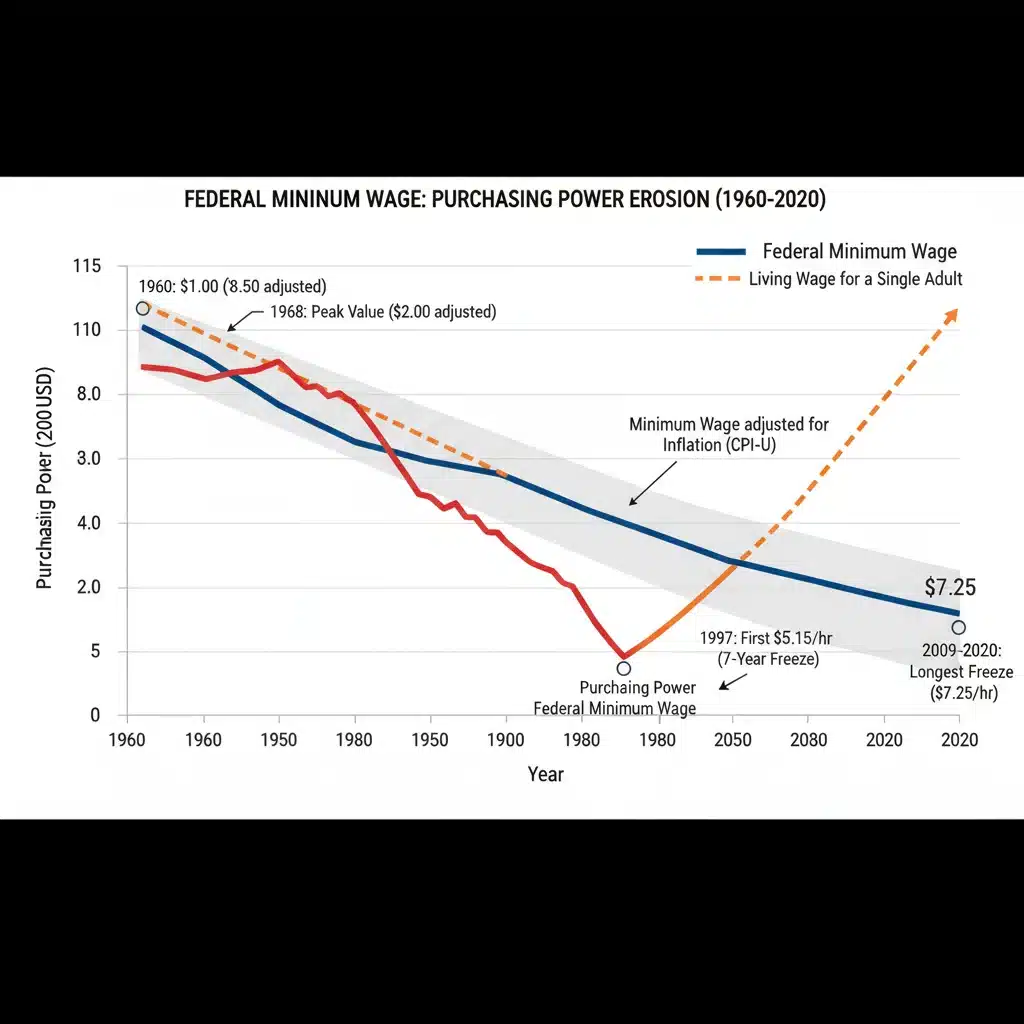
The peak purchasing power of the federal minimum wage was in 1968, when it reached $1.60 per hour, which, when adjusted for inflation, would be significantly higher than today’s $7.25. Since then, its real value has steadily eroded. This erosion is a central argument for those advocating for an increase, as they point out that a full-time worker earning the current minimum wage struggles to afford basic necessities in many parts of the country. This historical context provides a critical backdrop to the contemporary calls for a $15 federal minimum wage.
The stagnation of the federal minimum wage for over a decade has led to a significant gap between the lowest legal wage and the actual cost of living. This gap has exacerbated economic disparities and placed immense pressure on low-wage workers, many of whom are adults supporting families. The historical trend clearly illustrates a disconnect between wage growth for the lowest earners and the overall economic prosperity of the nation, prompting the current push for reform as a matter of economic justice and stability.
Current Proposals and Legislative Efforts for 2026
As we look towards 2026, several proposals are on the table to raise the federal minimum wage. The most prominent and widely discussed is the ‘Raise the Wage Act,’ which aims to gradually increase the minimum wage to $15 per hour over several years, eventually reaching that benchmark by 2025 or 2026. This act also includes provisions to eliminate the subminimum wage for tipped workers, youth workers, and workers with disabilities, ensuring that all workers are paid a fair, livable wage.
Supporters of these proposals argue that a phased-in approach allows businesses time to adjust to the new wage structure, mitigating potential negative impacts. The legislation often includes indexing future minimum wage increases to median wage growth, ensuring that the federal minimum wage keeps pace with economic changes and doesn’t fall behind again. These legislative efforts are often championed by progressive lawmakers, labor unions, and worker advocacy groups who see the increase as a crucial step towards economic equity.
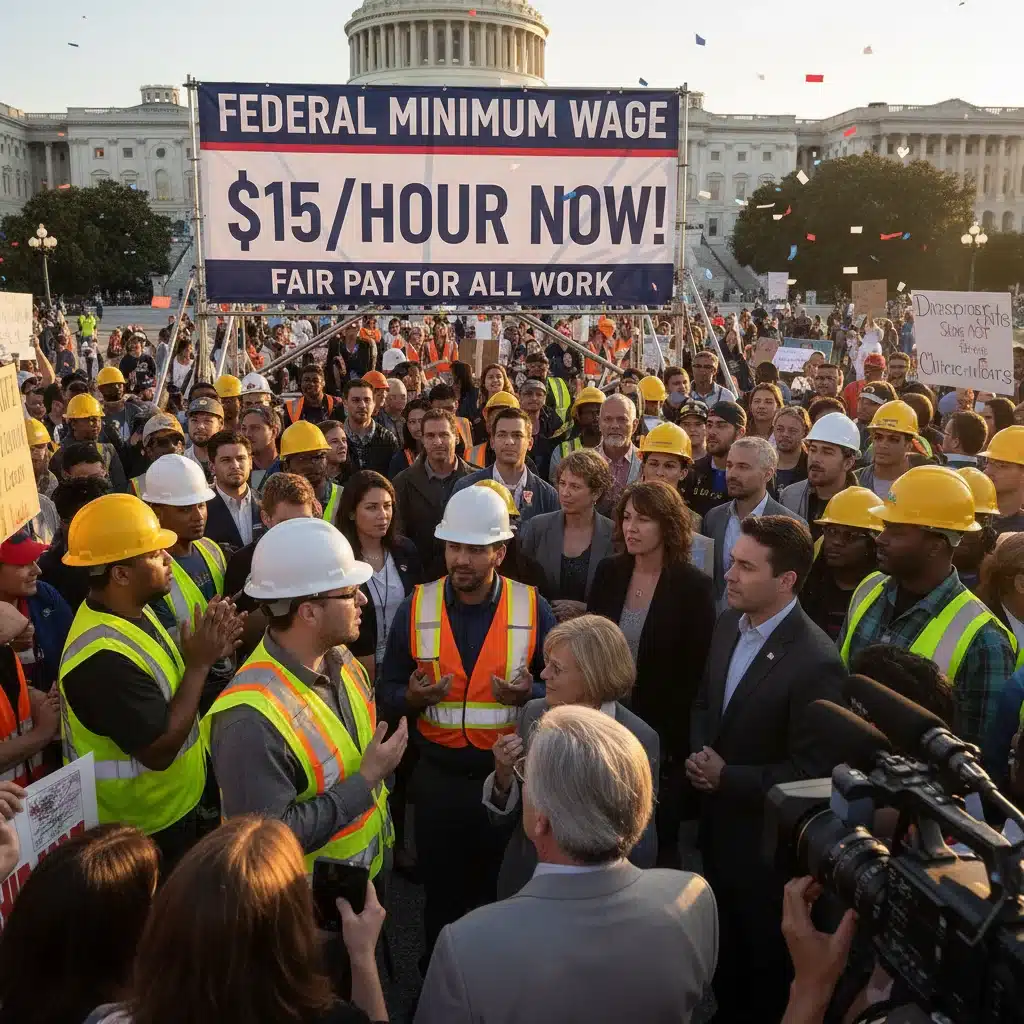
The political landscape surrounding these proposals is dynamic. While there is strong support from one side of the aisle, significant opposition exists, leading to intense debates and legislative stalemates. However, the growing public awareness and the increasing number of states and cities that have already adopted a $15 minimum wage locally are building momentum for a national change. The experiences of these local jurisdictions provide valuable data and case studies that inform the national debate on the federal minimum wage.
Economic Arguments For a $15 Federal Minimum Wage
Advocates for raising the federal minimum wage to $15 per hour present a compelling array of economic arguments. One of the primary benefits cited is poverty reduction. A higher minimum wage would directly increase the income of millions of low-wage workers, potentially lifting many individuals and families above the poverty line. This, in turn, could reduce reliance on public assistance programs, freeing up government resources.
Another key argument centers on economic stimulus. Proponents suggest that low-wage workers are more likely to spend any additional income, injecting money directly into the economy. This increased consumer spending can boost demand for goods and services, leading to greater economic activity and potentially creating jobs. Studies by various economic think tanks have suggested that such an increase could have a positive multiplier effect on local and national economies.
Furthermore, advocates argue that a higher federal minimum wage can improve worker morale, productivity, and reduce employee turnover. When workers are paid a living wage, they are often more motivated, less stressed, and more committed to their jobs. This can lead to decreased training costs for businesses and a more stable, experienced workforce. Some economists also point to reduced income inequality as a significant benefit, fostering a more equitable distribution of wealth and opportunities within society.
The argument extends to health and well-being. Financial stress is a major contributor to poor physical and mental health. By providing a more stable income, a $15 federal minimum wage could lead to improved health outcomes for low-wage workers, reducing healthcare costs in the long run and enhancing overall societal well-being. This multifaceted approach underscores the belief that a higher minimum wage is not just a matter of fairness but also sound economic policy.
Economic Arguments Against a $15 Federal Minimum Wage
Conversely, opponents of a $15 federal minimum wage raise significant concerns about its potential negative economic consequences. The most frequently cited argument is job losses. Businesses, particularly small businesses, might respond to increased labor costs by reducing their workforce, slowing hiring, or automating tasks previously performed by low-wage employees. This could lead to an overall decrease in employment opportunities, especially for entry-level workers and those with fewer skills.
Another major concern is inflation. Businesses facing higher labor costs might pass these costs on to consumers through higher prices for goods and services. This ‘wage-price spiral’ could erode the purchasing power of the increased wages, effectively negating the benefits for workers and potentially harming consumers across the board. The fear is that such an increase could trigger widespread inflationary pressures, impacting the overall stability of the economy.
Opponents also argue that a uniform federal minimum wage of $15 per hour does not account for regional economic differences. The cost of living varies dramatically across the United States. While $15 might be a livable wage in some rural areas, it could still be insufficient in high-cost urban centers, yet be an unsustainable burden for businesses in regions with lower costs of living and lower prevailing wages. This ‘one-size-fits-all’ approach, critics contend, could disproportionately harm businesses in less affluent areas.
Furthermore, there are concerns about reduced competitiveness for businesses. Companies operating on thin margins, particularly in industries like hospitality and retail, might struggle to absorb the increased labor costs. This could force some businesses to close, shift operations to other countries, or reduce their offerings, ultimately impacting local economies and consumer choice. The debate often highlights the delicate balance between supporting workers and ensuring business viability in a competitive market.
Impact on Small Businesses vs. Large Corporations
The potential impact of a $15 federal minimum wage is not uniform across all businesses. Small businesses, which often operate with tighter margins and fewer resources, are generally perceived to be more vulnerable to significant wage increases. They may find it harder to absorb higher labor costs compared to large corporations, which often have greater economies of scale and more flexibility to adjust prices or automate processes.
For small businesses, an increased federal minimum wage could mean difficult choices: cutting staff, reducing employee benefits, increasing prices, or even closing down. Many small business owners express concern that such a drastic increase would stifle their ability to grow, innovate, and compete. They often rely on entry-level positions to provide valuable training and experience, and a higher minimum wage could make these roles economically unfeasible.
In contrast, large corporations, particularly those that have already adopted higher minimum wages voluntarily, might be better positioned to adapt. Some large retailers and fast-food chains have already moved towards or exceeded a $15 hourly wage, often citing benefits in terms of employee retention and public image. For these companies, a national standard could even level the playing field by forcing competitors to match their wage structures.
However, even large corporations might face challenges, especially those with extensive networks of franchisees who operate as independent small businesses. The debate often centers on how to implement a wage increase in a way that supports workers without unduly burdening the backbone of the American economy – its small businesses. This distinction is crucial for policymakers attempting to craft legislation that achieves its social goals while minimizing economic disruption.
The State and Local Minimum Wage Landscape
While the debate over the federal minimum wage continues, many states and cities have not waited for national action. A significant number of jurisdictions across the U.S. have already enacted their own minimum wage laws that exceed the federal standard, with many moving towards or already at $15 per hour. These local initiatives serve as real-world laboratories, providing valuable data on the actual effects of higher minimum wages.
States like California, New York, and Massachusetts, along with numerous major cities such as Seattle, San Francisco, and Denver, have progressively raised their minimum wages. The experiences in these areas offer mixed results, depending on the specific economic conditions, industries present, and the pace of implementation. Some studies suggest minimal job losses and positive impacts on worker well-being and local economies, while others point to challenges for certain sectors or businesses.
The patchwork of state and local minimum wage laws creates a complex environment for businesses operating across different jurisdictions. A uniform federal minimum wage could simplify compliance for national companies, but it also raises questions about whether a single standard can effectively address the diverse economic realities of different regions. The lessons learned from these state and local experiments are critical for informing the national conversation and shaping future federal policy.
Understanding these varied outcomes is essential for a balanced perspective on the federal minimum wage debate. They highlight the importance of considering local economic conditions, industry-specific impacts, and the timing of implementation when discussing such a significant policy change. The data from these local initiatives will undoubtedly play a crucial role in the arguments for and against a national $15 minimum wage as we head into 2026.
The Role of Inflation and Cost of Living
A central tenet of the argument for increasing the federal minimum wage is its relationship with inflation and the cost of living. As mentioned, the current $7.25 per hour has not been adjusted for inflation since 2009, meaning its real purchasing power has significantly declined. Proponents argue that a $15 minimum wage is necessary simply to restore the buying power that minimum wage workers once had, allowing them to afford basic necessities like housing, food, and healthcare.
However, opponents counter that a rapid increase to $15 could itself fuel inflation, creating a cycle where wages increase, leading to higher prices, which then necessitates further wage increases. This concern is particularly relevant in periods of already high inflation. The challenge lies in determining a minimum wage level that adequately supports workers without triggering an inflationary spiral that undermines its own benefits.

The cost of living varies dramatically across different regions of the United States. What constitutes a ‘living wage’ in a rural town in the Midwest is vastly different from what is needed in New York City or San Francisco. This regional disparity is a key factor in the debate, with some arguing for a regionally adjusted minimum wage rather than a single national standard. However, implementing such a system presents its own complexities in terms of administration and fairness.
Ultimately, any decision regarding the federal minimum wage must carefully consider its interaction with inflation and the diverse costs of living across the nation. The goal is to find a balance that provides economic security for workers without unduly destabilizing the broader economy or creating unintended negative consequences for businesses and consumers. This ongoing economic analysis is a critical component of the 2026 debate.
Future Outlook and Policy Implications for 2026 and Beyond
As 2026 approaches, the likelihood of a significant increase in the federal minimum wage to $15 per hour remains a subject of intense speculation and political maneuvering. The outcome will depend on a confluence of factors, including the political composition of Congress, the priorities of the executive branch, and the ongoing economic conditions of the country. Public opinion also plays a crucial role, with polls often showing considerable support for a higher minimum wage, though the specific amount can vary.
If a $15 federal minimum wage is enacted, the policy implications would be profound. For workers, it could mean a substantial improvement in living standards, reduced financial stress, and greater economic mobility. For businesses, it would necessitate significant adjustments to compensation strategies, pricing models, and potentially operational efficiencies. The long-term effects on employment levels, inflation, and economic growth would be closely monitored and debated by economists and policymakers for years to come.
Beyond 2026, the discussion will likely shift to how the federal minimum wage is adjusted in the future. The proposals to index it to inflation or median wage growth are designed to prevent the kind of stagnation seen over the past decade. Such indexing would introduce greater predictability and stability, ensuring that the minimum wage remains a relevant and effective tool for supporting low-wage workers without requiring constant legislative intervention.
The debate over the federal minimum wage is more than just an economic calculation; it’s a reflection of societal values regarding fairness, equity, and the role of government in ensuring a basic standard of living. As we move closer to 2026, the discussions will continue to be robust, drawing on economic data, social impact studies, and deeply held beliefs about what constitutes a just and prosperous society. The decisions made in the coming years will undoubtedly shape the economic landscape for millions of Americans.
Conclusion
The push to raise the federal minimum wage to $15 per hour by 2026 is one of the most significant economic policy debates of our time. It encapsulates fundamental questions about economic justice, business viability, and the overall health of the American economy. While proponents highlight the potential for poverty reduction, increased consumer spending, and improved worker well-being, opponents raise legitimate concerns about job losses, inflation, and the disproportionate impact on small businesses and certain regions.
As legislative efforts continue and public discourse evolves, it is clear that any resolution will require careful consideration of diverse perspectives and a thorough analysis of potential outcomes. The experiences of states and localities that have already implemented higher minimum wages offer valuable insights, but the national scale of a federal change presents unique challenges. The ultimate decision on the federal minimum wage will not only redefine the economic landscape for millions of workers and businesses but also set a precedent for how the nation addresses wage policy in the decades to come.
Staying informed about the latest developments, economic studies, and political discussions surrounding the federal minimum wage is crucial for anyone interested in the future of work and the economy. The journey to 2026 promises to be an enlightening period of intense debate and potentially transformative policy changes.