US GDP Growth Forecast: Navigating the 2.5% Target for 2026 and Beyond
US GDP Growth Forecast: Navigating the 2.5% Target for 2026 and Beyond
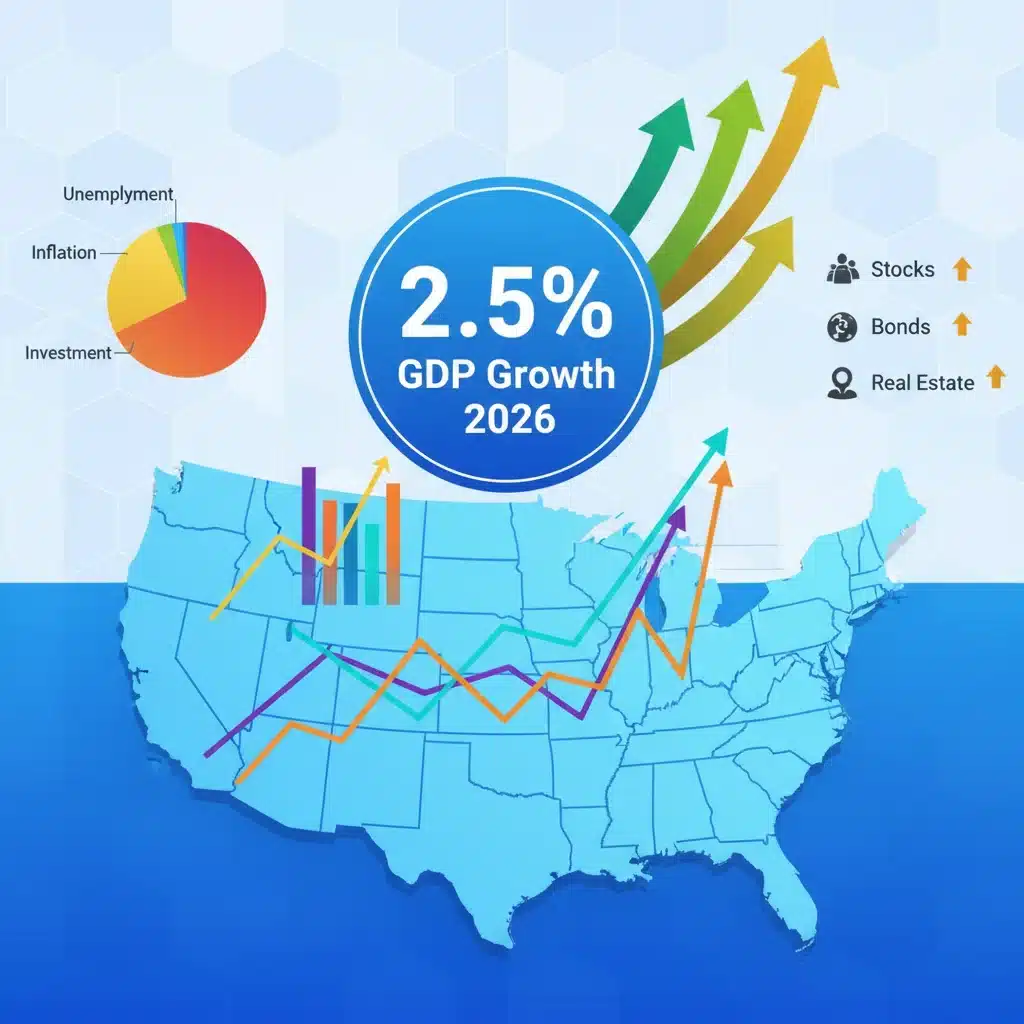
The United States economy, a colossal and intricate system, is constantly under the microscope of economists, policymakers, and investors worldwide. Understanding its trajectory is crucial for strategic planning across various sectors. Central to this understanding is the US GDP growth forecast, a key indicator of economic health and future potential. As we look towards 2026 and the years beyond, a significant benchmark has emerged: a projected 2.5% annual GDP growth. But what does this figure truly signify, and what are the underlying forces that will shape its realization?
This comprehensive article will delve deep into the intricacies of the US GDP growth forecast, dissecting the factors that contribute to this projection, the challenges that could impede it, and the opportunities that could accelerate it. We will explore the role of monetary and fiscal policies, the impact of technological innovation, the dynamics of global trade, and the ever-evolving labor market. Our aim is to provide a holistic view, enabling readers to better understand the potential economic landscape of the United States in the mid-2020s and beyond.
Understanding GDP: The Pulse of the Economy
Before we dissect the forecast, it’s essential to grasp what Gross Domestic Product (GDP) truly represents. GDP is the total monetary or market value of all the finished goods and services produced within a country’s borders in a specific time period. It serves as a comprehensive scorecard of a country’s economic health, reflecting its productivity and standard of living. A higher GDP growth rate generally indicates a thriving economy, characterized by increased employment, higher incomes, and greater consumer spending.
There are four main components of GDP:
- Consumption (C): This is the largest component, representing household spending on goods and services.
- Investment (I): Business spending on capital goods (like machinery and buildings), residential construction, and changes in inventories.
- Government Spending (G): Spending by federal, state, and local governments on goods and services (excluding transfer payments).
- Net Exports (NX): The value of a country’s total exports minus the value of its total imports.
The formula for GDP is often expressed as: GDP = C + I + G + NX. Each of these components plays a critical role in determining the overall US GDP growth forecast.
The 2.5% US GDP Growth Forecast for 2026: A Closer Look
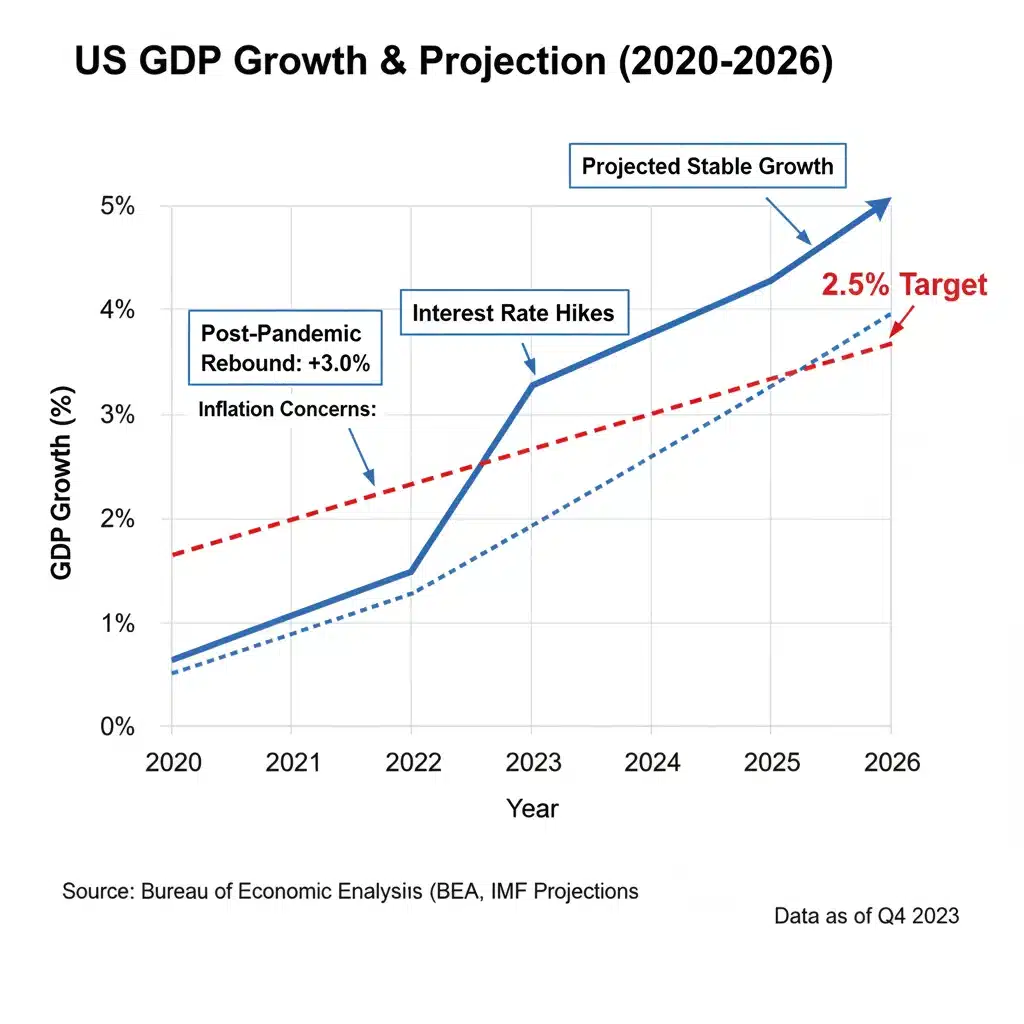
The projection of a 2.5% US GDP growth rate for 2026 is a consensus among many economic institutions and analysts, reflecting a belief in a sustained, albeit moderate, expansion. This figure suggests a return to a more stable growth pattern after periods of volatility, including the disruptions caused by the COVID-19 pandemic and subsequent inflationary pressures. A 2.5% growth rate is often considered healthy for a developed economy like the United States, indicating steady progress without overheating.
Several underlying assumptions underpin this forecast:
- Stabilization of Inflation: A key assumption is that inflation will continue to moderate, allowing the Federal Reserve to potentially ease monetary policy or at least maintain a stable interest rate environment.
- Resilient Consumer Spending: Continued strength in consumer spending, supported by a robust labor market and potentially rising real wages, is vital.
- Business Investment: An increase in business investment, driven by technological advancements and favorable regulatory environments, is expected to boost productivity.
- Global Economic Stability: A relatively stable global economic environment, with fewer major geopolitical disruptions, is also factored into the projection.
Understanding these assumptions is crucial for evaluating the robustness of the US GDP growth forecast. Any significant deviation from these assumptions could alter the economic trajectory.
Key Drivers of the US GDP Growth Forecast
Monetary Policy and the Federal Reserve
The Federal Reserve’s role in influencing the US economy cannot be overstated. Its decisions on interest rates, quantitative easing, and other monetary tools directly impact borrowing costs, investment, and consumer spending. For the 2.5% US GDP growth forecast to materialize, the Fed will likely need to navigate a delicate balance: taming inflation without stifling economic activity. A pivot towards more accommodative policies, or even a sustained period of stable rates, could provide the necessary tailwinds for growth.
- Interest Rates: Lower interest rates reduce the cost of borrowing for businesses and consumers, stimulating investment and consumption. Conversely, higher rates can curb inflation but slow growth.
- Inflation Management: Successful management of inflation, bringing it closer to the Fed’s target of 2%, is paramount. Persistent high inflation erodes purchasing power and creates economic uncertainty.
- Forward Guidance: The Fed’s communication about its future policy intentions can significantly influence market expectations and economic behavior.
Fiscal Policy and Government Spending
Government spending and taxation policies, collectively known as fiscal policy, also play a significant role. Infrastructure projects, investments in green energy, and social programs can inject demand into the economy, creating jobs and stimulating growth. However, excessive government debt or inefficient spending can also pose risks.
- Infrastructure Investment: Large-scale infrastructure projects can boost economic activity, create jobs, and improve long-term productivity.
- Taxation Policies: Tax cuts for businesses and individuals can stimulate investment and consumption, while tax increases can have the opposite effect.
- Budget Deficits and Debt: The long-term sustainability of government spending and the national debt are critical considerations that can influence investor confidence and future growth potential.
Technological Innovation and Productivity
Technological advancements are often the unsung heroes of sustained economic growth. Innovations in artificial intelligence, biotechnology, renewable energy, and automation can lead to significant productivity gains, creating new industries, increasing efficiency, and improving the quality of goods and services. These advancements are crucial for achieving and sustaining the 2.5% US GDP growth forecast.
- AI and Automation: The increasing integration of AI and automation across industries can boost efficiency and output, though it also raises questions about labor market adjustments.
- Green Technologies: Investments in renewable energy and sustainable technologies not only address climate change but also create new economic opportunities and industries.
- Research and Development (R&D): Continued investment in R&D is vital for fostering innovation and maintaining the US’s competitive edge.
Labor Market Dynamics
A healthy labor market is fundamental to robust economic growth. Low unemployment, rising wages, and increasing labor force participation contribute to strong consumer spending and overall economic vitality. The availability of skilled labor and the ability of the workforce to adapt to new technologies are critical factors.
- Unemployment Rate: A low and stable unemployment rate ensures that more people are earning and spending, contributing to consumption.
- Wage Growth: Sustainable wage growth, outpacing inflation, boosts household incomes and supports consumer demand.
- Labor Force Participation: An increasing labor force participation rate signals a growing pool of workers, which is essential for long-term economic expansion.
- Skills Gap: Addressing the skills gap through education and training programs is crucial to ensure that the workforce meets the demands of evolving industries.
Global Economic Environment and Trade
The US economy does not operate in a vacuum. Global economic conditions, geopolitical events, and international trade policies significantly influence its trajectory. A stable global environment, open trade routes, and strong demand from international partners can bolster US exports and stimulate domestic production, directly impacting the US GDP growth forecast.
- Global Demand: Strong economic growth in other major economies increases demand for US exports, boosting domestic production and employment.
- Supply Chains: Resilient and efficient global supply chains are crucial for businesses to operate smoothly, manage costs and meet consumer demand.
- Trade Policies: Favorable trade agreements and a reduction in trade barriers can enhance international trade and investment.
- Geopolitical Stability: Geopolitical tensions and conflicts can disrupt trade, create uncertainty, and negatively impact economic confidence.
Challenges and Risks to the 2.5% US GDP Growth Forecast
While the 2.5% US GDP growth forecast is a plausible scenario, it is not without its challenges and risks. Acknowledging these potential headwinds is essential for a balanced perspective.
Persistent Inflactionary Pressures
One of the most significant risks is the resurgence or persistence of high inflation. If inflationary pressures remain elevated, the Federal Reserve might be compelled to maintain a tighter monetary policy for longer, potentially slowing economic growth more than anticipated. Supply chain disruptions, wage-price spirals, or unexpected spikes in commodity prices could all contribute to this risk.
Geopolitical Instability
Global geopolitical events, such as ongoing conflicts, trade wars, or political instability in key regions, can have far-reaching economic consequences. These events can disrupt supply chains, increase energy costs, reduce international trade, and dampen investor confidence, thereby impacting the US GDP growth forecast.
Rising Interest Rates and Debt Burden
While interest rates may stabilize, a continued upward trend could increase the cost of borrowing for both the government and private sector. This could lead to a higher national debt burden, potentially crowding out private investment and limiting fiscal flexibility. For businesses, higher borrowing costs can deter expansion and innovation.
Labor Shortages and Skills Mismatches
Despite a strong labor market, persistent labor shortages in critical sectors or a mismatch between available skills and industry demands could constrain growth. This can lead to increased wage pressures without corresponding productivity gains, or simply limit the capacity for businesses to expand.
Financial Market Volatility
Sudden and severe volatility in financial markets, perhaps triggered by unexpected economic data, geopolitical events, or a loss of confidence, could impact investment and consumer sentiment. A significant market downturn could lead to a ‘wealth effect’ where consumers feel poorer and reduce spending.
Climate Change and Natural Disasters
The increasing frequency and intensity of extreme weather events and natural disasters pose both immediate and long-term economic challenges. These events can disrupt economic activity, damage infrastructure, and necessitate costly recovery efforts, diverting resources that could otherwise contribute to growth.
Opportunities for Accelerated Growth Beyond 2.5%
While 2.5% is a strong forecast, there are also opportunities that could potentially accelerate the US GDP growth forecast beyond this benchmark.
Breakthrough Technological Advancements
Unforeseen breakthroughs in areas like quantum computing, advanced materials, or personalized medicine could unlock entirely new industries and dramatically boost productivity across the economy. Rapid adoption of existing cutting-edge technologies could also yield significant benefits.
Robust Productivity Gains
Sustained and widespread productivity gains, driven by technological adoption, improved management practices, and a highly skilled workforce, could allow the economy to grow faster without generating inflationary pressures. This would be a significant positive for the long-term US GDP growth forecast.

Stronger-than-Expected Global Recovery
If major global economies experience a stronger and more synchronized recovery than currently anticipated, it could significantly boost demand for US exports and attract more foreign investment, providing an external impetus to US growth.
Effective Policy Coordination
Harmonious and effective coordination between monetary and fiscal policies could create a powerful synergy, optimizing conditions for sustained economic expansion. This includes targeted investments, responsible fiscal management, and clear monetary guidance.
Demographic Shifts and Immigration
While often seen as a challenge, strategic immigration policies that attract skilled workers could mitigate labor shortages and contribute to a growing, productive workforce, boosting potential GDP growth.
Implications of the US GDP Growth Forecast for Various Sectors
A 2.5% US GDP growth forecast has distinct implications across different sectors of the economy:
Technology Sector
The technology sector is likely to remain a primary driver of growth, benefiting from continued investment in R&D and widespread adoption of new technologies. Companies involved in AI, cloud computing, cybersecurity, and renewable energy are particularly well-positioned.
Manufacturing and Industrials
Reshoring initiatives, coupled with investments in automation and advanced manufacturing techniques, could revitalize the manufacturing sector. A stable growth environment would encourage capital expenditure and expansion.
Consumer Discretionary and Retail
A healthy 2.5% growth rate, supported by a strong labor market and stable wages, would translate into robust consumer spending, benefiting retail, hospitality, and other consumer discretionary sectors. However, shifts in consumer preferences towards experiences and sustainable products will also play a role.
Financial Services
The financial services sector would likely benefit from increased business activity, investment, and lending. However, it would also need to navigate potential regulatory changes and evolving interest rate environments.
Healthcare
Demand for healthcare services is expected to remain strong, driven by demographic trends and ongoing innovation in medical technology. Investment in biotechnology and pharmaceuticals would likely continue to be a significant growth area.
Conclusion: A Balanced Outlook for the US Economy
The 2.5% US GDP growth forecast for 2026 and beyond represents a cautiously optimistic outlook for the American economy. It suggests a period of stable expansion, underpinned by resilient consumer spending, strategic investments, and ongoing technological innovation. While significant challenges remain, including managing inflation and navigating geopolitical complexities, the underlying strengths of the US economy provide a solid foundation for continued progress.
Achieving this forecast will require a delicate balance of prudent monetary policy, targeted fiscal initiatives, and a commitment to fostering innovation and human capital development. For businesses, investors, and individuals, understanding these dynamics is crucial for making informed decisions and preparing for the economic landscape of the mid-2020s. The journey towards 2.5% growth is not a straight line, but with strategic foresight and adaptive policies, the US economy is well-positioned to meet this target and continue its trajectory of growth and prosperity.