Global Supply Chain Resilience in 2026: How US Policies Are Mitigating Future Disruptions
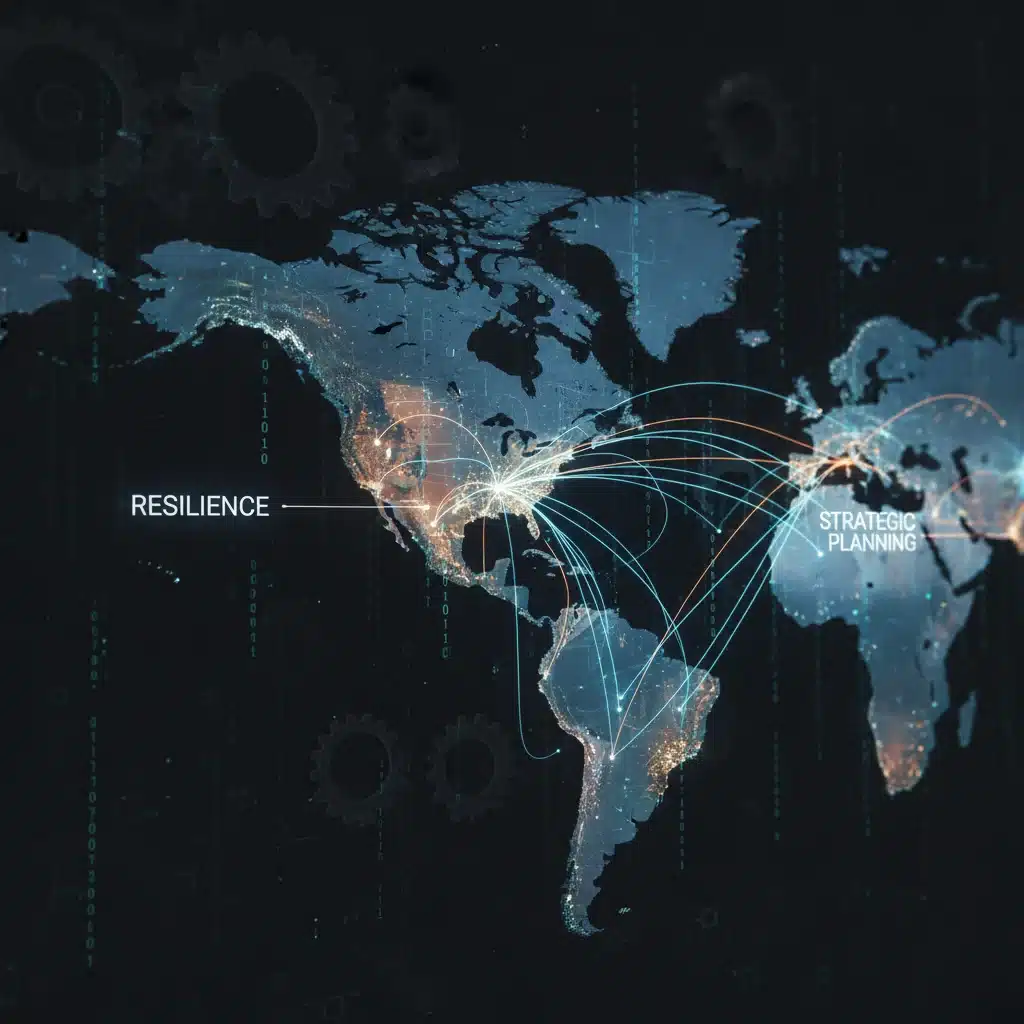
The global economy has experienced unprecedented shocks over the past few years, highlighting the critical vulnerabilities within our interconnected supply chains. From pandemics to geopolitical tensions and climate-related disasters, these disruptions have underscored the urgent need for enhanced supply chain resilience. As we look towards 2026, the United States has taken a proactive stance, implementing a series of strategic policies designed to strengthen global supply chains, mitigate future disruptions, and ensure economic stability. This comprehensive article delves into the specific measures being undertaken, their anticipated impact, and the evolving landscape of global trade.
The Imperative for Enhanced Supply Chain Resilience
Before diving into the specifics of US policy, it’s crucial to understand why supply chain resilience has become a paramount concern. The ‘just-in-time’ inventory management model, while efficient in stable times, proved fragile when faced with unforeseen events. Factories shut down, ports became backlogged, and essential goods vanished from shelves, causing widespread economic and social upheaval. This fragility prompted a global re-evaluation of supply chain strategies, moving towards a more robust, ‘just-in-case’ approach that prioritizes adaptability and redundancy.
The US government, recognizing the long-term implications of these vulnerabilities, has identified supply chain security as a national economic and security priority. The goal is not merely to react to crises but to build intrinsic resilience that can withstand future shocks. This involves a multi-faceted approach, encompassing everything from domestic manufacturing incentives to international diplomatic efforts. The year 2026 serves as a significant milestone, representing a period where many of these foundational policies are expected to show tangible results, transforming the global landscape of trade and production.
Key Pillars of US Policy for Supply Chain Resilience
The US strategy for fostering supply chain resilience is built upon several interconnected pillars. Each pillar addresses a specific aspect of vulnerability, aiming to create a more diversified, transparent, and secure global network. Understanding these pillars is essential to grasping the full scope of the US commitment.
1. Domestic Manufacturing and Reshoring Initiatives
A significant component of the US strategy involves bolstering domestic manufacturing capabilities. The logic is straightforward: by producing critical goods within national borders, the US reduces its reliance on potentially volatile foreign supply sources. This not only strengthens national security but also creates jobs and stimulates local economies. Policies such as the CHIPS and Science Act are prime examples, providing substantial funding and incentives for semiconductor manufacturing within the US. This act, signed into law in 2022, aims to reverse decades of offshoring in a critical industry, promising to enhance supply chain resilience for vital technological components by 2026 and beyond.
Beyond semiconductors, there are broader efforts to encourage reshoring across various sectors, including pharmaceuticals, medical supplies, and renewable energy components. Tax incentives, subsidies, and streamlined regulatory processes are being deployed to make domestic production more attractive. The long-term vision is to create a more balanced global manufacturing footprint, where the US plays a larger role in producing goods essential for its economic and national security.
2. Friend-Shoring and Allied Partnerships
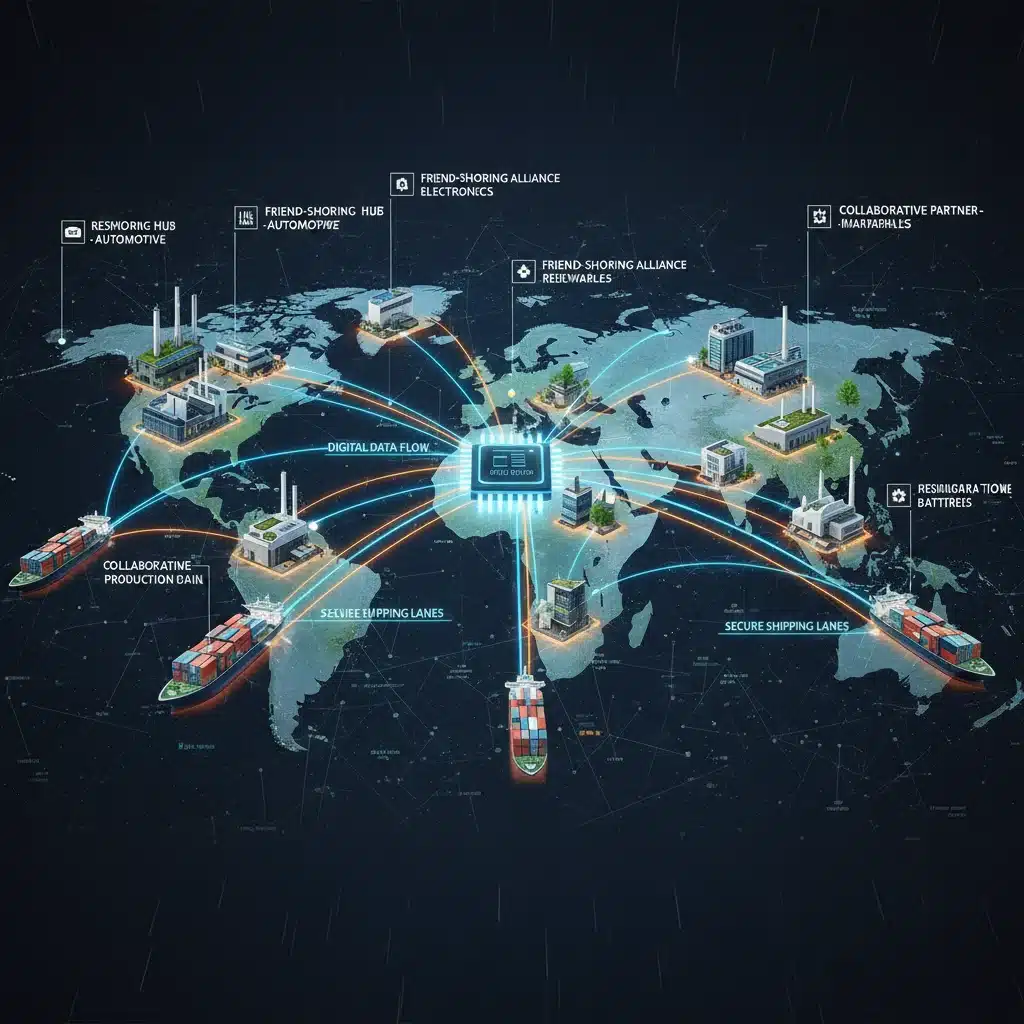
While reshoring focuses on domestic production, ‘friend-shoring’ is a complementary strategy that emphasizes sourcing goods and materials from trusted geopolitical allies. This approach aims to reduce dependence on adversarial nations or regions prone to instability, thereby enhancing overall supply chain resilience. The US is actively working with partners in Europe, Asia, and North America to build diversified supply networks that are less susceptible to disruption.
This involves deepening trade agreements, coordinating on critical material sourcing, and investing in joint manufacturing capabilities. For instance, discussions around critical mineral supply chains with allies like Australia and Canada are designed to ensure a stable flow of materials essential for electric vehicles, renewable energy, and defense technologies. By 2026, these efforts are expected to result in a more robust and politically aligned global supply network, significantly bolstering the collective supply chain resilience of democratic nations.
3. Supply Chain Mapping and Transparency
One of the biggest challenges in managing supply chain disruptions has been the lack of visibility into lower-tier suppliers. Many companies are unaware of the origins of all their components, making them vulnerable to unexpected shocks. The US government is promoting greater supply chain mapping and transparency through various initiatives. This includes advocating for industry best practices, developing data-sharing platforms, and potentially implementing regulatory requirements for critical sectors.
The goal is to create a comprehensive understanding of where goods and components originate, identifying potential single points of failure and enabling businesses to proactively diversify their supplier base. By leveraging advanced analytics and artificial intelligence, companies can gain real-time insights into their supply networks, allowing for quicker responses to emerging threats. This increased transparency is a cornerstone of building enduring supply chain resilience.

4. Investment in Infrastructure and Logistics
Efficient logistics and robust infrastructure are fundamental to a resilient supply chain. The US is making significant investments in improving its ports, roads, railways, and digital infrastructure. The Bipartisan Infrastructure Law, passed in 2021, allocates billions of dollars to upgrade transportation networks, reduce bottlenecks, and enhance the efficiency of goods movement. These investments are crucial for ensuring that even if goods are produced domestically or sourced from allies, they can reach their destination without undue delay.
Furthermore, there’s a focus on modernizing port operations through automation and digital technologies to increase throughput and reduce dwell times. Investments in broadband internet infrastructure, especially in rural areas, also play a role by facilitating better communication and data exchange across the supply chain. By 2026, these infrastructure upgrades are expected to significantly improve the speed and reliability of US supply chains, contributing directly to their overall supply chain resilience.
5. Strategic Stockpiling and Reserves
For certain critical goods, such as medical supplies, rare earth minerals, and defense components, strategic stockpiling remains a vital component of supply chain resilience. The US government is reviewing and expanding its strategic reserves to ensure adequate supplies during emergencies. This involves not only increasing the quantity of stored goods but also diversifying storage locations and regularly rotating stock to maintain viability.
This policy acts as a buffer against sudden supply shocks, providing the nation with time to adjust and re-establish normal supply flows. While stockpiling can be costly, the economic and social costs of not having critical supplies during a crisis far outweigh the investment. The focus by 2026 is on a more dynamic and responsive strategic reserve system, capable of adapting to evolving threats and technological advancements.
6. Workforce Development and Skilled Labor
A resilient supply chain also requires a skilled workforce. The US is investing in education and training programs to develop the talent needed for advanced manufacturing, logistics, and supply chain management. This includes vocational training, community college programs, and partnerships between industry and academia to ensure a steady pipeline of skilled workers. The shortage of truck drivers, port workers, and manufacturing technicians has been a significant bottleneck in recent years.
Policies are being implemented to address these gaps, making careers in these sectors more attractive and accessible. By strengthening its human capital, the US aims to build a more adaptable and robust industrial base, directly supporting long-term supply chain resilience. The goal is to have a workforce ready for the challenges and opportunities presented by a rapidly evolving global economy.
Anticipated Impact and Future Outlook by 2026
The cumulative effect of these US policies is expected to significantly reshape global supply chains by 2026. We anticipate several key outcomes:
Increased Diversification and Redundancy
One of the primary goals is to move away from over-reliance on single suppliers or regions. By 2026, companies are expected to have more diversified supplier portfolios, incorporating both domestic and friend-shored sources. This redundancy will provide multiple pathways for critical goods, making supply chains inherently more resilient to localized disruptions. The ‘eggs in one basket’ approach will largely be replaced by a more distributed and robust network.
Greater Transparency and Data-Driven Decision Making
Enhanced supply chain mapping and the adoption of advanced analytics will lead to greater transparency across the entire network. Businesses will have a clearer picture of their supply chain vulnerabilities and will be better equipped to make data-driven decisions to mitigate risks. This proactive approach will be a hallmark of supply chain resilience in 2026, enabling faster identification and resolution of potential issues before they escalate into full-blown crises.
Stronger Geopolitical Alignment in Trade
The emphasis on friend-shoring will naturally lead to stronger trade relationships with allied nations. This geopolitical alignment will create more stable and predictable trade environments, reducing the risk of politically motivated supply disruptions. While not entirely eliminating trade with non-allies, the strategic shift will prioritize security and reliability, fostering a more collaborative global economic framework among like-minded countries.
Economic Opportunities and Innovation
The investments in domestic manufacturing, infrastructure, and workforce development are expected to generate significant economic opportunities within the US. New factories, upgraded ports, and a skilled labor force will drive innovation and create jobs. This renewed focus on industrial capacity will not only enhance supply chain resilience but also contribute to long-term economic growth and technological advancement.
Challenges and Considerations
While the US policies are ambitious and well-intentioned, their implementation is not without challenges. The transition to more resilient supply chains requires significant investment, takes time, and can face resistance from companies accustomed to lower-cost, globalized production models. Balancing the desire for resilience with the need for cost-effectiveness will be an ongoing challenge.
Furthermore, international cooperation is essential. While friend-shoring aims to strengthen ties with allies, there’s a risk of alienating other trading partners or creating new geopolitical tensions. The US must navigate these complex international relations carefully to ensure that its pursuit of supply chain resilience contributes to overall global stability rather than fragmentation.
Another consideration is the pace of technological change. Supply chains are constantly evolving, with new technologies like AI, blockchain, and advanced robotics offering both opportunities and new vulnerabilities. Policies must remain agile and adaptable to incorporate these advancements and address emerging threats effectively. The ability to innovate and integrate new solutions will be critical for sustained supply chain resilience beyond 2026.
The Role of the Private Sector
Government policies lay the groundwork, but the private sector is ultimately responsible for executing the shift towards greater supply chain resilience. Companies are increasingly investing in their own strategies, including:
- Multi-sourcing: Actively seeking out multiple suppliers for critical components.
- Inventory optimization: Balancing just-in-time efficiency with strategic stockpiling of key items.
- Digital transformation: Implementing advanced software for real-time tracking, forecasting, and risk management.
- Regionalization: Shifting production closer to end markets to reduce lead times and transportation risks.
- Sustainability: Integrating environmental, social, and governance (ESG) factors into supply chain design, recognizing that sustainable practices often lead to greater long-term resilience.
The collaboration between government and industry is paramount. Public-private partnerships are facilitating information sharing, joint research and development, and the alignment of incentives to achieve common goals of enhanced supply chain resilience. This synergistic approach ensures that both regulatory frameworks and market forces are driving towards the same objective.
Conclusion: A Resilient Future by 2026 and Beyond
The journey towards robust global supply chain resilience is a continuous one, but the US policies enacted in recent years mark a significant turning point. By 2026, the cumulative impact of domestic manufacturing incentives, friend-shoring initiatives, increased transparency, infrastructure investments, and strategic stockpiling is expected to yield a much more secure and adaptable global trade environment. These measures are not merely reactive; they represent a fundamental paradigm shift in how nations approach economic security and international cooperation.
The lessons learned from past disruptions are being actively translated into actionable strategies, forging a path towards a future where supply chains are better equipped to withstand unforeseen challenges. While challenges remain, the proactive and multi-faceted approach taken by the US government, in conjunction with private sector innovation, is setting a strong foundation for sustained supply chain resilience, ensuring that the global economy is better prepared for whatever the future may hold.
The goal is to move beyond simply recovering from disruptions to preventing them where possible and minimizing their impact when they do occur. This strategic foresight will not only benefit the US but also contribute to a more stable and predictable global economy for all. The focus on 2026 as a benchmark for significant progress underscores the urgency and commitment behind these transformative policies.