Economic Sanctions 2026: A U.S. Perspective on Key Policy Updates
Anúncios
Anúncios
Economic Sanctions in 2026: A U.S. Perspective on 2 Key International Policy Updates
As the geopolitical landscape continues its rapid evolution, the role of U.S. economic sanctions as a primary foreign policy tool remains more critical than ever. Looking ahead to 2026, the United States is poised to refine and potentially expand its use of these powerful measures, driven by persistent global challenges and emerging strategic imperatives. This comprehensive analysis will delve into the anticipated shifts in U.S. sanctions policy, focusing on two pivotal international policy updates that are expected to shape the enforcement and impact of these financial restrictions. Understanding these dynamics is crucial for governments, corporations, and international organizations navigating the complexities of global trade and diplomacy.
The efficacy and legitimacy of U.S. economic sanctions have been subjects of ongoing debate, yet their utility in compelling behavioral change, deterring aggression, and countering illicit activities is undeniable. From countering terrorism and nuclear proliferation to addressing human rights abuses and cyber threats, sanctions offer a flexible, non-military option to exert influence. However, their application is not without consequences, often leading to humanitarian concerns, economic disruptions in target nations, and potential blowback on U.S. economic interests. As we approach 2026, the Biden administration, or its successor, will likely continue to balance these competing factors, striving for sanctions regimes that are both impactful and precisely targeted.
The Evolving Landscape of U.S. Economic Sanctions
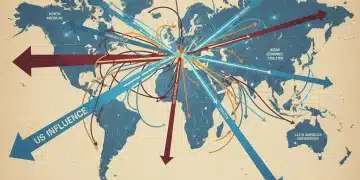
The past decade has witnessed a significant increase in the frequency and complexity of U.S. economic sanctions. This trend is expected to continue into 2026, with a particular emphasis on multilateral cooperation and the leveraging of technological advancements in sanctions enforcement. The U.S. Treasury Department’s Office of Foreign Assets Control (OFAC) remains at the forefront of this effort, continuously updating its guidance and expanding its list of sanctioned entities. The strategic use of secondary sanctions, which target non-U.S. persons engaged in transactions with sanctioned entities, has proven to be a particularly potent tool, extending the reach of U.S. jurisdiction globally.
Anúncios
One of the foundational shifts anticipated in 2026 is a greater integration of sanctions policy with broader strategic objectives, moving beyond purely punitive measures to include more preventative and deterrent elements. This involves a more proactive approach to identifying potential threats and imposing sanctions before crises escalate, rather than merely reacting to them. Such a shift would necessitate enhanced intelligence gathering and analysis, as well as closer coordination with international partners to ensure collective impact and reduce avenues for evasion. The goal is to make the cost of non-compliance prohibitively high, thereby fostering greater adherence to international norms and U.S. foreign policy objectives.
Key Policy Update 1: Enhanced Focus on Cyber-Enabled Sanctions and Digital Assets
The first significant international policy update influencing U.S. economic sanctions in 2026 is the dramatically enhanced focus on cyber-enabled sanctions and the regulation of digital assets. The proliferation of cryptocurrencies and other digital financial instruments has presented both challenges and opportunities for sanctions enforcement. While these technologies offer anonymity and speed, making them attractive for illicit financing, they also provide a transparent, immutable ledger that, with the right tools and regulations, can aid in tracing transactions.
In 2026, we anticipate a more formalized and robust framework from the U.S. government regarding the use of sanctions to counter malicious cyber activities. This will likely involve closer collaboration with allied nations to develop shared standards for identifying and sanctioning state-sponsored or state-affiliated cyber actors responsible for attacks on critical infrastructure, intellectual property theft, or election interference. The policy update will likely include specific criteria for designating entities involved in the development, facilitation, or use of cyber tools for malign purposes, expanding beyond traditional financial institutions to include technology companies and cryptocurrency exchanges.
Furthermore, the regulation and sanctioning of digital assets will become a cornerstone of this updated policy. OFAC has already issued guidance on virtual currency sanctions compliance, but 2026 is expected to bring more prescriptive rules and potentially new legislative mandates. This could include requirements for virtual asset service providers (VASPs) to implement stricter Know Your Customer (KYC) and Anti-Money Laundering (AML) protocols, as well as direct sanctions on digital wallets or addresses associated with sanctioned individuals or entities. The goal is to close loopholes that allow sanctioned actors to bypass traditional financial systems, thus strengthening the overall effectiveness of U.S. economic sanctions.
The implications of this policy shift are profound. Financial institutions, fintech companies, and cryptocurrency platforms will face increased compliance burdens and scrutiny. Companies operating in the digital asset space will need to invest heavily in sanctions screening technologies and expertise to avoid inadvertently facilitating sanctioned transactions. The international community will also be pressed to harmonize their regulatory approaches to digital assets, as a fragmented global framework would undermine the effectiveness of U.S. efforts. This focus underscores a recognition that the battle against illicit finance is increasingly fought in the digital realm.

Key Policy Update 2: Refined Multilateral Sanctions Regimes and Alliance-Building
The second crucial international policy update for U.S. economic sanctions in 2026 centers on a refined approach to multilateral sanctions regimes and intensified alliance-building. The U.S. has long understood that sanctions are most effective when implemented in concert with key allies, amplifying their economic pressure and lending greater international legitimacy. However, past efforts have sometimes been hampered by divergent national interests or differing interpretations of international law.
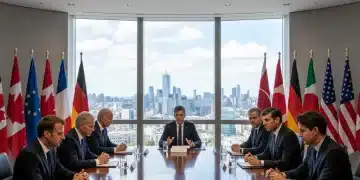
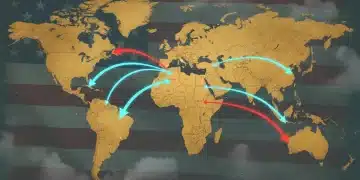
In 2026, the U.S. is expected to prioritize the development of more robust and agile multilateral sanctions frameworks, particularly with partners in Europe, Asia, and the Indo-Pacific. This policy update will likely involve efforts to standardize sanctions criteria, improve information sharing mechanisms, and coordinate enforcement actions more closely. The objective is not merely to impose sanctions jointly, but to create a unified front that presents fewer opportunities for evasion and demonstrates a cohesive international stance against destabilizing behaviors.
A significant aspect of this refined approach will be the strategic use of ‘mini-lateral’ groupings or coalitions of the willing, allowing for more flexible and rapid responses to emerging threats. While broad-based international consensus can be slow to achieve, smaller groups of like-minded nations can act more decisively. This doesn’t negate the importance of broader UN-backed sanctions, but rather complements them by providing additional avenues for pressure when Security Council action is stalled. The focus will be on building consensus around specific, egregious actions, such as severe human rights violations or aggressive territorial expansion, rather than attempting to enforce universal compliance on every issue.
The emphasis on alliance-building will also extend to capacity building in partner nations. The U.S. will likely invest more in assisting allies to develop their own sanctions implementation and enforcement capabilities, including providing technical assistance, training, and intelligence sharing. This not only strengthens the global sanctions architecture but also fosters greater interdependence and shared responsibility in maintaining international security. The long-term vision is a global network of nations capable of imposing and enforcing effective sanctions, thereby increasing the collective leverage against rogue actors.
Impact and Implications of These Policy Updates
The two key policy updates – enhanced focus on cyber-enabled sanctions and digital assets, and refined multilateral sanctions regimes – will have far-reaching impacts across various sectors and geographies. For businesses, particularly those with international operations, compliance will become even more complex and critical. The expanded scope of sanctions into the digital realm means that traditional compliance programs may no longer be sufficient. Companies will need to develop sophisticated strategies to identify and mitigate risks associated with digital assets and cyber transactions, investing in new technologies and expertise.
For financial institutions, the compliance burden will intensify. They will need to navigate not only traditional sanctions lists but also the complexities of cryptocurrency transactions, blockchain analysis, and the potential for cyber-related designations. This will necessitate significant investment in AI-driven compliance tools and highly skilled personnel capable of understanding both financial regulations and emerging technologies. The risk of hefty fines and reputational damage for non-compliance will remain a powerful deterrent, pushing institutions to prioritize robust sanctions screening and monitoring.
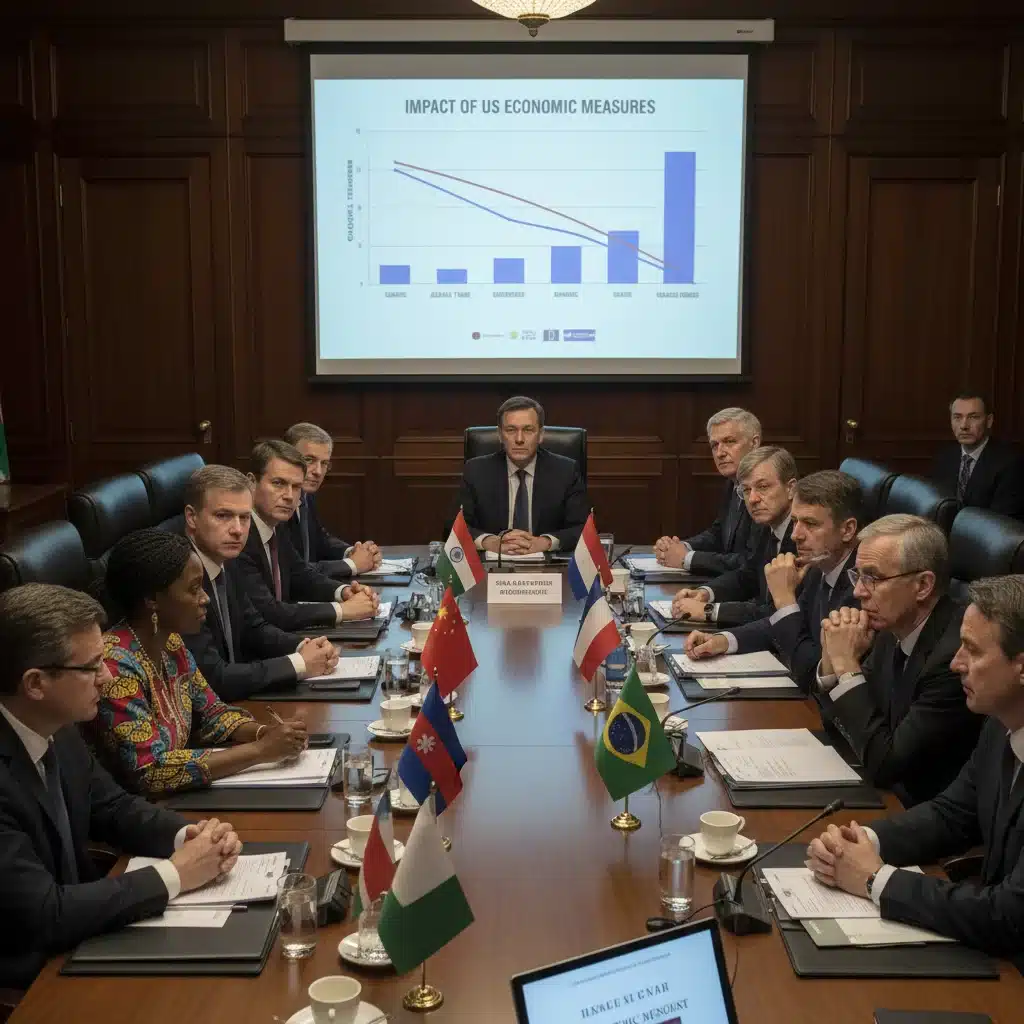
Geopolitically, these policy updates signal a continued commitment by the U.S. to use its economic leverage to shape international behavior. The focus on multilateralism suggests a desire to share the burden and enhance the legitimacy of sanctions, potentially reducing accusations of unilateralism. However, it also means that nations not fully aligned with U.S. policy may find themselves increasingly isolated or compelled to choose sides in complex geopolitical disputes. The emphasis on alliance-building could further solidify existing blocs while potentially exacerbating tensions with countries that are frequently targets of U.S. economic sanctions.
From a humanitarian perspective, the precision of these sanctions will be paramount. While the U.S. aims for targeted measures, the interconnectedness of the global economy means that even precise sanctions can have unintended consequences on civilian populations. The international community will continue to monitor the humanitarian impact and advocate for mechanisms to mitigate adverse effects, such as general licenses for humanitarian aid. The challenge for policymakers will be to maintain the punitive impact on sanctioned regimes while minimizing harm to innocent civilians.
Challenges and Opportunities for 2026
Despite the strategic refinement of U.S. economic sanctions, several challenges lie ahead for 2026. One major hurdle is the potential for sanctions evasion through sophisticated financial engineering, the use of non-traditional payment systems, or the development of alternative trade networks by sanctioned entities. The cat-and-mouse game between sanctions enforcers and evaders is ongoing, and the policy updates must anticipate and counteract these evolving tactics.
Another challenge is maintaining international consensus and cooperation. While the U.S. aims for refined multilateral regimes, geopolitical rivalries and differing national interests can easily derail collaborative efforts. Nations with significant economic ties to sanctioned states may be reluctant to fully commit to stringent sanctions, leading to fissures in the international front. The U.S. will need to engage in continuous diplomatic efforts, offering incentives and addressing concerns to maintain a broad coalition.
The rise of great power competition also presents a significant challenge. As major powers like China and Russia seek to establish alternative financial systems and challenge the dominance of the U.S. dollar, the long-term effectiveness of dollar-denominated U.S. economic sanctions could be tested. While the dollar’s supremacy is not expected to wane significantly by 2026, these trends signal a need for the U.S. to continually adapt its sanctions strategy to remain effective in a multipolar world.
Conversely, these policy updates also present significant opportunities. The enhanced focus on cyber-enabled sanctions and digital assets could lead to breakthroughs in financial forensics and intelligence, making the global financial system more transparent and less susceptible to illicit activities. The development of common standards and technologies for tracking digital assets could benefit not only sanctions enforcement but also broader efforts against money laundering and terrorist financing.
The refined multilateral approach offers an opportunity to strengthen alliances and foster greater international cooperation on a range of global issues. By working more closely with allies on sanctions, the U.S. can build trust and demonstrate shared values, which can then be leveraged for cooperation on climate change, pandemic preparedness, and other transnational challenges. A more coordinated international response to egregious behaviors, facilitated by robust sanctions, could contribute to a more stable and rule-based international order.
Conclusion: Navigating the Future of U.S. Economic Sanctions
As 2026 approaches, the landscape of U.S. economic sanctions is set for significant evolution, driven by the imperative to adapt to new geopolitical realities and technological advancements. The two key international policy updates – a heightened focus on cyber-enabled sanctions and digital assets, and the refinement of multilateral sanctions regimes through intensified alliance-building – underscore a strategic shift towards more precise, technologically informed, and collaboratively enforced measures. These changes reflect a recognition that traditional sanctions tools must be augmented to address the complexities of modern illicit finance and global power dynamics.
For businesses, financial institutions, and governments worldwide, understanding and preparing for these shifts will be paramount. Compliance programs must evolve to encompass digital asset screening, cyber risk assessments, and a deeper understanding of multilateral frameworks. The increasing interconnectedness of the global economy means that the reach of U.S. sanctions will continue to extend, making robust compliance not just a legal necessity but a strategic imperative for maintaining access to international markets and financial systems.
Ultimately, the effectiveness of U.S. economic sanctions in 2026 will depend on a delicate balance: the ability to exert sufficient pressure to achieve foreign policy objectives, while minimizing unintended humanitarian and economic consequences; the capacity to innovate and adapt to new technologies and evasion tactics; and the commitment to foster genuine international cooperation. As the U.S. continues to wield this powerful tool, its strategic refinement will be key to navigating an increasingly complex and interconnected world, shaping global behavior, and promoting a more secure international environment.