PSLF Changes 2026: Your Essential Guide to Public Service Loan Forgiveness Updates

PSLF Changes 2026: Your Essential Guide to Public Service Loan Forgiveness Updates
The landscape of student loan forgiveness is constantly evolving, and for those dedicated to public service, understanding the upcoming PSLF Changes 2026 is paramount. The Public Service Loan Forgiveness (PSLF) program has been a beacon of hope for millions of public sector employees, offering a path to debt relief after a decade of dedicated service. However, like many federal programs, PSLF is subject to periodic adjustments. The year 2026 marks a significant juncture, bringing with it new rules and considerations that could impact your eligibility and the path to your forgiveness.
This comprehensive guide aims to demystify the PSLF Changes 2026, providing you with a clear understanding of what to expect, how these changes might affect your current situation, and most importantly, the proactive steps you need to take now to ensure you remain on track for loan forgiveness. Whether you’re a long-time participant or just considering PSLF, these updates are critical for securing your financial future.
Understanding the Core of PSLF: A Quick Refresher Before the PSLF Changes 2026
Before diving into the specifics of the PSLF Changes 2026, let’s briefly revisit the foundational principles of the Public Service Loan Forgiveness program. Established in 2007, PSLF was designed to encourage individuals to enter and remain in full-time public service employment. The promise was simple yet powerful: make 120 qualifying monthly payments while working for a qualifying employer, and the remaining balance on your Direct Loans would be forgiven, tax-free.
Who Qualifies for PSLF?
- Qualifying Employment: This is a cornerstone. You must be employed full-time by a U.S. federal, state, local, or tribal government organization, or a non-profit organization that is tax-exempt under Section 501(c)(3) of the Internal Revenue Code. Certain other non-profit organizations that provide specific public services may also qualify.
- Qualifying Loans: Only Direct Loans are eligible for PSLF. If you have Federal Family Education Loan (FFEL) Program loans or Federal Perkins Loans, you must consolidate them into a Direct Consolidation Loan to make them eligible.
- Qualifying Payments: You need to make 120 separate monthly payments. These payments must be made under a qualifying income-driven repayment (IDR) plan, for the full amount due as shown on your bill, no later than 15 days after your due date, and while you are employed full-time by a qualifying employer.
For years, borrowers faced significant hurdles in navigating these requirements, leading to widespread confusion and often, denial of forgiveness. This led to temporary waivers and adjustments, which bring us closer to understanding the impetus behind the PSLF Changes 2026.
The Driving Force Behind the PSLF Changes 2026: Why Now?
The federal student loan landscape is constantly under scrutiny, with efforts to simplify programs, address historical inequities, and improve borrower outcomes. The upcoming PSLF Changes 2026 are largely a continuation of these efforts, building upon lessons learned from past implementations and aiming to streamline the program for future participants. The Biden-Harris Administration has been particularly active in reforming student loan programs, including significant expansions and flexibilities introduced through initiatives like the PSLF Waiver and the Income-Driven Repayment (IDR) Account Adjustment.
These temporary measures, while immensely beneficial, highlighted areas where the permanent PSLF rules could be improved for clarity and fairness. The PSLF Changes 2026 are expected to codify some of the flexibilities introduced by these temporary programs, making them a permanent fixture of PSLF. This shift is intended to reduce administrative burdens, increase transparency, and ensure more borrowers who dedicate their careers to public service can actually achieve the forgiveness they were promised.
The goal is to create a more predictable and equitable path to forgiveness, moving away from the complex and often frustrating experience many borrowers have historically faced. Understanding this broader context helps to frame the specific adjustments coming in 2026.
Key Aspects of the PSLF Changes 2026 You Need to Know
While the full scope of the PSLF Changes 2026 is still being finalized and detailed guidance will continue to emerge, several key areas are expected to see significant modifications. These changes are primarily designed to simplify eligibility, broaden the definition of qualifying payments, and make the forgiveness process more transparent.
1. Permanent Codification of Flexibilities from Temporary Waivers
Many of the beneficial provisions introduced under the PSLF Waiver and the IDR Account Adjustment are anticipated to become permanent. This is perhaps the most impactful aspect of the PSLF Changes 2026. What does this mean for you?
- Expanded Qualifying Payments: Expect a broader range of payment types to count towards the 120 required payments. This could include periods of deferment or forbearance that were previously ineligible, particularly those related to economic hardship or military service.
- Payments Before Consolidation: Historically, payments made on FFEL or Perkins loans prior to consolidation into a Direct Loan did not count. The waiver allowed these to count, and this flexibility is expected to be integrated into the permanent rules for future borrowers.
- Any Payment Amount: Under the waiver, payments did not have to be for the full amount due or on time to count. While the specifics for 2026 are still being detailed, the spirit of this flexibility is likely to influence the new rules, potentially allowing partial or late payments to count under certain conditions.
These changes aim to prevent borrowers from losing progress toward forgiveness due to past administrative errors or confusing rules, a common frustration before the waivers.
2. Simplified Income-Driven Repayment (IDR) Plans
The array of IDR plans has often been a source of confusion. The PSLF Changes 2026 are expected to align with broader efforts to simplify IDR plans, potentially leading to fewer, more straightforward options. The new SAVE (Saving on a Valuable Education) plan, which replaced the REPAYE plan, is already a significant step in this direction, offering more generous terms for many borrowers, especially those with lower incomes.
- Impact of SAVE Plan: The SAVE plan significantly reduces monthly payments for many, tying them to a smaller percentage of discretionary income and preventing interest capitalization. For PSLF purposes, making payments under SAVE will be a clear path to qualifying payments.
- Easier Enrollment: The process for enrolling in and recertifying IDR plans is expected to become more automated and less burdensome, reducing the risk of administrative missteps that could jeopardize PSLF progress.
3. Improved Tracking and Communication
A major criticism of the original PSLF program was the lack of clear communication and accurate payment tracking. The PSLF Changes 2026 are expected to incorporate enhanced systems for borrowers to track their qualifying payments and employment more easily and reliably. This could include:
- Automated Payment Counts: More frequent and accurate updates on qualifying payment counts directly from the loan servicer.
- Streamlined Employment Certification: A simpler, more intuitive process for certifying employment, potentially with automatic verification for certain public sector employers.
- Proactive Borrower Outreach: The Department of Education may implement more proactive communication strategies to inform borrowers of their PSLF progress and any necessary actions.
These improvements are crucial for giving borrowers peace of mind and ensuring they are fully aware of their standing in the program.

What Borrowers Need to Do NOW to Prepare for the PSLF Changes 2026
While 2026 might seem distant, proactive steps taken today can make a significant difference in your PSLF journey. Don’t wait for the changes to fully materialize; laying the groundwork now will ensure a smoother transition and maximize your chances of forgiveness under the updated rules.
1. Consolidate Your Loans (If Necessary)
If you have FFEL Program loans, Federal Perkins Loans, or other non-Direct federal loans, you absolutely must consolidate them into a Direct Consolidation Loan. This is a non-negotiable step for PSLF eligibility. While the temporary waivers allowed past payments on consolidated loans to count, doing this sooner rather than later ensures all your loans are in the correct program type well before the PSLF Changes 2026 fully take effect. Ensure you consolidate by the end of 2024 to take full advantage of the IDR Account Adjustment.
2. Certify Your Employment Annually (or Whenever You Change Jobs)
This is perhaps the single most important action you can take. Regularly submitting the PSLF Employment Certification Form (ECF) serves several critical purposes:
- Confirms Qualifying Employment: It verifies that your employer and your employment period meet PSLF requirements.
- Updates Payment Count: It prompts your loan servicer (now MOHELA for most PSLF borrowers) to update your qualifying payment count. Without regular certification, your payment count will not be accurate.
- Identifies Issues Early: If there’s an issue with your employer or your payment count, certifying regularly allows you to identify and address it years before you expect forgiveness, giving you ample time to correct any problems.
Even if you’ve been certifying for years, continue this practice diligently. The PSLF Changes 2026 will likely build on the importance of accurate employment records.
3. Enroll in an Income-Driven Repayment (IDR) Plan
To make qualifying payments for PSLF, you must be enrolled in an IDR plan. If you are not currently on an IDR plan (like SAVE, PAYE, IBR, or ICR), apply immediately. The SAVE plan is generally the most beneficial for many borrowers due to its lower payment calculations and interest benefits. Ensure you recertify your income and family size annually to keep your payments affordable and qualifying.
4. Keep Meticulous Records
While the PSLF Changes 2026 aim for better tracking, it’s always wise to maintain your own comprehensive records. This includes:
- Copies of all PSLF Employment Certification Forms and confirmation of submission.
- Statements from your loan servicer showing payment history and qualifying payment counts.
- Records of your employment, including pay stubs and W-2s.
- Any correspondence with your loan servicer or the Department of Education regarding your loans or PSLF.
These records can be invaluable if discrepancies arise or if you need to appeal a decision.
5. Understand the IDR Account Adjustment Deadline
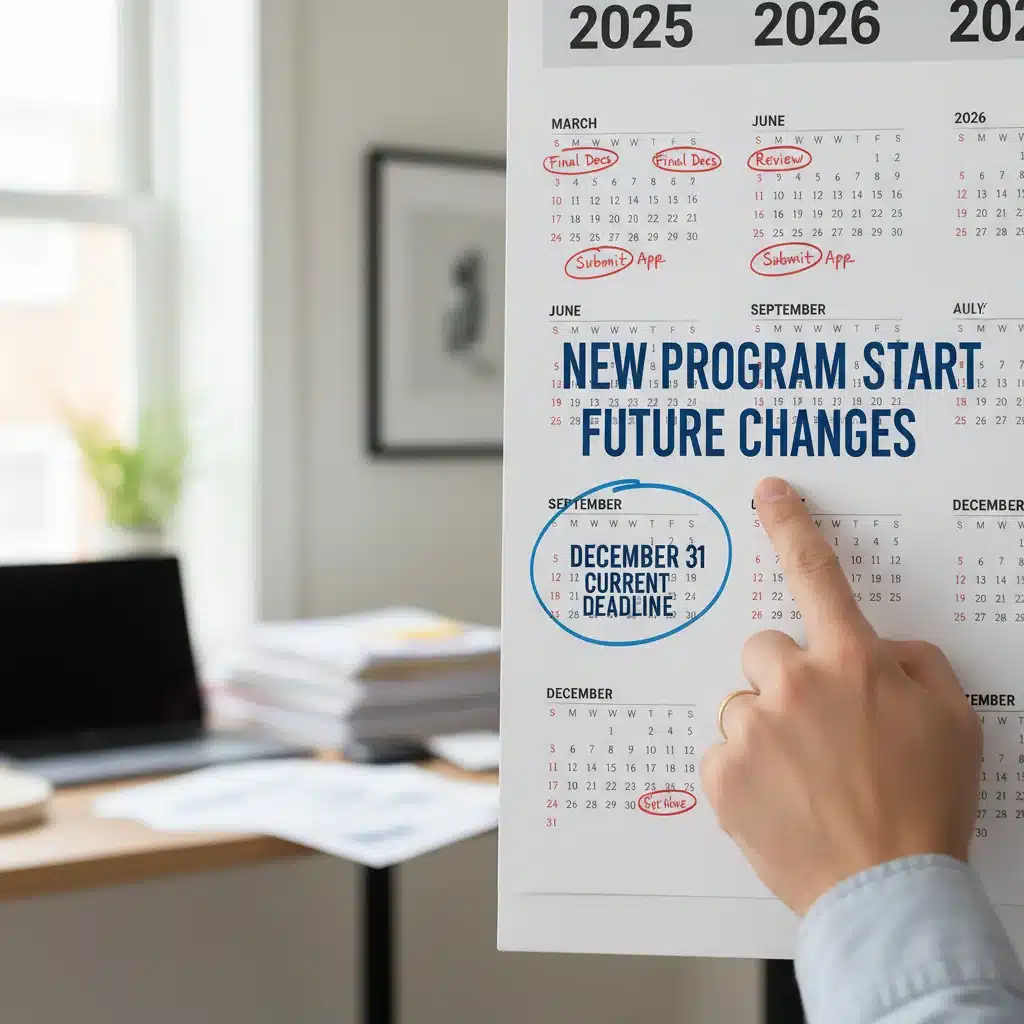
The IDR Account Adjustment is a one-time initiative that reviews past payment periods for IDR and PSLF. It counts more periods of repayment, as well as certain periods of deferment and forbearance, towards forgiveness. This adjustment is expected to be applied automatically, but there’s an important deadline. If you have FFEL or Perkins loans and want to maximize the benefit of this adjustment for PSLF, you must consolidate them into a Direct Loan by December 31, 2024. This is crucial for ensuring all eligible past periods are counted before the PSLF Changes 2026 fully roll out.
6. Stay Informed and Monitor Official Communications
The details of the PSLF Changes 2026 are still subject to final rulemaking and official guidance. Regularly check the official Federal Student Aid (StudentAid.gov) website for the most up-to-date information. Sign up for email alerts from the Department of Education or your loan servicer. Be wary of unofficial sources or scams promising guaranteed forgiveness.
Potential Challenges and How to Navigate Them with PSLF Changes 2026
Even with improvements, navigating student loan programs can present challenges. Being aware of potential pitfalls can help you prepare for the PSLF Changes 2026.
- Employer Eligibility: Always double-check that your employer qualifies. While most government and 501(c)(3) non-profits do, some organizations (e.g., labor unions, partisan political organizations, for-profit organizations) do not. Use the PSLF Help Tool on StudentAid.gov to verify.
- Loan Type Confusion: Ensure all your loans are Direct Loans. If not, consolidate them. This is a common stumbling block.
- Payment Tracking Discrepancies: Despite improvements, errors can occur. Your personal records will be your best defense against incorrect payment counts.
- Changing Servicers: If your loan servicer changes, ensure all your records and payment counts transfer correctly.
- Recertification Deadlines: Missing your annual IDR recertification deadline can cause your payments to become ineligible or your interest to capitalize. Set reminders!
Case Studies: Real-World Impact of PSLF Before and After Changes
To illustrate the significance of these changes, let’s look at hypothetical scenarios:
Case Study 1: Sarah, a Teacher (Pre-Waiver Frustrations)
Sarah, a dedicated public school teacher, graduated in 2008 with a mix of FFEL and Direct Loans. For years, she made payments but wasn’t on an IDR plan for some time and hadn’t consolidated her FFEL loans. When she finally learned about PSLF, she consolidated her loans in 2018. Under the original rules, only payments made after consolidation and while on an IDR plan counted. She was told she had only accumulated 20 qualifying payments, despite working in public service for 10 years. This was a common and heartbreaking scenario.
Impact of Waivers/PSLF Changes 2026: With the PSLF Waiver and anticipated PSLF Changes 2026, Sarah’s past payments on her FFEL loans and even periods where she wasn’t on an IDR plan (if they met other criteria) could be retroactively counted after consolidation. This significantly accelerates her path to forgiveness, potentially bringing her much closer to or even over the 120-payment threshold, demonstrating the program’s evolution towards greater fairness.
Case Study 2: Mark, a Social Worker (Navigating the New Landscape)
Mark, a social worker, started his career in 2023 with Direct Loans. He immediately enrolled in the SAVE plan and began certifying his employment annually. He’s heard about the PSLF Changes 2026. Because he’s been proactive, consolidating wasn’t an issue, and he’s already on an optimal IDR plan. The 2026 changes are likely to benefit him by making the payment tracking more transparent and potentially expanding what counts as a qualifying payment, ensuring his path to forgiveness is clearer and less prone to administrative hurdles.
Case Study 3: Emily, a Nurse (Benefit of the IDR Account Adjustment)
Emily, a nurse at a non-profit hospital, has been in public service since 2010. She had FFEL loans that she only consolidated into Direct Loans in 2022. She also had several periods of forbearance over the years. Before the IDR Account Adjustment, many of her payments and forbearance periods wouldn’t have counted. However, by consolidating before the December 31, 2024 deadline, the IDR Account Adjustment will review her entire payment history, counting eligible periods of forbearance and payments made on her FFEL loans before consolidation. This will drastically increase her qualifying payment count, bringing her much closer to forgiveness under the spirit of the PSLF Changes 2026.
The Future of Public Service Loan Forgiveness Post-2026
The PSLF Changes 2026 represent a significant step towards a more robust and borrower-friendly PSLF program. The intention is to create a sustainable and equitable pathway for public servants to achieve financial relief, thereby reinforcing the program’s original mission: to incentivize careers in vital public service sectors. While no program is ever entirely static, these upcoming changes aim to establish a more stable foundation for PSLF for years to come.
It’s important to remember that the core commitment of PSLF remains: serve your community, and your student loans will be forgiven. The PSLF Changes 2026 are designed to make that promise more attainable and less fraught with administrative complexity. By understanding these updates and taking proactive steps, public servants can continue their invaluable work with greater confidence in their financial future.
Conclusion: Empowering Public Servants Through PSLF Changes 2026
The upcoming PSLF Changes 2026 are not just regulatory adjustments; they are a reaffirmation of the nation’s commitment to its public servants. These updates promise a more streamlined, transparent, and ultimately more effective Public Service Loan Forgiveness program. For current and aspiring public service professionals, understanding these changes is not merely an option but a necessity.
By taking the proactive steps outlined in this guide – consolidating loans if needed, diligently certifying employment, enrolling in an appropriate IDR plan like SAVE, maintaining meticulous records, and staying informed – you can confidently navigate the evolving landscape of student loan forgiveness. Your dedication to public service is invaluable, and with these forthcoming changes, the path to loan forgiveness is set to become clearer and more accessible than ever before. Don’t let uncertainty derail your journey; empower yourself with knowledge and action today to secure your forgiveness tomorrow.