2026 Data Privacy Regulations: Small Business Compliance Guide

Anúncios
New Regulations on Data Privacy in 2026: A Step-by-Step Guide for Small Businesses to Ensure Compliance (PRACTICAL SOLUTIONS)
The digital landscape is constantly evolving, and with it, the complexities of data privacy. As we approach 2026, a new wave of data privacy regulations is on the horizon, poised to reshape how businesses collect, process, and store personal information. For small businesses, these changes can seem daunting, often feeling like an overwhelming burden amidst daily operations. However, understanding and preparing for these new rules is not just about avoiding penalties; it’s about building trust with your customers and safeguarding your company’s reputation. This comprehensive guide aims to demystify the upcoming data privacy compliance 2026 requirements, offering practical, step-by-step solutions tailored specifically for small businesses.
Anúncios
The year 2026 marks a significant milestone in global data protection. While specific details of all forthcoming regulations are still being finalized in various jurisdictions, the overarching trend points towards stricter consent requirements, enhanced data subject rights, more robust security obligations, and increased accountability for data handlers. Ignoring these changes could lead to substantial fines, legal challenges, and a loss of customer confidence. Conversely, proactive preparation can turn a potential challenge into a competitive advantage, demonstrating your commitment to ethical data practices.
This article will walk you through everything you need to know, from understanding the core principles of the new regulations to implementing actionable strategies within your organization. We’ll cover key areas such as data mapping, consent management, data security, incident response, and the importance of employee training. Our goal is to equip you with the knowledge and tools necessary to navigate the data privacy compliance 2026 landscape with confidence and efficiency.
Anúncios
Understanding the Core Principles of 2026 Data Privacy Regulations
Before diving into specific actions, it’s crucial to grasp the fundamental principles driving the 2026 data privacy regulations. While different regions might have their unique nuances, several common themes are emerging globally. These principles form the bedrock of effective data privacy compliance 2026 and should guide all your efforts.
1. Transparency and Lawfulness: Businesses must be transparent about what data they collect, why they collect it, and how they use it. Data processing must be lawful, meaning it’s based on legitimate grounds such as explicit consent, contractual necessity, legal obligation, or legitimate interest. Small businesses need to review all data collection points and ensure clear, concise privacy notices are readily available to individuals.
2. Purpose Limitation: Data should only be collected for specified, explicit, and legitimate purposes and not further processed in a manner that is incompatible with those purposes. This means you can’t collect data for one reason and then decide to use it for an entirely different, unrelated purpose without obtaining new consent or having another lawful basis.
3. Data Minimization: Collect only the data that is absolutely necessary for the stated purpose. Avoid collecting excessive personal information. This principle encourages businesses to critically assess their data needs and reduce their data footprint wherever possible. Less data means less risk, simplifying your data privacy compliance 2026 efforts.
4. Accuracy: Personal data must be accurate and, where necessary, kept up to date. Businesses should take every reasonable step to ensure that inaccurate personal data is erased or rectified without delay. Implementing mechanisms for individuals to update their information is a good practice.
5. Storage Limitation: Personal data should be kept in a form which permits identification of data subjects for no longer than is necessary for the purposes for which the personal data are processed. This requires establishing clear data retention policies and securely deleting data once it’s no longer needed.
6. Integrity and Confidentiality (Security): Personal data must be processed in a manner that ensures appropriate security of the personal data, including protection against unauthorized or unlawful processing and against accidental loss, destruction, or damage, using appropriate technical or organizational measures. This is arguably one of the most critical aspects for small businesses, requiring robust cybersecurity practices.
7. Accountability: Businesses are responsible for, and must be able to demonstrate, compliance with these principles. This involves maintaining records of processing activities, conducting data protection impact assessments (DPIAs) where necessary, and implementing appropriate data governance frameworks. This principle underscores the need for documented processes and verifiable actions to achieve data privacy compliance 2026.
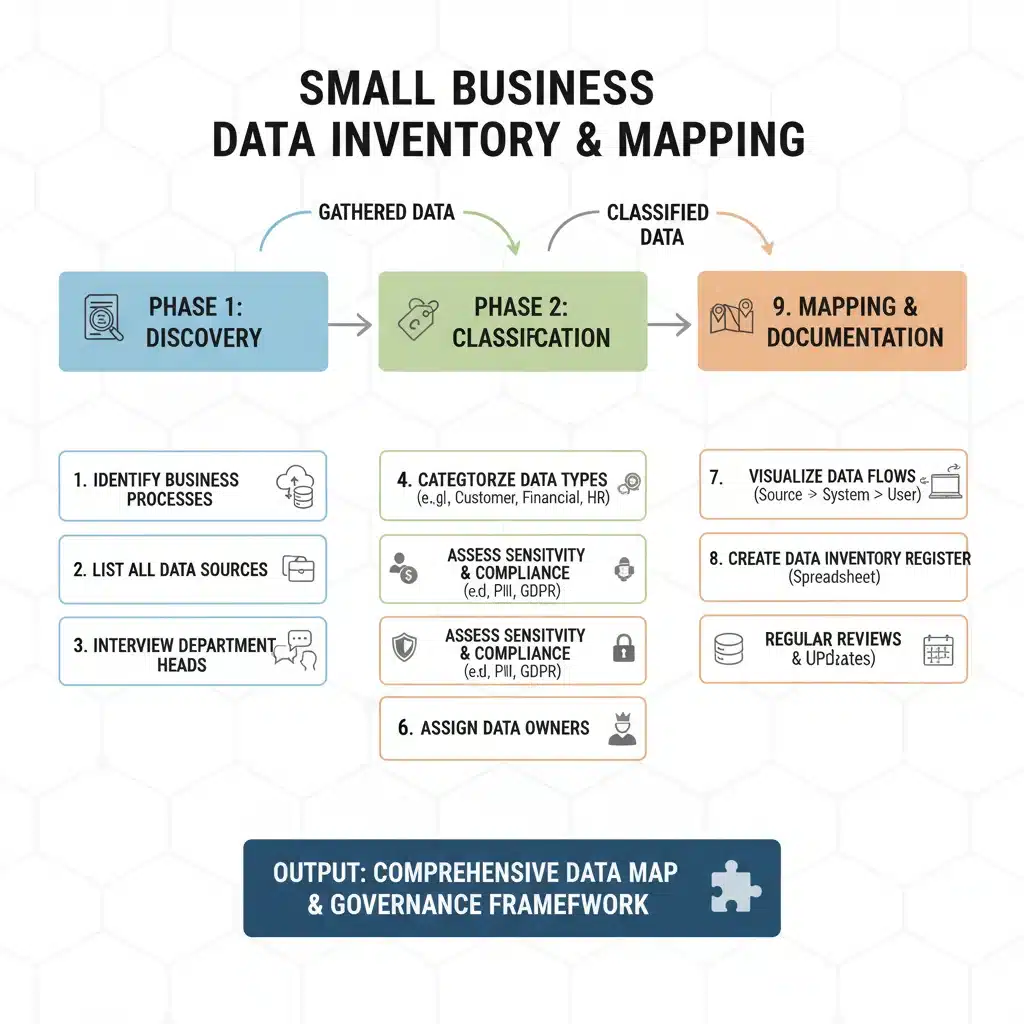
Step 1: Conduct a Data Inventory and Mapping Exercise
The first and most fundamental step towards achieving data privacy compliance 2026 is to understand what personal data your business collects, where it’s stored, who has access to it, and how it flows through your organization. This process is known as data inventory and mapping.
Why is Data Inventory and Mapping Crucial?
- Identify Risks: Pinpoint areas where personal data might be vulnerable or where current practices might not align with future regulations.
- Meet Accountability Requirements: Demonstrate to regulators and customers that you have a clear understanding of your data processing activities.
- Facilitate Data Subject Rights: Easily locate and retrieve personal data when individuals exercise their rights (e.g., access, rectification, erasure).
- Inform Policy Development: Provide the necessary information to create or update privacy policies, data retention schedules, and security protocols.
How to Conduct a Data Inventory:
- Identify All Data Collection Points: Start by listing every instance where your business collects personal data. This could include:
- Website contact forms, newsletter sign-ups
- E-commerce transaction data
- Customer support inquiries (email, phone, chat)
- Employee records (HR, payroll)
- Marketing databases (CRM systems)
- Third-party service providers (e.g., cloud storage, analytics tools)
- Document Data Categories: For each collection point, identify the types of personal data collected. Examples include:
- Identifiers (names, email addresses, IP addresses)
- Demographic data (age, gender, location)
- Financial data (credit card information, bank details)
- Health data (if applicable)
- Employment data (for employees)
- Map Data Flows: Trace the journey of personal data from collection to storage, processing, and eventual deletion. Ask:
- Where is the data stored (servers, cloud, physical files)?
- Who has access to this data (employees, departments, third parties)?
- How is the data processed (analytics, marketing, billing)?
- Is the data transferred internationally?
- What is the retention period for this data?
- Identify Legal Basis for Processing: For each type of data processing, determine the lawful basis. Is it consent, a contract, a legal obligation, vital interests, public task, or legitimate interests? This is a critical component of data privacy compliance 2026.
- Document Third-Party Sharing: List all third-party vendors and partners with whom you share personal data. Understand their data privacy practices and ensure your contracts include appropriate data protection clauses.
Tools for data inventory can range from simple spreadsheets for very small businesses to specialized data mapping software for larger operations. The key is to be thorough and systematic.
Step 2: Update Your Privacy Policies and Consent Mechanisms
Once you have a clear picture of your data, the next step in achieving data privacy compliance 2026 is to revise your public-facing privacy policies and ensure your consent mechanisms meet the new, stricter requirements.
Privacy Policy Overhaul:
Your privacy policy is your promise to your customers about how you handle their data. The new regulations will likely demand greater clarity, specificity, and accessibility. Ensure your updated policy:
- Is Easy to Understand: Avoid legal jargon. Use plain language that an average person can comprehend.
- Is Comprehensive: Clearly state what data you collect, the purposes for collection, the legal basis for processing, how long data is retained, and who it’s shared with (including third parties and international transfers).
- Outlines Data Subject Rights: Clearly inform individuals of their rights, such as the right to access, rectify, erase, restrict processing, data portability, and object to processing. Explain how they can exercise these rights.
- Provides Contact Information: Include details for your data protection officer (if you have one) or a designated privacy contact.
- Is Easily Accessible: Make sure your privacy policy is prominently displayed on your website, apps, and any other relevant platforms.
Strengthening Consent Mechanisms:
Consent under the new regulations must be “freely given, specific, informed, and unambiguous.” This means:
- No Pre-ticked Boxes: Individuals must actively opt-in. Pre-ticked boxes for consent are generally not acceptable.
- Granular Consent: If you process data for multiple distinct purposes, you may need to obtain separate consent for each purpose.
- Easy Withdrawal: Individuals must be able to withdraw their consent as easily as they gave it. Provide clear instructions on how to do this.
- Record Keeping: Maintain records of when and how consent was obtained, including what information was provided to the individual at the time.
For small businesses, this might mean redesigning website forms, email sign-up processes, and terms of service agreements. A consent management platform (CMP) can be a valuable tool to help manage and record consent effectively, streamlining your data privacy compliance 2026 efforts.
Step 3: Implement Robust Data Security Measures
Data security is a cornerstone of data privacy compliance 2026. The new regulations will place a strong emphasis on protecting personal data from unauthorized access, loss, or destruction. Small businesses, often seen as easier targets, must prioritize cybersecurity.
Key Security Measures to Implement:
- Encryption: Encrypt sensitive data both in transit (e.g., using SSL/TLS for website traffic) and at rest (e.g., encrypting hard drives, cloud storage).
- Access Controls: Implement strict access controls based on the principle of least privilege. Employees should only have access to the data necessary for their job functions. Regularly review and update access permissions.
- Strong Passwords and Multi-Factor Authentication (MFA): Enforce strong password policies and implement MFA for all systems containing personal data.
- Regular Backups: Implement a robust data backup and recovery strategy to prevent data loss.
- Firewalls and Antivirus/Anti-malware: Ensure all systems are protected by up-to-date firewalls and reputable antivirus/anti-malware software.
- Regular Security Audits and Penetration Testing: Periodically assess your systems for vulnerabilities. While penetration testing might be costly, regular vulnerability scans are a good starting point for small businesses.
- Secure Data Disposal: When data is no longer needed, ensure it is disposed of securely, whether through shredding physical documents or securely wiping digital storage devices.
- Vendor Security Assessment: Vet your third-party vendors and cloud providers to ensure they meet adequate security standards and have contractual obligations to protect your data.
It’s important to remember that data security is an ongoing process, not a one-time fix. Regular reviews and updates are essential to maintain effective data privacy compliance 2026.

Step 4: Establish a Data Breach Incident Response Plan
Despite your best efforts, data breaches can happen. The 2026 regulations will likely mandate strict notification requirements for data breaches. Having a well-defined incident response plan is crucial for managing breaches effectively and minimizing their impact on your business and your customers. This is a critical aspect of proactive data privacy compliance 2026.
Key Components of an Incident Response Plan:
- Identification: Procedures for detecting and confirming a data breach.
- Containment: Steps to limit the damage and prevent further unauthorized access or data loss.
- Eradication: Actions to remove the cause of the breach and restore system integrity.
- Recovery: Steps to restore affected systems and data to normal operation.
- Notification: Clear guidelines on who needs to be notified (regulatory authorities, affected individuals, partners) and within what timeframe. The timeframe for notification is often very short (e.g., 72 hours under GDPR), so speed is paramount.
- Post-Incident Review: A process to analyze the breach, identify lessons learned, and improve security measures to prevent future incidents.
Small businesses should regularly test their incident response plan through tabletop exercises to ensure all team members understand their roles and responsibilities. This proactive approach significantly strengthens your data privacy compliance 2026 posture.
Step 5: Train Your Employees and Foster a Culture of Privacy
Your employees are your first line of defense against data privacy breaches. Human error is a significant factor in many data incidents. Comprehensive training is indispensable for ensuring data privacy compliance 2026.
Essential Training Topics:
- Understanding Personal Data: What constitutes personal data and sensitive personal data.
- Privacy Policy Awareness: Familiarity with your company’s privacy policy and how it applies to their daily tasks.
- Data Handling Procedures: Proper procedures for collecting, storing, processing, and sharing personal data.
- Security Best Practices: Strong password hygiene, recognizing phishing attempts, secure email practices, and safe use of company devices.
- Data Subject Rights: How to handle requests from individuals exercising their data rights.
- Incident Reporting: How to identify and report potential data breaches or security incidents immediately.
Fostering a Culture of Privacy:
Beyond formal training, cultivate an environment where data privacy is a shared responsibility. This involves:
- Regular Reminders: Periodic communications about privacy and security.
- Lead by Example: Management demonstrating a commitment to data protection.
- Open Communication: Encouraging employees to ask questions and report concerns without fear of reprisal.
- Ongoing Education: Providing refresher training and updates as regulations or threats evolve.
Investing in employee training is one of the most cost-effective ways for small businesses to enhance their data privacy compliance 2026 and reduce risk.
Step 6: Review and Update Contracts with Third-Party Vendors
Many small businesses rely on third-party vendors for various services, from cloud hosting and CRM to marketing automation and payment processing. These vendors often process personal data on your behalf, making them a crucial link in your data privacy compliance 2026 chain.
What to Look for in Vendor Contracts:
- Data Processing Agreements (DPAs): Ensure your contracts include a DPA or similar clauses that clearly define the roles and responsibilities of both parties regarding data protection.
- Security Standards: Verify that vendors commit to implementing appropriate technical and organizational security measures that meet the new regulatory standards.
- Audit Rights: Ideally, contracts should grant you the right to audit the vendor’s data processing activities or at least receive regular security reports.
- Data Breach Notification: Vendors should be obligated to notify you promptly in the event of a data breach involving your data.
- Data Transfer Mechanisms: If data is transferred internationally, ensure appropriate legal mechanisms (e.g., Standard Contractual Clauses) are in place.
- Data Retention and Deletion: Clarify how and when data will be returned or securely deleted upon termination of the contract.
Start reviewing existing vendor contracts well in advance of 2026. Prioritize vendors who handle the most sensitive data or large volumes of personal information. This proactive step is vital for comprehensive data privacy compliance 2026.
Step 7: Stay Informed and Adapt
The regulatory landscape is dynamic. While this guide provides a solid foundation for data privacy compliance 2026, it’s crucial for small businesses to stay informed about specific legislative developments in their operating regions and any industries they serve.
Tips for Staying Informed:
- Follow Regulatory Bodies: Monitor official websites of data protection authorities in relevant jurisdictions.
- Subscribe to Industry News: Follow reputable cybersecurity and privacy news outlets, legal blogs, and industry associations.
- Consult Legal Professionals: For specific legal advice, especially concerning complex scenarios or international data transfers, consult with a legal professional specializing in data privacy.
- Network with Peers: Share insights and best practices with other small business owners.
Data privacy is not a static state but an ongoing journey of continuous improvement and adaptation. Regularly review your policies, procedures, and technologies to ensure they remain effective and compliant with evolving regulations. This commitment to ongoing vigilance is the hallmark of robust data privacy compliance 2026.
Practical Solutions for Small Businesses: A Checklist
To help you consolidate the information, here’s a practical checklist for small businesses preparing for data privacy compliance 2026:
- ✓ Designate a responsible person or team for data privacy.
- ✓ Conduct a thorough data inventory and mapping exercise.
- ✓ Update your privacy policy to be transparent, comprehensive, and accessible.
- ✓ Implement clear, explicit, and easy-to-withdraw consent mechanisms.
- ✓ Strengthen data security with encryption, access controls, MFA, and regular backups.
- ✓ Develop and test a data breach incident response plan.
- ✓ Provide mandatory and ongoing data privacy and security training for all employees.
- ✓ Review and update all third-party vendor contracts with data protection clauses.
- ✓ Establish clear data retention and secure disposal policies.
- ✓ Regularly monitor regulatory updates and seek expert advice when needed.
Conclusion: Turning Compliance into Trust
While the prospect of new data privacy compliance 2026 regulations might seem daunting, it also presents a unique opportunity for small businesses. By proactively addressing these requirements, you not only mitigate legal and financial risks but also strengthen your relationship with customers. In an era where data breaches are common and privacy concerns are paramount, a commitment to robust data protection can be a significant differentiator, fostering trust and loyalty.
Remember, achieving full compliance is a journey, not a destination. It requires ongoing effort, vigilance, and a willingness to adapt. By following the steps outlined in this guide, small businesses can confidently navigate the complexities of the 2026 data privacy landscape, ensuring they are not just compliant, but also recognized as responsible stewards of personal information. Start your preparation today, and turn the challenge of compliance into an opportunity to build a more secure and trustworthy business for the future.