Economic Impact of US Infrastructure Spending: $1.2 Trillion by 2026

The United States stands on the cusp of a transformative era, propelled by an unprecedented commitment to revitalize its foundational infrastructure. The Bipartisan Infrastructure Law, enacted in late 2021, earmarks a staggering $1.2 trillion for investments across various critical sectors, promising to reshape the nation’s economic landscape. This monumental funding initiative is not merely about repairing dilapidated roads and bridges; it represents a strategic pivot towards enhancing national competitiveness, fostering sustainable growth, and creating millions of jobs. The economic impact of US infrastructure spending, particularly this $1.2 trillion injection, is projected to be profound and far-reaching, with significant implications expected to materialize by 2026 and beyond.
For decades, America’s infrastructure has been underfunded and neglected, leading to a decline in efficiency, increased maintenance costs, and a drag on economic productivity. The American Society of Civil Engineers (ASCE) has consistently graded the nation’s infrastructure poorly, highlighting the urgent need for substantial investment. This new legislation directly addresses these long-standing issues, focusing on modernizing transportation networks, upgrading water and energy systems, expanding broadband access, and building resilience against climate change. Understanding the multifaceted economic impact of US infrastructure spending requires a deep dive into its direct, indirect, and induced effects, examining how these investments ripple through the economy to generate widespread benefits.
This comprehensive analysis will explore the projected economic benefits of this historic investment, focusing on key areas such as job creation, GDP growth, enhanced productivity, and regional development. We will also consider the challenges and potential pitfalls that could influence the ultimate success of these initiatives. By 2026, the nation expects to see tangible improvements in its physical assets and a robust stimulus to its economic engine. The sheer scale of the investment promises not just a facelift for America’s physical backbone but a fundamental re-engineering of its economic potential.
Direct Economic Impact: Job Creation and Industry Growth
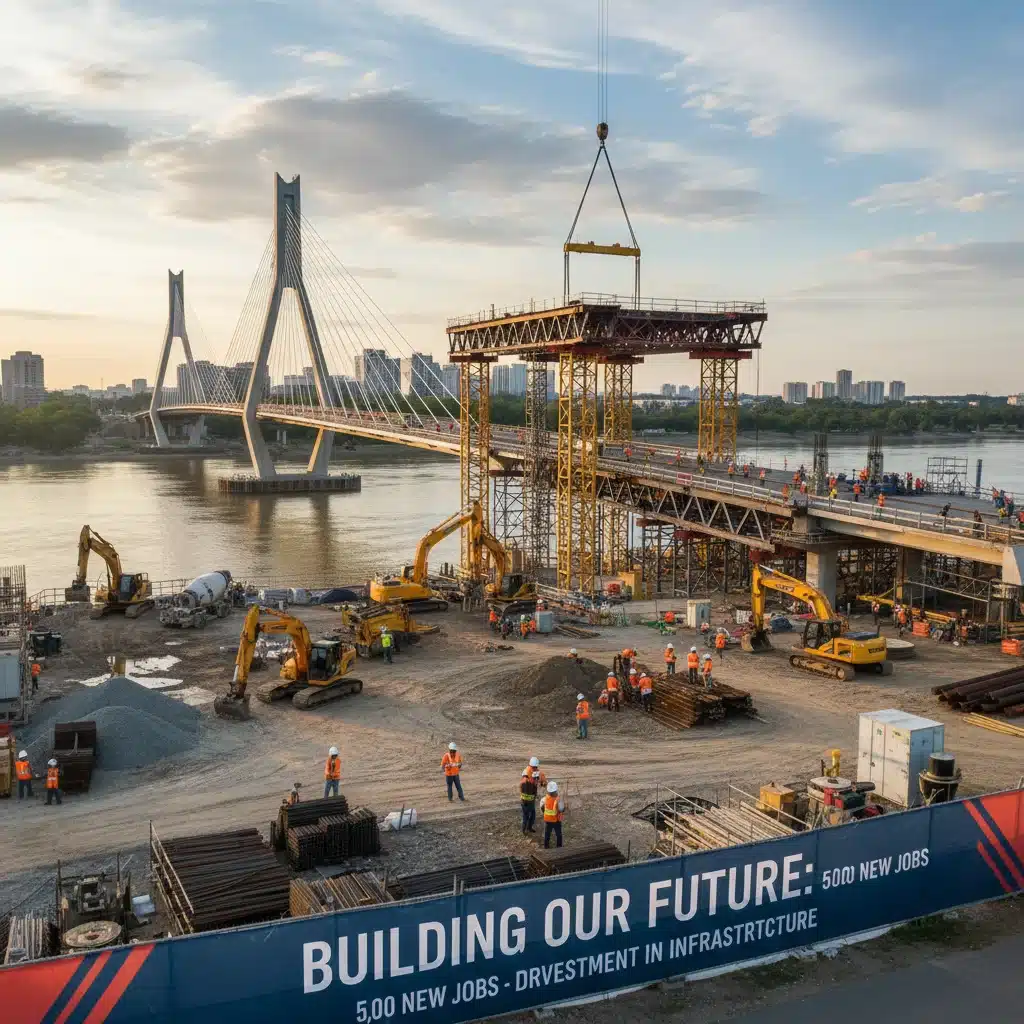
One of the most immediate and tangible benefits of the $1.2 trillion US infrastructure spending package is its potential for massive job creation. Construction projects, by their very nature, are labor-intensive, requiring a diverse workforce ranging from engineers and project managers to skilled laborers and tradespeople. Economists estimate that every billion dollars invested in infrastructure can support thousands of jobs, directly and indirectly. With a $1.2 trillion outlay, the potential for job growth is immense, with projections suggesting millions of new jobs could be created over the next five years, particularly by 2026.
These jobs will not be confined to the construction sector alone. The demand for materials such as steel, concrete, asphalt, and machinery will spur growth in manufacturing, mining, and logistics industries. Suppliers of everything from safety equipment to advanced technology for smart infrastructure will see increased demand, leading to further job creation across the supply chain. This direct injection of capital into various industries creates a powerful multiplier effect, where initial spending generates subsequent rounds of spending and economic activity.
Furthermore, the nature of these infrastructure projects often involves long-term commitments, providing stable employment opportunities for many years. This stability is crucial for local economies, enabling workers to invest in their communities, purchase homes, and contribute to local businesses. The focus on modernizing infrastructure also means a demand for new skills and technologies, encouraging workforce development programs and creating pathways for careers in emerging fields like renewable energy infrastructure and smart city technologies. The economic impact of US infrastructure spending is thus not just about temporary boosts but about fostering sustainable career growth.
Beyond the direct construction and manufacturing jobs, the administrative and oversight functions required for such a vast undertaking will also generate employment. Project managers, environmental specialists, financial analysts, and regulatory compliance officers will all play crucial roles, contributing to a broader employment surge. This comprehensive approach to job creation underscores the transformative power of significant public investment in infrastructure.
Indirect Economic Impact: Enhanced Productivity and Supply Chain Efficiency
While direct job creation is easily quantifiable, the indirect economic impact of US infrastructure spending is arguably even more significant in the long term. Improved infrastructure leads to enhanced productivity across almost all sectors of the economy. For instance, modernizing transportation networks – including roads, bridges, railways, ports, and airports – reduces travel times, lowers shipping costs, and minimizes delays. This efficiency gain allows businesses to operate more smoothly, get their products to market faster, and reduce operational expenses. The cumulative effect of these efficiencies can significantly boost a nation’s GDP.
Consider the impact on supply chains. The COVID-19 pandemic exposed the vulnerabilities of global supply chains, often exacerbated by aging and inadequate domestic infrastructure. Investing in better roads, more efficient rail lines, and upgraded port facilities will streamline the movement of goods, making supply chains more resilient and responsive. This means less wasted time and resources, which translates into lower costs for businesses and, ultimately, lower prices for consumers. Such improvements are vital for maintaining competitive advantage in a globalized economy.
Broadband expansion, another key component of the infrastructure package, will unlock new economic opportunities, particularly in rural and underserved areas. Access to high-speed internet enables remote work, facilitates e-commerce, supports digital education, and fosters innovation. Businesses in these areas can connect to national and global markets, reducing geographical barriers to economic participation. This digital infrastructure is as crucial as physical infrastructure in the 21st century economy, driving productivity gains and fostering a more equitable distribution of economic opportunities. The economic impact of US infrastructure spending through broadband is a game-changer for many communities.
Furthermore, investments in renewable energy infrastructure and grid modernization will enhance energy reliability and potentially lower energy costs in the long run. A stable and affordable energy supply is fundamental for industrial production and commercial activities. By reducing energy-related disruptions and costs, businesses can allocate more resources to innovation, expansion, and job creation. These indirect benefits, though harder to measure instantly, accumulate over time to create a stronger, more dynamic economy.
Induced Economic Impact: Consumer Spending and Regional Development
The induced economic impact of US infrastructure spending refers to the ripple effects generated by the increased income of workers employed directly and indirectly by infrastructure projects. As these workers earn higher wages, they tend to spend more on goods and services, stimulating demand in local economies. This increased consumer spending supports retail businesses, restaurants, entertainment venues, and a host of other service providers, creating a virtuous cycle of economic growth.
Regional development is another significant induced benefit. Infrastructure projects often target specific regions or communities, bringing concentrated economic activity and investment to those areas. Improved transportation links can open up new markets for local businesses, attract new industries, and boost tourism. For example, a new highway bypassing a congested area might revitalize towns along the new route or make previously inaccessible areas more attractive for development. This localized economic stimulus can be particularly impactful for communities that have historically struggled with economic stagnation.
The investment in water infrastructure, including lead pipe replacement and wastewater treatment upgrades, directly improves public health and quality of life. Healthier communities are more productive communities. Reduced healthcare costs associated with waterborne diseases and improved environmental conditions can indirectly boost economic activity by enabling a healthier, more engaged workforce. Similarly, investments in climate resilience, such as upgrading storm defenses and protecting critical infrastructure from extreme weather events, prevent costly damages and disruptions, ensuring long-term economic stability.
The psychological impact of seeing significant public investment in one’s community should not be underestimated. It can foster a sense of optimism and confidence among residents and businesses, encouraging further private investment and entrepreneurship. This renewed confidence is a powerful, albeit intangible, driver of economic growth. The economic impact of US infrastructure spending thus extends beyond mere financial figures to encompass community well-being and future prospects.
Challenges and Considerations for Implementation by 2026
While the economic potential of the $1.2 trillion US infrastructure spending is undeniable, its successful implementation is not without challenges. One primary concern is inflation. The massive influx of federal funds into the economy, coupled with existing supply chain constraints and labor shortages, could exacerbate inflationary pressures. The cost of raw materials like steel and concrete has already seen significant increases, which could drive up project costs and potentially reduce the number of projects that can be completed within the allocated budget. Careful monitoring and adaptive strategies will be crucial to mitigate this risk.
Labor availability and skill gaps represent another significant hurdle. Many infrastructure projects require specialized skills that are currently in short supply. An aging workforce, coupled with a historical decline in vocational training, means there may not be enough skilled workers to meet the demands of this ambitious program. To address this, significant investments in workforce development, apprenticeship programs, and technical training will be necessary. Without a sufficient and skilled labor force, project timelines could be delayed, and costs could escalate, diminishing the overall economic impact of US infrastructure spending.
Bureaucracy and regulatory complexities can also impede progress. Large-scale infrastructure projects often involve multiple federal, state, and local agencies, each with its own permitting and approval processes. Streamlining these processes while maintaining environmental and safety standards will be critical to ensure projects can move from planning to execution efficiently. Delays due to red tape can lead to increased costs and postponed benefits, undermining the intended economic stimulus.
Furthermore, ensuring equitable distribution of funds and benefits across all regions and demographics is a complex task. There is a risk that some communities, particularly those with less political clout or capacity to apply for grants, might be left behind. The legislation includes provisions aimed at addressing equity, but active oversight and targeted outreach will be necessary to ensure that the benefits of this infrastructure investment are broadly shared. The long-term economic impact of US infrastructure spending depends heavily on fair and effective distribution.
Lastly, political will and sustained commitment are essential. Infrastructure projects often span multiple political cycles. Changes in administration or shifts in political priorities could affect funding levels or project direction. Maintaining bipartisan support and a long-term vision will be vital to ensure that the $1.2 trillion investment yields its full potential by 2026 and continues to deliver benefits for decades to come.
Long-Term Economic Benefits and Global Competitiveness
Looking beyond 2026, the long-term economic benefits of robust US infrastructure are immense. A modern, efficient infrastructure system enhances a nation’s global competitiveness. Businesses are more likely to invest and expand in countries with reliable transportation, advanced communication networks, and resilient utilities. This attracts foreign direct investment, fosters domestic innovation, and strengthens supply chains, making the US a more attractive place to do business.
Improved infrastructure also supports long-term economic stability. By reducing the costs associated with maintenance and repair of aging systems, and by mitigating the economic disruptions caused by infrastructure failures, the nation can allocate more resources to other productive investments. For example, a resilient power grid reduces outages, protecting businesses from costly downtime. Upgraded water systems reduce leaks and contamination, safeguarding public health and preserving vital resources. These foundational improvements create a more stable and predictable environment for economic activity.

The investment in climate-resilient infrastructure is particularly crucial for future generations. As climate change continues to pose threats through extreme weather events, sea-level rise, and other impacts, building infrastructure that can withstand these challenges is an economic imperative. Preventing catastrophic damage saves billions in repair costs, avoids economic disruption, and protects lives and livelihoods. This forward-thinking approach ensures that the economic impact of US infrastructure spending extends far into the future, safeguarding against potential economic shocks.
Furthermore, the focus on green infrastructure and sustainable practices within the legislation supports the transition to a cleaner energy economy. Investments in electric vehicle charging stations, renewable energy transmission lines, and energy-efficient public buildings not only create jobs but also reduce carbon emissions and promote environmental sustainability. This alignment with global climate goals can open up new markets for American technologies and expertise, positioning the US as a leader in the green economy. This strategic foresight ensures that the economic impact of US infrastructure spending is not only about immediate gains but also about securing a prosperous and sustainable future.
Education and research institutions also stand to benefit. Many infrastructure projects require advanced research and development, fostering collaboration between industry and academia. This can lead to breakthroughs in materials science, engineering, and digital technologies, creating new intellectual property and driving further innovation. A well-educated and technically proficient workforce, supported by cutting-edge infrastructure, is the bedrock of a thriving, knowledge-based economy. The long-term effects of this investment will be felt in every facet of American life and enterprise.
Conclusion: A Path to Renewed Prosperity by 2026
The $1.2 trillion US infrastructure spending package represents a monumental commitment to revitalizing America’s physical and economic foundations. By 2026, the nation is poised to experience a significant uplift in economic activity, driven by direct job creation, enhanced productivity, and stimulated consumer spending. The investments in transportation, broadband, water, and energy systems are not just about addressing past neglect; they are about strategically positioning the United States for future prosperity and global leadership. The comprehensive economic impact of US infrastructure spending is expected to be a powerful catalyst for growth across diverse sectors and regions.
While challenges related to inflation, labor shortages, and bureaucratic hurdles must be carefully managed, the potential benefits far outweigh the risks. Successful implementation will require sustained political will, innovative solutions, and a collaborative spirit among all stakeholders. The ripple effects of this investment—from more efficient supply chains and increased business competitiveness to improved public health and environmental resilience—will create a stronger, more equitable, and more sustainable economy for decades to come.
The vision behind this historic legislation is clear: to build a 21st-century infrastructure that supports a 21st-century economy. As the projects unfold and the investments take root, the economic impact of US infrastructure spending will serve as a testament to the power of public investment in driving national progress. By 2026, Americans can anticipate a more robust job market, a more efficient economy, and a modern infrastructure system that better serves the needs of all its citizens, paving the way for renewed prosperity and enhanced global standing.
This transformative period underscores the critical role of government in fostering economic development and ensuring the foundational elements of national success are not only maintained but advanced. The commitment to rebuilding and modernizing infrastructure is an investment in the future, promising substantial returns for generations to come. The economic impact of US infrastructure spending is not merely a forecast; it is a strategic blueprint for a more resilient and prosperous America.