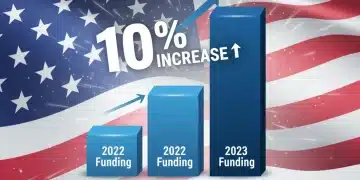
US Contributions to Global Health Security in 2026: Pandemic Preparedness
The year 2026 marks a critical juncture in the ongoing global effort to bolster health security. The COVID-19 pandemic served as a stark reminder of humanity’s vulnerability to infectious diseases, underscoring the urgent need for robust preparedness and rapid response mechanisms. In this evolving landscape, the United States continues to play a pivotal role, dedicating significant resources and expertise to strengthen global health security. This article explores the multifaceted contributions of the US in 2026, examining its strategies, investments, and collaborative initiatives aimed at preventing, detecting, and responding to future health crises on a global scale.
The concept of global health security is not merely about protecting American citizens from foreign threats; it’s about recognizing that diseases know no borders. A pathogen emerging anywhere can quickly become a threat everywhere. Therefore, the US approach is inherently collaborative, built on the understanding that collective action is the most effective defense against pandemics. This involves not only direct financial aid and technical assistance but also diplomatic engagement, scientific exchange, and the promotion of international norms and standards for health emergency management. The lessons learned from past outbreaks, including SARS, MERS, Ebola, and critically, COVID-19, have profoundly shaped the current US strategy, pushing for a more proactive, integrated, and equitable approach to health security.
In 2026, the US agenda for global health security is characterized by several key pillars: strengthening public health infrastructure in partner nations, advancing biomedical research and development, enhancing global surveillance and early warning systems, and fostering resilient supply chains for medical countermeasures. These pillars are interconnected, forming a comprehensive framework designed to create a more secure and healthier world. The commitment extends beyond immediate crisis response, aiming to build sustainable capacities that can withstand future shocks, whether they originate from novel pathogens, bioterrorism, or other health threats.
Strengthening Public Health Infrastructure: A Foundation for Resilience
A cornerstone of US contributions to global health security in 2026 is the unwavering focus on building and strengthening public health infrastructure in low- and middle-income countries. This goes beyond emergency handouts; it involves long-term investments in human resources, laboratory capabilities, and robust health systems. The US Agency for International Development (USAID) and the Centers for Disease Control and Prevention (CDC) are at the forefront of these efforts, working directly with ministries of health and local communities to tailor solutions that meet specific national needs.
Training a skilled health workforce is paramount. In 2026, US programs are emphasizing the development of epidemiologists, public health practitioners, laboratory technicians, and frontline healthcare workers who can effectively detect, investigate, and respond to outbreaks. This includes supporting field epidemiology training programs (FETPs) that equip individuals with practical, hands-on experience in disease surveillance and outbreak response. By empowering local experts, these programs ensure that countries have the indigenous capacity to manage health emergencies without constant external intervention, thereby fostering true self-reliance in global health security.
Furthermore, significant attention is being paid to enhancing laboratory networks. Accurate and timely diagnostics are crucial for identifying pathogens, tracking their spread, and informing public health interventions. US assistance in 2026 includes providing state-of-the-art laboratory equipment, reagents, and quality assurance programs, as well as training local staff in advanced diagnostic techniques. This ensures that countries can quickly and reliably test for a wide range of infectious diseases, from common endemic illnesses to emerging pandemic threats. The goal is to establish interconnected laboratory systems that can share data and samples efficiently, creating a unified front against disease.
Beyond human and technical capacities, strengthening health systems also involves improving governance, financing, and supply chain management within partner nations. The US supports initiatives that help countries develop national action plans for health security, establish emergency operations centers, and implement robust legal frameworks for public health. These systemic improvements are vital for ensuring that resources are allocated effectively, responses are coordinated efficiently, and health services remain accessible even during crises. The vision for global health security in 2026 is one where every nation possesses the fundamental capabilities to protect its population from health threats.
Advancing Biomedical Research and Development: The Innovation Engine
Innovation is a critical driver of global health security, and the US remains a global leader in biomedical research and development (R&D). In 2026, US government agencies, particularly the National Institutes of Health (NIH) and the Biomedical Advanced Research and Development Authority (BARDA), are investing heavily in cutting-edge science to accelerate the discovery and development of vaccines, therapeutics, and diagnostics for emerging infectious diseases. This commitment is a direct response to the realization that rapid access to effective medical countermeasures is essential for containing pandemics.
A key focus is on platform technologies that can be rapidly adapted to new pathogens. This includes mRNA vaccine technology, which proved revolutionary during the COVID-19 pandemic, as well as novel antiviral drug discovery platforms and advanced diagnostic tools. The US is not only funding research within its borders but also fostering international collaborations, sharing scientific expertise and resources with researchers worldwide. This collaborative R&D model accelerates progress, diversifies research portfolios, and ensures that innovations are globally relevant and accessible.
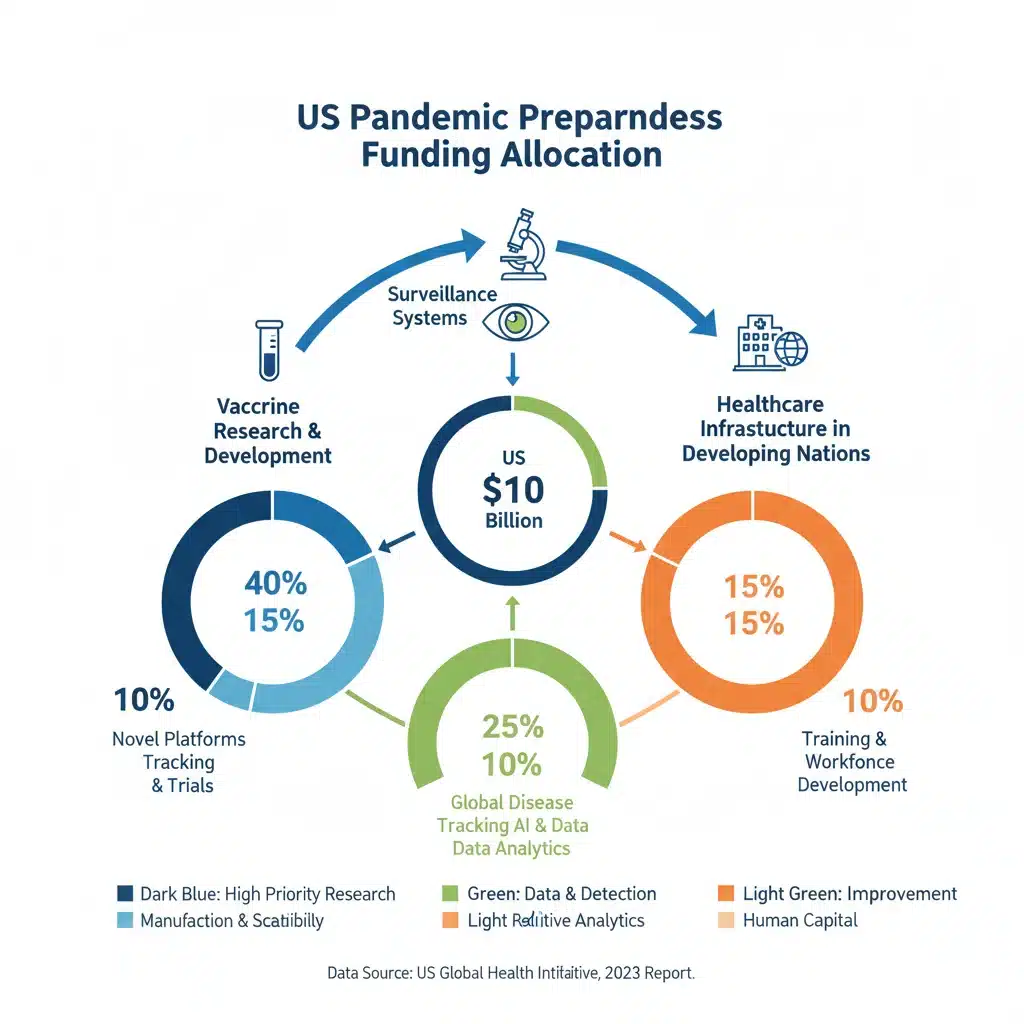
Furthermore, the US is actively working to address the challenges of equitable access to these innovations. This includes supporting initiatives like the Coalition for Epidemic Preparedness Innovations (CEPI) and advocating for mechanisms that ensure fair distribution of vaccines and treatments, especially to low-income countries. The aim is to prevent a repeat of the ‘vaccine apartheid’ experienced during the early stages of the COVID-19 pandemic, ensuring that breakthroughs in R&D translate into tangible health benefits for all. This focus on equitable access is a moral imperative and a strategic necessity for achieving true global health security.
Another area of significant investment is in zoonotic disease research. A majority of new infectious diseases originate in animals, making the ‘One Health’ approach critical. This interdisciplinary strategy recognizes the interconnectedness of human, animal, and environmental health. US programs in 2026 are funding research into wildlife surveillance, understanding pathogen spillover events, and developing interventions that address health at the human-animal-environment interface. By proactively addressing threats at their source, the US aims to prevent future pandemics before they even begin.
Enhancing Global Surveillance and Early Warning Systems: The Eyes and Ears of Health Security
Effective global health security hinges on the ability to detect outbreaks early and accurately. In 2026, the US is significantly enhancing its support for global surveillance and early warning systems, leveraging advanced technologies and fostering greater data sharing among nations. The goal is to create a robust network of ‘eyes and ears’ that can identify unusual health events, track disease trends, and provide timely alerts to public health authorities worldwide.
This includes investing in digital surveillance tools that can integrate data from various sources, such as healthcare facilities, laboratories, and even social media, to detect anomalies that might signal an emerging threat. Artificial intelligence and machine learning are being deployed to analyze vast datasets, identify patterns, and predict potential outbreak hotspots. The US is also supporting the development of interoperable data systems that allow for seamless information exchange while safeguarding privacy and data security. This technological advancement is crucial for moving from reactive response to proactive prevention in global health security.
Beyond technology, strengthening human networks is equally important. The US continues to support the World Health Organization (WHO) and other international bodies in coordinating global surveillance efforts. This involves facilitating regular information sharing, conducting joint risk assessments, and developing common protocols for outbreak investigation. The Global Health Security Agenda (GHSA), a partnership of nations, international organizations, and non-governmental stakeholders, remains a key platform for advancing these objectives, with the US playing a leading role in many of its action packages.
Early warning systems are not just about detecting a disease; they are also about rapidly assessing its potential to spread and its severity. This requires sophisticated epidemiological analysis and modeling capabilities, areas where the US is providing substantial technical assistance. By helping countries develop these capacities, the US ensures that alerts are not just issued but are accompanied by actionable intelligence, enabling swift and effective public health interventions. This foresight is invaluable in preventing localized outbreaks from escalating into global pandemics, a core tenet of effective global health security.
Fostering Resilient Supply Chains for Medical Countermeasures: Ensuring Access
The COVID-19 pandemic exposed critical vulnerabilities in global supply chains for essential medical countermeasures, including personal protective equipment (PPE), diagnostics, and vaccines. In 2026, the US is actively working to build more resilient and equitable supply chains as a vital component of global health security. This involves a multi-pronged approach that addresses both domestic production capabilities and international distribution mechanisms.
Domestically, the US is investing in expanding manufacturing capacity for key medical supplies and pharmaceuticals, reducing reliance on single-source suppliers and diversifying production geographically. This ‘onshoring’ and ‘friend-shoring’ strategy aims to ensure that the US has sufficient reserves and production capabilities to meet its own needs during a crisis, while also being able to contribute to global efforts. Strategic national stockpiles are being replenished and diversified to include a wider range of medical countermeasures and raw materials.

Internationally, the US is collaborating with allies and partners to establish diversified global manufacturing hubs, particularly in regions that have historically lacked production capacity. This not only strengthens overall global health security but also promotes economic development and creates jobs in partner countries. Initiatives to transfer technology and intellectual property, while complex, are being explored to empower more nations to produce their own medical countermeasures, reducing dependence on a few dominant suppliers.
Furthermore, the US is advocating for greater transparency and coordination in global supply chains. This includes promoting international agreements that facilitate the free flow of essential goods during health emergencies, preventing export restrictions that can exacerbate shortages, and establishing early warning systems for supply chain disruptions. By working towards a more transparent and collaborative global marketplace for medical countermeasures, the US aims to ensure that critical supplies reach those who need them most, regardless of their location or economic status. This is a crucial element in building a truly equitable and resilient global health security architecture.
Diplomacy and International Collaboration: The Human Element of Security
While technological advancements and infrastructure investments are crucial, the human element of diplomacy and international collaboration remains indispensable for global health security. In 2026, the US is intensifying its diplomatic efforts to foster stronger partnerships, build trust, and promote collective action on health threats. This involves engagement at bilateral, regional, and multilateral levels, advocating for shared responsibilities and coordinated responses.
The US actively participates in and supports international forums such as the G7, G20, and the World Health Assembly, using these platforms to champion health security initiatives. It also engages in bilateral dialogues with key partner countries, developing tailored cooperation agreements that address specific health challenges and leverage complementary strengths. These diplomatic engagements are essential for aligning national priorities with global needs and for mobilizing the political will and resources required to tackle complex health issues.
Beyond government-to-government interactions, the US also supports the vital role of non-governmental organizations (NGOs), academic institutions, and the private sector in global health security. These actors bring diverse expertise, innovative solutions, and critical on-the-ground presence to global health efforts. Public-private partnerships are particularly important for accelerating research, developing new technologies, and ensuring the efficient delivery of health services and products.
A key aspect of US diplomacy in 2026 is promoting adherence to the International Health Regulations (IHR). The IHR provide a legal framework for countries to prevent, protect against, control, and provide a public health response to the international spread of disease. The US supports countries in meeting their IHR obligations through technical assistance, capacity building, and peer-to-peer learning. By strengthening the implementation of the IHR globally, the US aims to create a more harmonized and effective international response system, a cornerstone of robust global health security.
Addressing Health Disparities and Equity: A Holistic Approach
True global health security cannot be achieved without addressing underlying health disparities and promoting health equity. The COVID-19 pandemic highlighted how existing inequalities exacerbate the impact of health crises, with marginalized populations often bearing the heaviest burden. In 2026, the US is integrating equity as a central tenet of its global health security strategy, recognizing that a chain is only as strong as its weakest link.
This involves focusing assistance on vulnerable populations and regions that have historically been underserved or disproportionately affected by health threats. Programs are being designed to reach remote communities, strengthen primary healthcare systems, and address social determinants of health such as poverty, education, and access to clean water and sanitation. By investing in these foundational elements, the US aims to build more resilient communities that are better equipped to withstand health shocks.
Furthermore, the US is promoting gender equality in health programming, recognizing that women and girls often face unique health challenges and play critical roles in community health. Empowering women as healthcare workers, researchers, and community leaders is seen as essential for strengthening health systems and improving health outcomes. This holistic approach to global health security acknowledges that health is not just the absence of disease, but a state of complete physical, mental, and social well-being.
The commitment to equity also extends to ensuring that all countries have a voice in global health governance. The US supports reforms that make international health institutions more inclusive and responsive to the needs of all member states. By fostering a more equitable global health architecture, the US aims to build greater trust, solidarity, and shared ownership in the collective pursuit of global health security.
Conclusion: A Shared Future of Enhanced Global Health Security
As we look towards 2026 and beyond, the US remains steadfast in its commitment to advancing global health security. The lessons from past pandemics have forged a clearer path forward, emphasizing the critical importance of preparedness, innovation, collaboration, and equity. Through strategic investments in public health infrastructure, cutting-edge biomedical research, advanced surveillance systems, resilient supply chains, and robust diplomatic engagement, the US is actively working to build a world that is better equipped to prevent, detect, and respond to future health crises.
The journey to comprehensive global health security is a continuous one, requiring sustained effort and adaptability in the face of evolving threats. The US understands that its own health security is inextricably linked to the health security of every nation. Therefore, its contributions are not merely acts of benevolence but strategic investments in a safer, more stable, and prosperous future for all. By working hand-in-hand with international partners, scientists, and communities worldwide, the US aims to lay the groundwork for a truly resilient global health system, ensuring that the world is never again caught unprepared by a pandemic.
The vision for 2026 and beyond is one of collective responsibility and shared prosperity, where strong health systems and a vigilant global community stand ready to safeguard humanity from the relentless challenge of infectious diseases. The US role in this endeavor is not just about leadership but about partnership, fostering a collaborative spirit that is essential for achieving enduring global health security.