2026 US Energy Market: Policy Changes Driving Investment and Innovation
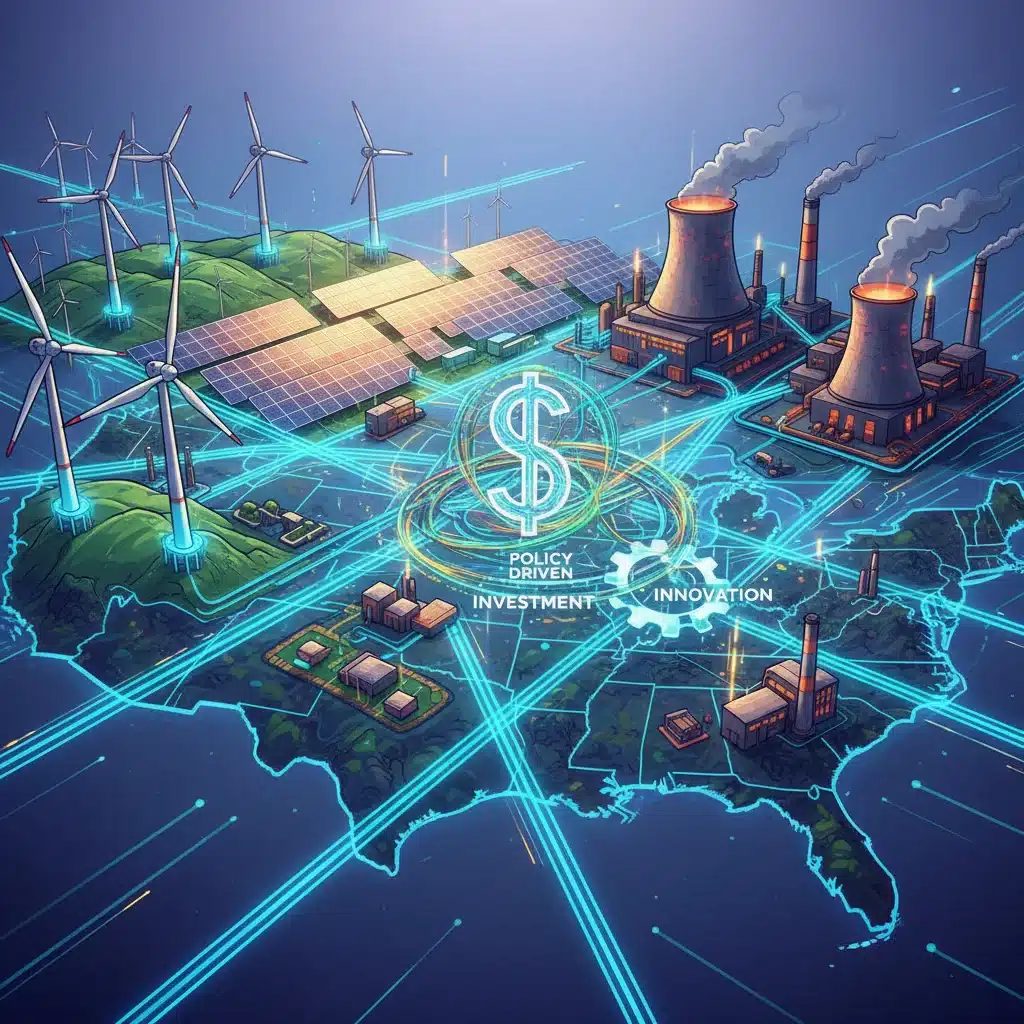
The energy landscape in the United States is in a constant state of flux, shaped by technological advancements, environmental imperatives, and, most critically, policy decisions. As we look towards 2026, the US energy policy 2026 framework is emerging as a critical determinant of the nation’s energy future. This article will dissect three pivotal policy changes that are expected to profoundly influence investment, spur innovation, and fundamentally reshape the 2026 US energy market. Understanding these shifts is not merely an academic exercise; it is essential for investors, industry leaders, policymakers, and indeed, every citizen concerned with a sustainable and prosperous future.
The trajectory of energy policy in the US has historically been a complex interplay of economic interests, national security concerns, and environmental stewardship. While past policies have often focused on ensuring energy independence and affordability, a growing emphasis on climate change mitigation and renewable energy integration is now undeniable. The year 2026 is set to be a landmark period, with new legislative and regulatory frameworks coming into full effect, designed to accelerate the transition to a cleaner, more resilient energy system. This transformation is not without its challenges, but the opportunities for growth, job creation, and technological breakthroughs are immense. Our focus here is to provide a comprehensive overview of these key policy drivers and their anticipated impact on the 2026 US energy market.
Policy Change 1: Enhanced Incentives for Renewable Energy Deployment and Storage
One of the most significant policy shifts impacting the US energy policy 2026 is the substantial enhancement of incentives for renewable energy deployment and energy storage solutions. Building upon existing frameworks, new legislation is expected to offer more generous and long-term tax credits, grants, and loan programs for solar, wind, geothermal, and hydroelectric projects. These incentives are designed to reduce the upfront capital costs of renewable energy installations, making them more competitive with traditional fossil fuel-based power generation. The goal is to accelerate the pace of renewable energy adoption across all sectors, from utility-scale farms to residential rooftop solar.
Beyond generation, a critical component of this policy change focuses on energy storage. The intermittency of renewable sources like solar and wind has long been a challenge for grid stability. New policies aim to provide robust support for the development and deployment of advanced battery storage, pumped-hydro storage, and other innovative storage technologies. This includes tax credits for standalone storage projects, as well as incentives for co-located storage with renewable generation. The rationale is clear: by improving the reliability and dispatchability of renewable energy, these policies will pave the way for a higher penetration of clean energy into the national grid. The US energy policy 2026 reflects a strategic understanding that a truly resilient and sustainable grid cannot rely solely on generation but must also incorporate sophisticated storage capabilities.
Impact on Investment in the 2026 US Energy Market
The financial implications of these enhanced incentives are monumental. We anticipate a surge in private and public investment in renewable energy projects. Developers will find it more attractive to initiate new ventures, leading to a boom in construction, manufacturing, and related services. This will not only create numerous jobs but also stimulate economic growth in regions with abundant renewable resources. Furthermore, the long-term nature of these incentives provides greater certainty for investors, reducing perceived risks and encouraging larger capital commitments. Venture capital and private equity firms are already signaling increased interest in the clean energy sector, anticipating significant returns from these policy-driven opportunities. The US energy policy 2026 is essentially de-risking renewable investments, making them a cornerstone of future economic development.
Moreover, the focus on energy storage will open up entirely new markets and investment avenues. Companies specializing in battery technology, grid management software, and smart grid solutions are set to benefit immensely. The demand for raw materials for battery production, such as lithium and cobalt, will also likely increase, prompting investment in mining and processing facilities. This holistic approach ensures that the entire value chain of renewable energy and storage receives the necessary impetus for rapid expansion. The competitive landscape will also evolve, with established players and innovative startups vying for market share in this burgeoning sector. The ripple effect of this investment will be felt across various industries, from materials science to information technology, all contributing to a more robust and diversified 2026 US energy market.
Policy Change 2: Federal Mandates and Carbon Pricing Mechanisms
The second significant policy change shaping the US energy policy 2026 involves a more assertive federal stance on emissions reduction, likely through a combination of mandates and carbon pricing mechanisms. While the exact form these policies will take is still being debated, the direction is clear: a concerted effort to internalize the cost of carbon emissions and accelerate the decarbonization of the energy sector. This could manifest as a national clean electricity standard (CES), requiring utilities to source a certain percentage of their electricity from carbon-free sources by a specific deadline. Alternatively, or in conjunction, a federal carbon tax or a cap-and-trade system could be implemented, placing a direct cost on carbon emissions from power plants and industrial facilities.
A national clean electricity standard would provide a clear regulatory signal to the industry, compelling utilities to invest in renewable energy and nuclear power to meet compliance targets. This would create a stable and predictable market for clean energy technologies, further accelerating their deployment. On the other hand, carbon pricing mechanisms, such as a carbon tax, would directly incentivize polluters to reduce their emissions. By making fossil fuels more expensive, a carbon tax would enhance the economic competitiveness of cleaner alternatives. It would also generate revenue that could be reinvested in clean energy research, infrastructure, or even returned to citizens as a dividend. Regardless of the specific mechanism, the intent of the US energy policy 2026 is to create a strong economic incentive for emissions reduction, fundamentally altering the cost-benefit analysis for energy producers.

Impact on Innovation and Transition in the 2026 US Energy Market
The introduction of federal mandates and carbon pricing will be a powerful catalyst for innovation. Companies will be driven to develop and adopt more efficient and lower-carbon technologies to avoid penalties or capitalize on new market opportunities. This will spur research and development in areas such as advanced nuclear reactors, carbon capture and storage (CCS), green hydrogen production, and innovative energy efficiency solutions. The pressure to decarbonize will not only push technological boundaries but also foster new business models and service offerings aimed at helping industries and consumers reduce their carbon footprint. The US energy policy 2026 will transform the energy sector into a hotbed of innovation, with a strong focus on sustainable solutions.
Furthermore, these policies will accelerate the transition away from coal-fired power plants and other high-emission facilities. While this transition will present challenges for communities historically reliant on fossil fuel industries, the policies are often accompanied by provisions for just transition initiatives, including workforce retraining programs and economic development funds for affected regions. The overall effect will be a cleaner, more diversified energy mix, with a reduced reliance on fossil fuels. This shift will require significant infrastructure upgrades, including new transmission lines to bring renewable power from remote areas to demand centers, and smart grid technologies to manage a more complex and decentralized energy system. The 2026 US energy market will therefore see not just changes in power generation, but a complete overhaul of its underlying infrastructure, driven by these ambitious federal policies.
Policy Change 3: Streamlined Permitting and Grid Modernization Initiatives
The third critical policy change centers on streamlining permitting processes for energy infrastructure projects and comprehensive grid modernization initiatives. Historically, the lengthy and often convoluted permitting process has been a significant bottleneck for the development of new energy projects, particularly for large-scale renewables and transmission lines. New policies under the US energy policy 2026 framework are expected to address this by simplifying regulatory reviews, establishing clearer guidelines, and potentially setting federal deadlines for permit approvals. The goal is to reduce delays and costs, thereby accelerating the deployment of essential energy infrastructure.
Alongside permitting reform, significant federal investment and regulatory directives are anticipated for grid modernization. The current US electricity grid, in many places, is aging and not adequately equipped to handle the influx of distributed renewable energy or the increasing frequency of extreme weather events. Grid modernization initiatives will focus on upgrading transmission and distribution lines, implementing advanced sensing and control technologies (smart grid), enhancing cybersecurity measures, and improving grid resilience. This includes investments in microgrids, demand-side management programs, and technologies that enable greater interoperability and efficiency across the entire electricity network. The US energy policy 2026 recognizes that a clean energy future is contingent upon a robust, intelligent, and flexible grid capable of integrating diverse energy sources and responding dynamically to demand.
Impact on Efficiency and Reliability in the 2026 US Energy Market
The streamlining of permitting processes will directly translate into faster project development cycles and reduced costs for energy developers. This efficiency gain will make clean energy projects more financially viable and accelerate their deployment, helping the US meet its decarbonization targets sooner. For consumers, this could mean lower electricity rates in the long run, as the costs associated with prolonged permitting delays are mitigated. The ability to bring new generation and transmission online more quickly will also enhance energy security and reduce the risk of supply shortages. This focus on efficiency is a cornerstone of the US energy policy 2026, aiming to remove unnecessary bureaucratic hurdles.
Grid modernization initiatives, on the other hand, will dramatically improve the reliability and resilience of the electricity system. A smarter grid can better anticipate and respond to disruptions, reducing the frequency and duration of power outages. It will also be more adept at integrating variable renewable energy sources, ensuring a stable power supply even as the energy mix shifts. Enhanced cybersecurity measures will protect critical infrastructure from malicious attacks, a growing concern in the digital age. For businesses, a reliable power supply is paramount, and a modernized grid will reduce operational risks and foster economic stability. For individual households, it means fewer interruptions and more consistent access to electricity. The 2026 US energy market will therefore be characterized by a more robust and dependable energy infrastructure, capable of supporting the demands of a modern, electrified economy.
Cross-Cutting Themes and Synergies in US Energy Policy 2026
It is important to recognize that these three policy changes – enhanced renewable incentives, federal mandates/carbon pricing, and streamlined permitting/grid modernization – are not isolated initiatives. They are deeply interconnected and designed to create synergistic effects that amplify their individual impacts on the 2026 US energy market. For instance, enhanced renewable incentives make it easier for utilities to meet clean electricity standards or respond to carbon pricing signals. Simultaneously, streamlined permitting and a modernized grid are essential for efficiently deploying and integrating the increased volume of renewable energy brought about by incentives and mandates. This integrated approach is a hallmark of the US energy policy 2026, aiming for a holistic transformation rather than piecemeal adjustments.
The combined effect of these policies is expected to foster a virtuous cycle of investment, innovation, and deployment. As more capital flows into clean energy, technological advancements will accelerate, making these solutions even more cost-effective and efficient. This, in turn, will make it easier to meet policy targets, leading to further investment and innovation. The US energy policy 2026 is thus designed to create a self-reinforcing mechanism for sustainable energy growth. This comprehensive strategy also addresses multiple objectives simultaneously: combating climate change, enhancing energy security, creating economic opportunities, and improving public health through reduced pollution. The long-term vision is a future where clean, affordable, and reliable energy is the norm, not the exception.

Challenges and Opportunities for the 2026 US Energy Market
While the outlook for the 2026 US energy market under these new policies is largely positive, it is crucial to acknowledge the challenges that lie ahead. The transition to a cleaner energy system requires significant capital investment, and navigating the complexities of financing these projects will be paramount. Supply chain constraints for critical minerals and manufacturing components could also pose hurdles, necessitating strategic investments in domestic production and diversified sourcing. Furthermore, ensuring a just transition for communities and workers currently dependent on fossil fuel industries will require careful planning and robust support programs. The political will to sustain these policies through changing administrations will also be a critical factor in their long-term success. These are not insurmountable obstacles, but they require proactive and collaborative solutions from all stakeholders.
However, the opportunities presented by the US energy policy 2026 far outweigh these challenges. The potential for job creation in the renewable energy sector, from manufacturing and installation to research and development, is enormous. The US has the chance to re-establish itself as a global leader in clean energy technology and innovation, driving exports and creating new industries. Enhanced energy independence, less susceptible to geopolitical fluctuations, is another significant benefit. Moreover, the public health improvements resulting from reduced air and water pollution will be substantial, leading to lower healthcare costs and a better quality of life for millions of Americans. The 2026 US energy market is not just about power generation; it’s about building a healthier, more prosperous, and sustainable nation for future generations.
Conclusion: A Transformative Era for US Energy
The 2026 US energy market stands on the cusp of a transformative era, driven by a series of ambitious and interconnected policy changes. Enhanced incentives for renewable energy and storage, federal mandates and carbon pricing mechanisms, and streamlined permitting coupled with grid modernization initiatives are collectively charting a new course for the nation’s energy future. These policies are designed to unleash unprecedented levels of investment, foster groundbreaking innovation, and build a more efficient, reliable, and sustainable energy system.
While the path forward will undoubtedly involve complexities and challenges, the strategic alignment of these policies under the umbrella of US energy policy 2026 provides a clear roadmap for decarbonization and economic growth. Stakeholders across the energy ecosystem – from industry giants to small businesses, from policymakers to individual consumers – must understand and adapt to these shifts. The successful implementation of these policies will not only secure a cleaner, more resilient energy supply for the United States but also position the nation as a global leader in the fight against climate change. The year 2026 will be a pivotal moment, marking a significant acceleration towards a future powered by clean, abundant, and sustainable energy.