Navigating the 2026-2027 Federal Student Aid Application Process

Navigating the 2026-2027 Federal Student Aid Application Process: Your Comprehensive Guide
Embarking on the journey of higher education is an exciting prospect, but for many, the financial aspect can feel daunting. Fortunately, the Federal Student Aid Application process exists to help bridge that gap, providing crucial financial assistance to millions of students across the United States. As we look towards the 2026-2027 academic year, it’s essential to understand that this process is undergoing significant transformations. These changes aim to simplify the application, expand eligibility, and ultimately make college more accessible. This comprehensive guide will walk you through everything you need to know about the updated Federal Student Aid Application for the upcoming academic year, ensuring you’re well-prepared to secure the funding you need.
The Evolution of Federal Student Aid: What’s New for 2026-2027?
The landscape of federal student aid is constantly evolving, with significant reforms introduced to make the application process more user-friendly and equitable. The 2026-2027 academic year will see the full implementation of many of these changes, building upon the foundational shifts introduced in previous cycles. Understanding these updates is the first step in successfully navigating your Federal Student Aid Application.
Key Changes to the FAFSA Form
The Free Application for Federal Student Aid (FAFSA) is the gateway to federal grants, scholarships, work-study programs, and student loans. For 2026-2027, you can expect a continued focus on the streamlined FAFSA, which has been significantly shortened and simplified. Here are some of the most notable changes:
- Reduced Number of Questions: The FAFSA has been dramatically reduced in length, cutting down the number of questions from over 100 to approximately 36. This aims to make the application less intimidating and quicker to complete.
- Direct Data Exchange with IRS: A major improvement is the direct data exchange with the IRS. Applicants will be required to provide consent for the IRS to directly share their tax information with the Department of Education. This eliminates the need for manual entry of tax data, reducing errors and simplifying the process for most applicants. This also means the term ‘Expected Family Contribution’ (EFC) has been replaced with the ‘Student Aid Index’ (SAI).
- New Terminology: Familiarize yourself with new terms like ‘Student Aid Index’ (SAI) instead of EFC. The SAI is a new eligibility index number that financial aid administrators use to determine how much federal student aid a student is eligible to receive.
- Expanded Pell Grant Eligibility: More students will qualify for Federal Pell Grants, and many who already qualify may receive larger awards. The updated methodology for calculating aid considers inflation and provides a minimum and maximum Pell Grant based on adjusted gross income (AGI) and family size.
- Changes to Family Definition: The definition of ‘family size’ for aid calculations now aligns more closely with tax household size, which could impact eligibility for some families.
- Single Parent Household Changes: For divorced or separated parents, the parent who provides the most financial support to the student will now be the one who completes the FAFSA, rather than the parent with whom the student lived most during the past 12 months. This is a significant shift that could affect many applicants.
- No Penalty for "Double-Dipping" on Child Support: Previously, child support received was counted as untaxed income. Under the new system, it is no longer included in the SAI calculation, which could increase aid eligibility for some families.
These changes are designed to make the Federal Student Aid Application process more efficient, transparent, and accessible to a wider range of students. It’s crucial to stay informed about these updates to ensure a smooth application experience.
Who is Eligible for Federal Student Aid?
Eligibility for federal student aid is not solely based on financial need. Several factors determine whether you qualify for assistance. Understanding these criteria upfront can save you time and effort when preparing your Federal Student Aid Application.
Basic Eligibility Requirements:
- U.S. Citizenship or Eligible Non-Citizen: You must be a U.S. citizen or an eligible non-citizen with a valid Social Security number.
- High School Diploma or GED: You must have a high school diploma or a recognized equivalent, such as a General Educational Development (GED) certificate.
- Enrolled in an Eligible Program: You must be enrolled or accepted for enrollment as a regular student in an eligible degree or certificate program at a school that participates in federal student aid programs.
- Satisfactory Academic Progress (SAP): Once enrolled, you must maintain satisfactory academic progress as defined by your school. This typically involves maintaining a certain GPA and completing a minimum number of credits.
- No Default on Federal Student Loans: You must not be in default on any federal student loans and must not owe a refund on a federal Pell Grant or other federal student aid.
- Selective Service Registration: If you are a male between the ages of 18 and 25, you must be registered with the Selective Service System.
- Drug Convictions: Certain drug convictions can affect your eligibility for federal student aid.
It’s important to review these requirements carefully before beginning your Federal Student Aid Application. If you have any doubts about your eligibility, it’s best to contact the financial aid office at your prospective school or the Federal Student Aid Information Center.
Types of Federal Student Aid Available
The federal government offers various types of financial aid to help students pay for college. These aid types fall into a few main categories, each with its own characteristics and eligibility criteria.
Grants: Free Money You Don’t Repay
Grants are often considered the best form of financial aid because they do not have to be repaid. They are typically awarded based on financial need.
- Federal Pell Grants: These are usually awarded to undergraduate students who display exceptional financial need and have not earned a bachelor’s or professional degree. As mentioned, eligibility for Pell Grants is expanding for 2026-2027.
- Federal Supplemental Educational Opportunity Grants (FSEOG): These grants are for undergraduate students with exceptional financial need. FSEOGs are administered directly by the financial aid office at participating schools.
- Teacher Education Assistance for College and Higher Education (TEACH) Grants: These grants are for students who are completing or plan to complete coursework to begin a career in teaching and agree to serve for a certain number of years in a high-need field at a low-income school. If the service agreement isn’t met, the grant converts to a loan.
- Iraq and Afghanistan Service Grants: These grants are for students whose parent or guardian died as a result of military service in Iraq or Afghanistan after September 11, 2001, and who were under 24 years old or enrolled in college at the time of the parent’s or guardian’s death.
Work-Study: Earning Money While You Learn
Federal Work-Study provides part-time jobs for undergraduate and graduate students with financial need, allowing them to earn money to help pay for educational expenses. The program encourages community service work and work related to the student’s course of study.
Loans: Money You Must Repay
Federal student loans are funds borrowed from the government that must be repaid with interest. They generally offer more favorable terms than private loans, such as fixed interest rates and income-driven repayment plans.
- Direct Subsidized Loans: These are for undergraduate students with demonstrated financial need. The U.S. Department of Education pays the interest while you’re in school at least half-time, during your grace period, and during deferment periods.
- Direct Unsubsidized Loans: These are available to undergraduate and graduate students, regardless of financial need. You are responsible for paying the interest on an unsubsidized loan during all periods. If you choose not to pay the interest while you’re in school and during grace periods and deferment or forbearance periods, your interest will accrue and be added to your principal balance.
- Direct PLUS Loans: These are for graduate or professional students and parents of dependent undergraduate students to help pay for education expenses not covered by other financial aid. Eligibility is not based on financial need, but a credit check is required.
- Direct Consolidation Loans: These allow you to combine multiple federal education loans into one loan with a single loan servicer.
Understanding these different types of aid is crucial when completing your Federal Student Aid Application, as it helps you identify which options best suit your financial situation and educational goals.
Step-by-Step Guide to Completing Your 2026-2027 Federal Student Aid Application
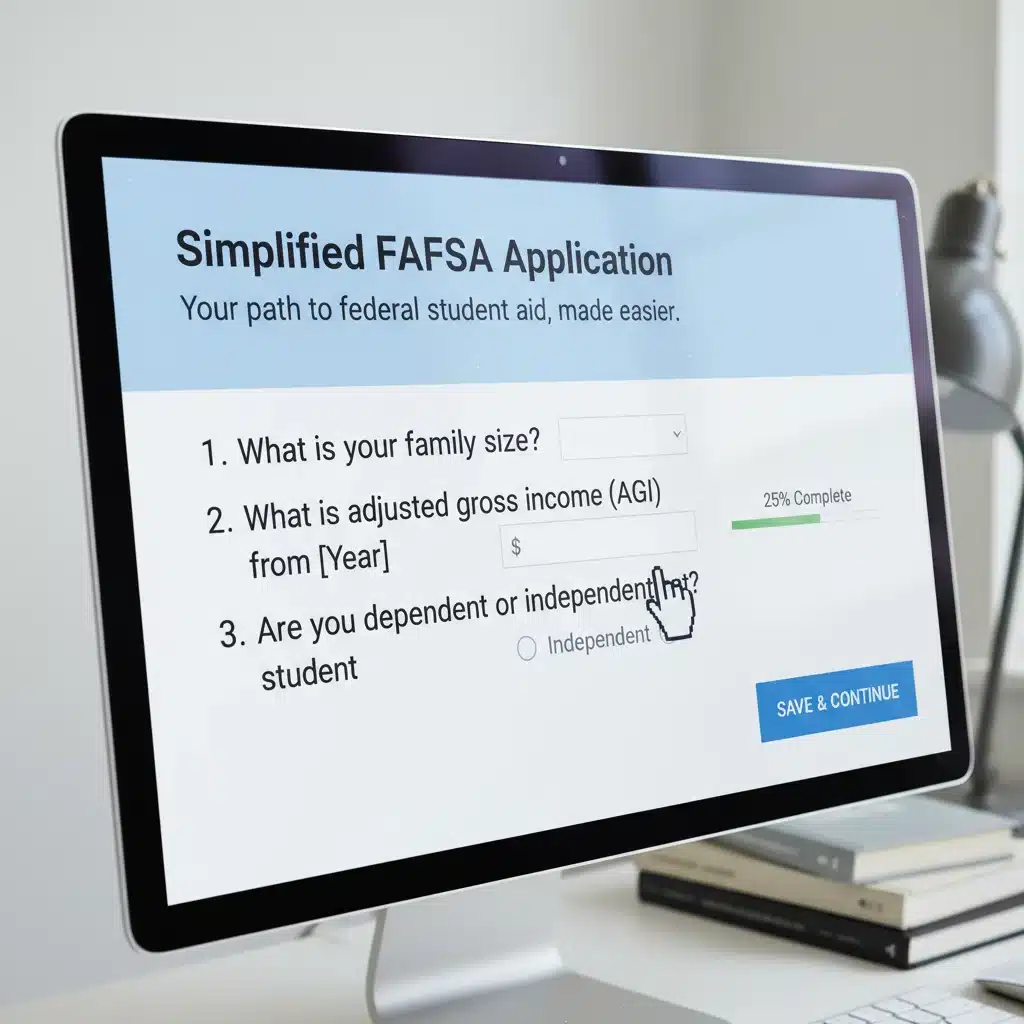
The process of completing the FAFSA for the 2026-2027 academic year has been designed to be more straightforward. However, careful attention to detail is still essential. Here’s a step-by-step guide to help you through the Federal Student Aid Application.
Step 1: Gather Necessary Documents and Information
Before you even start the FAFSA, gather all the required documents. Having these on hand will make the process much smoother and prevent unnecessary delays.
- FSA ID: Both the student and one parent (if you are a dependent student) will need an FSA ID. This is a username and password used to log in to federal student aid websites and electronically sign federal student aid documents. If you don’t have one, create it well in advance at studentaid.gov.
- Social Security Numbers: Your Social Security number (and your parents’ if you are a dependent student).
- Alien Registration Number: If you are an eligible non-citizen.
- Federal Tax Information: For the 2026-2027 FAFSA, you will need tax information from the 2024 tax year. While the IRS Direct Data Exchange will pull most of this, it’s good to have your 2024 tax returns (IRS Form 1040, 1040-SR, 1040-NR) on hand for reference.
- Records of Other Income: This includes W-2 Forms, records of child support received, and other untaxed income.
- Records of Assets: Information on cash, savings, checking accounts, investments (stocks, bonds, mutual funds), and real estate (excluding the home you live in).
- List of Schools: A list of the schools you are interested in attending. You can list up to 20 schools on your FAFSA.
Step 2: Create Your FSA ID
If you haven’t already, create an FSA ID. This is a critical step for both students and parents. It serves as your legal signature and allows you to access your federal student aid information. Ensure your FSA ID is created at least a few days before you plan to fill out the FAFSA, as it can take 1-3 days for the Social Security Administration to verify your information.
Step 3: Access the FAFSA Online
The quickest and most efficient way to complete your Federal Student Aid Application is online at studentaid.gov. The FAFSA for the 2026-2027 academic year typically opens on October 1st of the preceding year (October 1, 2025). However, due to recent FAFSA Simplification Act changes, the opening date might be later, so always check the official studentaid.gov website for the most current information.
Step 4: Complete the FAFSA Form
Follow the prompts carefully. The simplified FAFSA will guide you through sections including:
- Student Demographics: Basic information about the student.
- School Selection: Add the federal school code for each college you want to receive your FAFSA information.
- Dependency Status: Determine if you are a dependent or independent student. This section has been streamlined, but accurate reporting is crucial.
- Parent Demographics (if dependent): Information about your parents. Remember the new rule for divorced/separated parents.
- Financial Information: This is where the IRS Direct Data Exchange comes into play. You will be asked to provide consent for the IRS to share your (and your parents’, if applicable) 2024 tax information directly. This significantly reduces the manual entry required. For any income not reported on taxes, you will enter it manually.
- Assets: Report information on cash, savings, checking accounts, and investments.
Remember to save your progress frequently if you’re not completing the form in one sitting.
Step 5: Review and Submit Your FAFSA
Before submitting, carefully review all the information you’ve entered. Even with the IRS data exchange, errors can occur. Ensure all names, Social Security numbers, and financial figures are accurate. Once you’re confident, sign the FAFSA electronically with your FSA ID (and your parent’s, if applicable) and submit it.
Step 6: What Happens After Submission?
After submitting your Federal Student Aid Application, you will receive a FAFSA Submission Summary (FSS). This document replaces the Student Aid Report (SAR) and provides a summary of the data you submitted, your Student Aid Index (SAI), and an estimate of your Pell Grant eligibility. Review this document for accuracy. If you need to make corrections, you can do so online.
Your FAFSA information will then be sent to the schools you listed. Each school’s financial aid office will use your FAFSA data, along with other information they may require, to determine your aid package. They will then send you an award letter outlining the types and amounts of aid you are eligible to receive.
Maximizing Your Federal Student Aid Potential
Simply completing the Federal Student Aid Application is a great start, but there are strategies you can employ to potentially maximize the aid you receive. Being proactive and informed can make a significant difference in your financial aid package.
File Early
While federal aid has a specific deadline, many states and individual colleges have their own deadlines for distributing their institutional aid. These funds are often awarded on a first-come, first-served basis. By filing your FAFSA as soon as it opens (typically October 1st, but check for 2026-2027 specific dates), you increase your chances of receiving all available aid.
Understand Your Dependency Status
Your dependency status (dependent or independent) significantly impacts your FAFSA. If you are a dependent student, your parents’ financial information will be required. If you are independent, only your financial information is needed. The FAFSA asks a series of questions to determine your status. Do not incorrectly claim independent status, as this can lead to penalties or even aid revocation.
Report Financial Information Accurately
With the IRS Direct Data Exchange, this is largely automated, but for other income and assets, accuracy is paramount. Incorrect information, whether intentional or accidental, can delay your application or result in a less favorable aid package. Keep all financial records organized and accessible.
Communicate with Financial Aid Offices
If your family experiences a significant change in financial circumstances after you’ve filed your FAFSA (e.g., job loss, medical expenses, divorce), contact the financial aid office at your chosen school. They may be able to make adjustments to your aid package through a process called "professional judgment." Don’t assume your aid package is final without exploring all options.
Consider All Types of Aid
Don’t just focus on grants. Explore federal work-study opportunities, which allow you to earn money to help cover expenses while gaining valuable work experience. Additionally, federal student loans, particularly subsidized ones, offer better terms than most private loans and should be considered if grants and work-study aren’t sufficient.
Be Aware of State and Institutional Aid
Many states and individual colleges also offer their own financial aid programs. Completing the FAFSA is often the first step to being considered for these as well. Research deadlines and additional application requirements for aid specific to your state and the schools you’re applying to.
By taking these steps, you can significantly enhance your chances of securing the maximum possible financial assistance through the Federal Student Aid Application process.

Common Pitfalls to Avoid in Your Federal Student Aid Application
While the updated Federal Student Aid Application aims for simplicity, certain mistakes can still hinder your progress or negatively impact your aid eligibility. Knowing these common pitfalls can help you steer clear of them.
Missing Deadlines
This is arguably the most critical mistake. Federal, state, and institutional aid all have deadlines. Missing any of them can mean missing out on significant funding, especially for state and institutional grants which are often first-come, first-served. Always check the FAFSA website, your state’s higher education agency, and individual college financial aid websites for specific deadlines for the 2026-2027 academic year.
Not Creating an FSA ID in Advance
The FSA ID is essential for both students and parents. It can take a few days for the information to be verified by the Social Security Administration. Waiting until the last minute to create your FSA ID can delay your FAFSA submission.
Not Providing Consent for IRS Data Exchange
For the 2026-2027 FAFSA, providing consent for the IRS to share your tax data is mandatory for federal student aid eligibility, even if you didn’t file taxes. Refusing consent will make you ineligible for federal student aid. This is a crucial change to be aware of.
Confusing Parent Information for Dependent Students
For dependent students, the FAFSA requires parental financial information. Ensure you understand who counts as a parent for FAFSA purposes, especially in cases of divorce or separation (remember the new rule about the parent providing the most financial support). Do not use guardian information unless legally adopted.
Reporting Assets Incorrectly
While the FAFSA is simpler, accurately reporting assets is still important. Understand which assets need to be reported (e.g., savings, investments) and which do not (e.g., the value of the home you live in, qualified retirement accounts). Over-reporting assets can reduce your aid eligibility.
Ignoring the FAFSA Submission Summary (FSS)
After submission, you’ll receive an FSS. It’s vital to review this document carefully for any errors. If you find mistakes, correct them promptly online. An uncorrected error could lead to an inaccurate aid package.
Not Applying Every Year
Federal student aid is not a one-time application. You must complete a new Federal Student Aid Application (FAFSA) every year you plan to attend college and want to receive federal student aid. Your financial situation can change, and so can your aid eligibility.
Assuming You Won’t Qualify
Many families mistakenly believe they earn too much money to qualify for federal student aid and therefore don’t bother to apply. This is a significant mistake. There are no income cutoffs for federal student aid, and many factors go into determining eligibility. Even if you don’t qualify for grants, you might be eligible for federal student loans with favorable terms. Always complete the FAFSA to explore your options.
By being mindful of these common pitfalls, you can ensure a smoother and more successful Federal Student Aid Application experience for the 2026-2027 academic year.
The Future of Federal Student Aid: What to Expect Beyond 2026-2027
The changes implemented for the 2026-2027 Federal Student Aid Application are part of a broader, ongoing effort to simplify and improve the financial aid system. While predicting future modifications with absolute certainty is difficult, the trend suggests a continued focus on accessibility, ease of use, and equitable distribution of aid.
Continued Simplification
The Department of Education is committed to making the FAFSA even more user-friendly. Future iterations might see further reductions in questions, more sophisticated data integration, and improved guidance tools to help applicants navigate complex scenarios. The goal is to remove as many barriers as possible to ensure all eligible students apply for aid.
Enhanced Data Security and Privacy
As more personal and financial data is exchanged electronically, expect an ongoing emphasis on robust cybersecurity measures and privacy protections. The federal government is continually investing in securing sensitive student information.
Evolution of Eligibility Criteria
The Student Aid Index (SAI) and Pell Grant eligibility formulas will likely be reviewed periodically to ensure they accurately reflect economic realities and effectively target aid to those who need it most. This could mean adjustments to income thresholds, asset calculations, and other factors that influence aid awards.
Focus on Student Outcomes
There’s a growing national conversation around the value of higher education and student loan debt. Future federal student aid policies might increasingly tie aid to institutional accountability, encouraging schools to demonstrate strong student outcomes, graduation rates, and manageable post-graduation debt levels.
Broader Awareness Campaigns
Expect continued efforts from the Department of Education and partner organizations to raise awareness about federal student aid programs. This includes outreach to underserved communities and first-generation college students to ensure they understand the opportunities available to them through the Federal Student Aid Application.
Staying informed about these potential future developments will empower you to adapt to any further changes in the federal student aid landscape, ensuring you can continue to access the financial support needed for your educational journey.
Conclusion: Your Path to Federal Student Aid Success
The Federal Student Aid Application for the 2026-2027 academic year represents a significant step forward in making college more affordable and accessible. With a simplified FAFSA, expanded Pell Grant eligibility, and a more streamlined application process, more students than ever before have the opportunity to receive crucial financial assistance. By understanding the key changes, knowing your eligibility, meticulously completing the application, and being proactive in your approach, you can successfully navigate this process.
Remember to create your FSA ID early, gather all necessary documents, file your FAFSA as soon as it opens, and review your FAFSA Submission Summary carefully. Don’t hesitate to reach out to the financial aid offices of your prospective schools if you have questions or experience changes in your financial circumstances. Your educational aspirations are within reach, and federal student aid is a powerful tool to help you achieve them. Take the time to understand this vital process, and you’ll be well on your way to securing the funding needed for a successful college experience.