Crude Oil Prices: Geopolitical Tensions Drive 5% Monthly Fluctuation
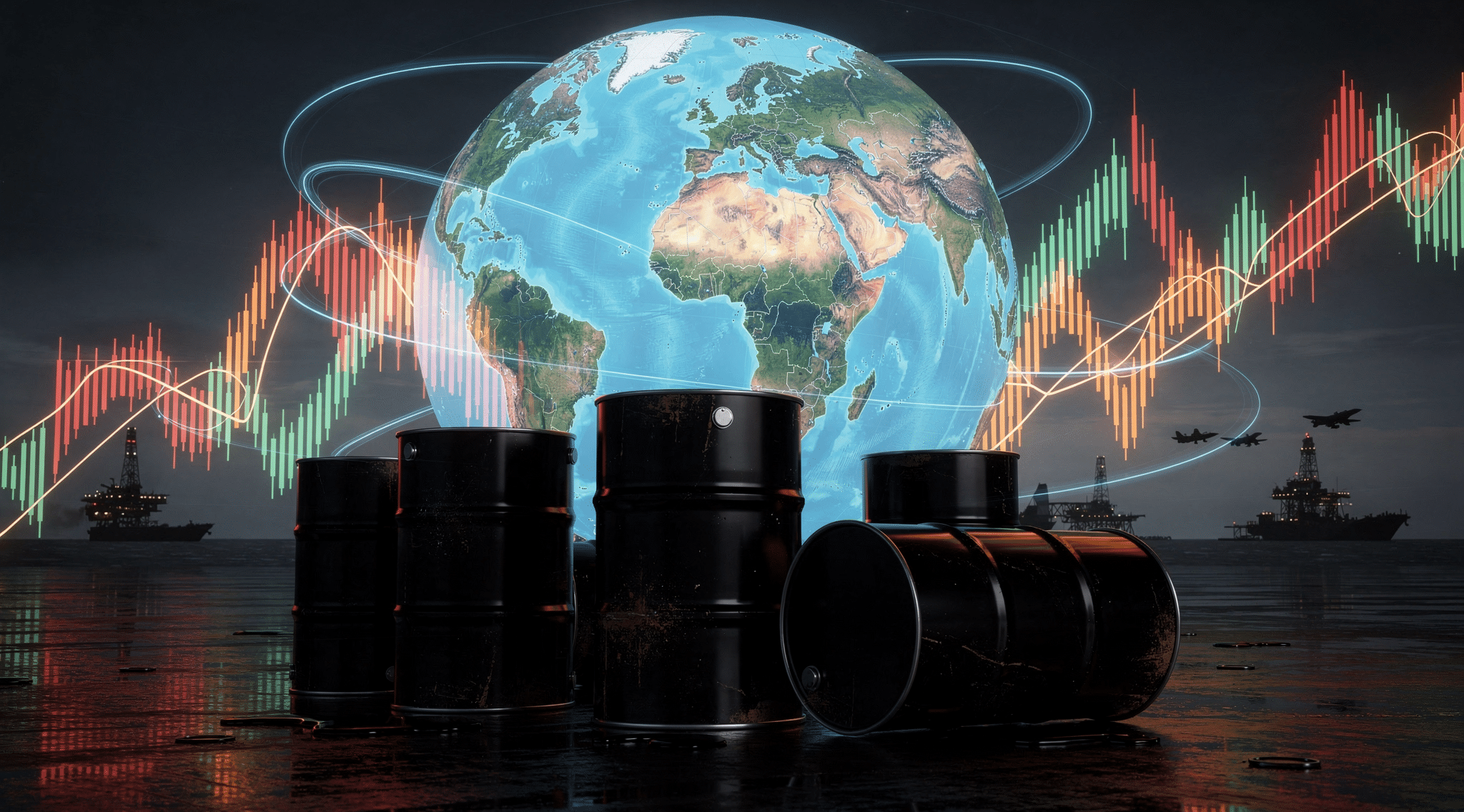
The global energy landscape is a complex tapestry woven with threads of supply, demand, economic indicators, and, perhaps most significantly, geopolitical stability. In the past month, the world has witnessed a notable 5% fluctuation in crude oil prices, a shift that has sent ripples across international markets and highlighted the inherent volatility of this critical commodity. This article delves deep into the factors contributing to this recent movement, examining the interplay of geopolitical events, supply-demand dynamics, and speculative trading that collectively shape the trajectory of crude oil prices.
Understanding the nuances of crude oil prices is paramount for businesses, policymakers, and consumers alike. From the cost of transportation and manufacturing to the price at the pump, the impact of oil fluctuations is pervasive. The recent 5% swing is not merely a statistical anomaly; it is a symptom of deeper underlying tensions and uncertainties that are increasingly defining the global economic outlook. This comprehensive analysis will explore the specific geopolitical flashpoints that have fueled this volatility, the fundamental market forces at play, and the potential implications for the future of energy.
The intricate dance of supply and demand for crude oil prices is constantly influenced by a myriad of factors. On the supply side, decisions by major oil-producing nations and cartels like OPEC+ hold immense sway. Production cuts or increases, often driven by strategic economic objectives or political considerations, directly impact the global availability of oil. On the demand side, economic growth in major consuming nations, industrial activity, and even seasonal variations play a crucial role. A robust global economy typically translates to higher demand for oil, pushing crude oil prices upwards, while economic slowdowns tend to have the opposite effect.
However, the past month’s fluctuations in crude oil prices cannot be fully explained by these fundamental economic principles alone. Geopolitical tensions have emerged as a dominant force, injecting an element of unpredictability and risk premium into the market. Conflicts, political instability in oil-rich regions, and disruptions to key shipping lanes can severely impact supply chains, leading to immediate price surges. Conversely, easing tensions can alleviate supply concerns, contributing to price declines. This delicate balance makes forecasting crude oil prices a continuous challenge, requiring a keen understanding of both economic data and geopolitical developments.
The Geopolitical Undercurrents Driving Crude Oil Prices
The recent 5% fluctuation in crude oil prices is inextricably linked to a series of escalating geopolitical tensions across various regions. One of the primary drivers has been the ongoing conflict in Eastern Europe, which continues to disrupt global energy flows and foster uncertainty. Sanctions against a major oil producer have forced a reallocation of supply, leading to increased shipping costs and a scramble for alternative sources. This has not only impacted the availability of certain crude grades but has also amplified concerns about future supply disruptions, pushing crude oil prices higher.
Furthermore, political instability in the Middle East, a region historically central to global oil production, has played a significant role. Threats to vital shipping routes, such as the Strait of Hormuz, through which a substantial portion of the world’s oil supply passes, create an immediate risk premium. Any perceived threat to these chokepoints can trigger a rapid increase in crude oil prices as traders factor in potential supply shortages. The region’s complex web of alliances and rivalries means that even localized incidents can have far-reaching effects on the global oil market.
Another contributing factor has been the strained relations between major global powers, which can manifest in trade disputes or strategic maneuvers impacting energy security. For instance, discussions around strategic petroleum reserves, import tariffs, or agreements on energy infrastructure can all influence market sentiment and, consequently, crude oil prices. The increasing weaponization of energy in international relations means that political decisions, rather than purely economic ones, are increasingly dictating market movements.
The cumulative effect of these geopolitical flashpoints is a market characterized by heightened anxiety and quick reactions. News of a new development, whether a ceasefire or an escalation, can cause immediate and dramatic shifts in crude oil prices. This responsiveness underscores the fragility of the global energy supply chain and its vulnerability to non-economic shocks. As long as these geopolitical tensions persist, significant fluctuations in crude oil prices are likely to remain a defining feature of the energy market.
Supply-Demand Dynamics and Their Influence on Crude Oil Prices
While geopolitical factors often grab headlines, the underlying supply-demand dynamics remain a foundational element in determining crude oil prices. The recent 5% fluctuation cannot be fully understood without considering these fundamental forces. On the supply side, decisions by OPEC+ continue to be a dominant influence. The cartel’s recent production adjustments, whether to cut or increase output, are carefully watched by the market. A decision to curtail production, for example, can immediately tighten supply, leading to an upward pressure on crude oil prices, especially if global demand remains robust.
Non-OPEC production, particularly from countries like the United States, Canada, and Brazil, also plays a crucial role. Shale oil production in the U.S., for instance, has demonstrated its ability to quickly respond to price signals, acting as a swing producer to some extent. However, investment in new drilling and exploration has slowed in recent years, partly due to environmental concerns and partly due to investor pressure for returns rather than aggressive growth. This can limit the capacity of non-OPEC producers to quickly ramp up supply in response to unexpected demand surges or geopolitical disruptions, thereby exacerbating volatility in crude oil prices.
On the demand side, global economic health is the primary driver. Major economies like China, India, and the United States are significant consumers of oil, and their industrial output, transportation needs, and consumer spending directly correlate with oil demand. Recent indicators suggest a mixed global economic picture. While some economies are showing resilience, others are grappling with inflation and potential slowdowns. This uneven recovery creates uncertainty for demand forecasts, contributing to the volatility of crude oil prices.
Furthermore, the ongoing energy transition and the push towards renewable energy sources are gradually reshaping long-term demand expectations. While this transition is a gradual process, it influences investment decisions in the fossil fuel sector, potentially leading to underinvestment in new production capacity, which could create supply deficits in the medium term. This long-term structural shift, combined with short-term economic fluctuations, makes the demand outlook for crude oil prices particularly complex to predict.
Inventory levels in major consuming nations also provide a snapshot of the immediate supply-demand balance. A build-up in inventories often indicates an oversupplied market, putting downward pressure on crude oil prices, while a draw-down suggests tightening supply. These weekly and monthly inventory reports are closely watched by traders and analysts for immediate market sentiment indicators. The interplay of these various supply and demand factors creates a dynamic and often unpredictable environment for crude oil prices.
The Role of Speculation and Financial Markets in Crude Oil Prices
Beyond the fundamental forces of supply and demand and the disruptive influence of geopolitics, the financial markets and speculative trading play a significant, often amplifying, role in the fluctuations of crude oil prices. Crude oil is not just a physical commodity; it is also a highly traded financial asset. Futures contracts, options, and other derivatives allow investors to speculate on future crude oil prices, and the sheer volume of these trades can create considerable price momentum.
Hedge funds, institutional investors, and individual traders take positions based on their forecasts of future supply, demand, and geopolitical events. If a significant number of speculative investors believe that crude oil prices are headed upwards due to perceived supply risks or strong demand, their collective buying activity can push prices higher, even if the underlying physical market fundamentals haven’t drastically changed yet. Conversely, a bearish sentiment can lead to widespread selling, accelerating price declines.
Algorithmic trading, which uses complex computer programs to execute trades at high speeds, further exacerbates this speculative influence. These algorithms can react to news, economic data releases, or even social media sentiment within milliseconds, triggering rapid buying or selling frenzies that can cause sharp, short-term swings in crude oil prices. The ‘herd mentality’ within financial markets means that initial price movements can be amplified as more traders jump on board, fearing they might miss out on potential gains or losses.
Moreover, the U.S. dollar’s strength or weakness also impacts crude oil prices. Since crude oil is predominantly priced in U.S. dollars, a stronger dollar makes oil more expensive for buyers using other currencies, potentially dampening demand and putting downward pressure on prices. Conversely, a weaker dollar makes oil cheaper, encouraging demand and pushing prices up. This currency dynamic adds another layer of complexity to understanding crude oil prices, as global monetary policies and interest rate decisions in the U.S. can have indirect but significant effects.
The interplay between these financial market dynamics and physical market realities creates a feedback loop. Speculation can influence physical market sentiment, and physical market developments can, in turn, validate or invalidate speculative positions. This intricate relationship means that understanding the behavior of financial market participants is just as crucial as analyzing traditional supply and demand metrics when assessing the trajectory of crude oil prices.
Impact on Global Economies and Consumers
The recent 5% fluctuation in crude oil prices, driven by geopolitical tensions and market dynamics, has significant repercussions for global economies and individual consumers. For importing nations, particularly those heavily reliant on oil for energy and industrial processes, higher crude oil prices translate directly into increased import bills. This can strain national budgets, widen trade deficits, and put pressure on local currencies. Businesses face higher operational costs, from transportation to manufacturing, which can lead to increased prices for goods and services, fueling inflation.
For consumers, the most immediate impact is often felt at the pump. Higher crude oil prices mean more expensive gasoline and diesel, eroding purchasing power and potentially leading to a reduction in discretionary spending. This can have a ripple effect across various sectors of the economy, from retail to tourism. Households with lower incomes are disproportionately affected, as energy costs represent a larger share of their overall expenditure.
Conversely, oil-exporting nations often benefit from rising crude oil prices. Increased revenues can boost national income, allow for greater public spending, and strengthen their fiscal positions. However, even these nations are not immune to volatility; sharp declines in crude oil prices can quickly lead to budget deficits and economic instability, highlighting the double-edged sword of oil dependency.
Central banks around the world closely monitor crude oil prices as a key indicator of inflationary pressures. Sustained high oil prices can complicate their efforts to manage inflation through monetary policy. They may be forced to raise interest rates to curb inflation, potentially slowing economic growth. This delicate balancing act underscores the pervasive influence of oil markets on macroeconomic stability.
Furthermore, the energy transition agenda can be both helped and hindered by fluctuating crude oil prices. While high oil prices can accelerate the shift towards renewable energy by making alternatives more economically competitive, prolonged periods of low prices can disincentivize investment in greener technologies. The volatility itself creates uncertainty for long-term energy planning and investment decisions, making it challenging for governments and corporations to commit to large-scale, long-term energy projects.
In essence, the recent 5% swing in crude oil prices serves as a stark reminder of the interconnectedness of global energy markets, geopolitics, and economic well-being. Its impact extends far beyond the trading floors, touching the lives of billions and shaping the policy decisions of governments worldwide.
Forecasting Future Crude Oil Prices: Challenges and Outlook
Predicting the future trajectory of crude oil prices is notoriously difficult, and the recent 5% fluctuation underscores the inherent challenges in forecasting such a volatile commodity. The multitude of influencing factors – from geopolitical conflicts and OPEC+ decisions to global economic growth and the pace of energy transition – creates a complex web of variables that are constantly in flux. Any single significant development can quickly invalidate previous forecasts, making agile analysis essential.
Looking ahead, several key factors will continue to shape crude oil prices. Geopolitical stability, or the lack thereof, will remain a paramount concern. The ongoing conflict in Eastern Europe, tensions in the Middle East, and the broader strategic competition between major global powers will continue to inject uncertainty and risk premiums into the market. Any de-escalation could lead to downward pressure on prices, while further intensification could see them spike.
On the supply side, OPEC+’s cohesion and discipline will be critical. Their ability to manage output in response to market conditions will largely determine the global supply balance. Simultaneously, the resilience and growth of non-OPEC production, particularly from the U.S. shale sector, will be closely watched. Investment levels in new oil and gas projects, influenced by environmental policies and investor sentiment, will also play a role in shaping future supply capacity.
Global economic growth will be the primary determinant of demand. The pace of recovery in major economies, particularly China, and the success of central banks in taming inflation without triggering severe recessions, will significantly impact oil consumption. Any signs of a global slowdown could temper demand growth and exert downward pressure on crude oil prices, while a robust recovery would likely support higher prices.
The accelerating energy transition also presents both challenges and opportunities for crude oil prices. While the long-term trend is towards reduced fossil fuel dependence, the transition itself is not linear. Increased adoption of electric vehicles and renewable energy sources will gradually erode oil demand, but this process is expected to span decades. In the interim, underinvestment in traditional oil production could create supply shortfalls if demand for fossil fuels persists longer than anticipated, leading to price spikes.
Technological advancements in extraction and refining, as well as innovations in energy efficiency, will also contribute to the evolving landscape of crude oil prices. These developments can alter the cost structure of production and influence the overall supply curve.
In conclusion, while the recent 5% fluctuation in crude oil prices offers a snapshot of current market dynamics, the future remains highly uncertain. Analysts will continue to monitor a complex array of geopolitical, economic, and technological factors to provide the most accurate forecasts. For businesses and consumers, adapting to this inherent volatility and building resilience against price shocks will be key to navigating the ever-changing energy market.