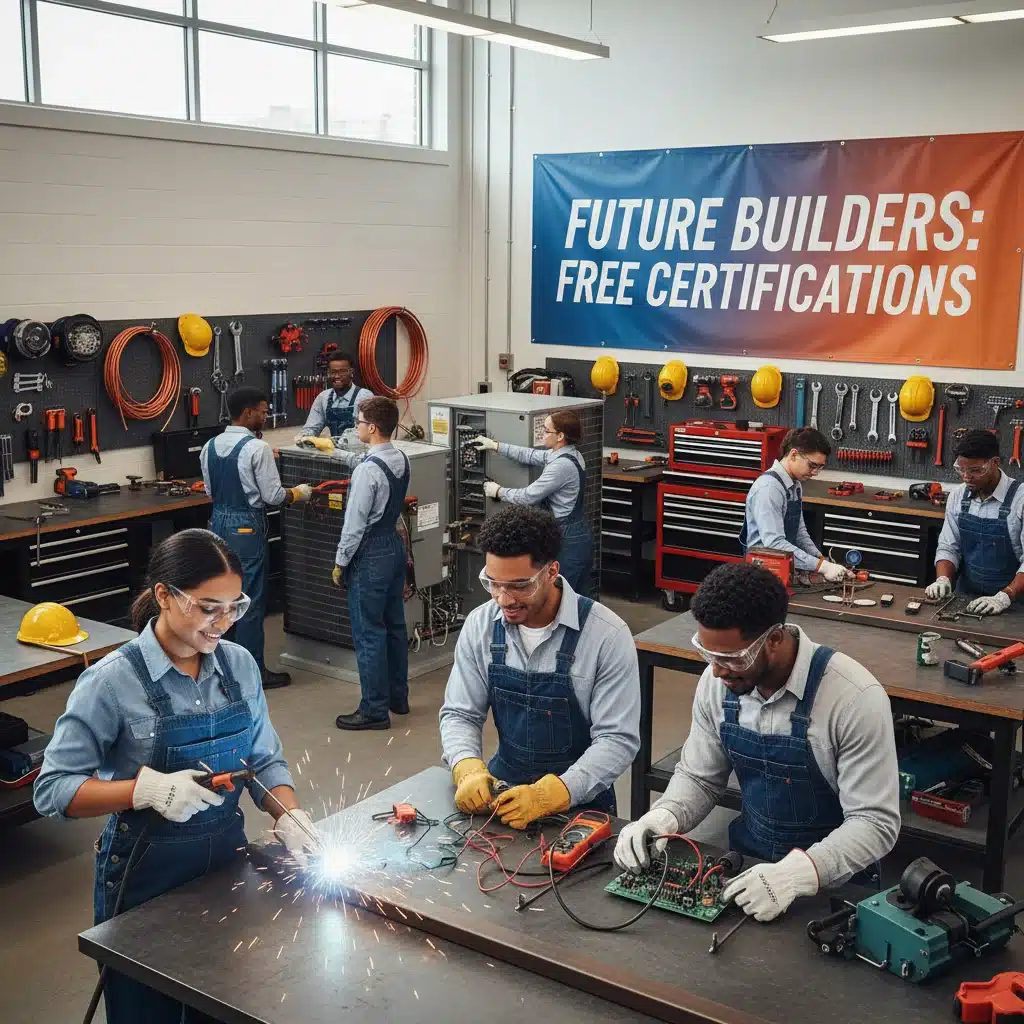
Unlock Your Future: Free Certifications in High-Demand Trades by 2026
In an ever-evolving global economy, the demand for skilled tradespeople is skyrocketing. Industries from construction to healthcare technology are facing significant labor shortages, creating a golden opportunity for individuals seeking stable, well-paying careers without the burden of traditional four-year college debt. Recognizing this critical need, numerous educational programs and government initiatives are stepping up to offer free trade certifications in high-demand fields. By mid-2026, these programs are set to empower countless individuals, providing them with the necessary skills and credentials to thrive in a robust job market.
This comprehensive guide delves into the top five key educational programs that are leading the charge in providing free certifications. We will explore what these programs offer, who is eligible, and how you can seize these incredible opportunities to transform your career trajectory. The emphasis on high-demand trades means you’re not just getting a free education; you’re investing in a future with excellent job prospects and competitive salaries. Let’s embark on this journey to discover how you can secure your professional future with invaluable, tuition-free training.
The Growing Need for Skilled Trades and the Rise of Free Certification Programs
The narrative around career paths has long been dominated by the pursuit of a four-year university degree. While valuable, this path often comes with exorbitant tuition fees and, for many, a disconnect from immediate employment opportunities. In stark contrast, vocational and technical trades offer direct routes to employment, often with higher starting salaries than many entry-level white-collar jobs. The current landscape reveals a significant gap between the available skilled workforce and industry demands. Plumbers, electricians, HVAC technicians, welders, and healthcare support professionals are just a few examples of occupations experiencing critical shortages.
This deficit is not merely a regional issue; it’s a national and even global phenomenon. Governments, non-profit organizations, and even private companies are acutely aware of this challenge. As a result, there’s been a concerted effort to fund and promote programs that provide accessible, affordable, and, increasingly, free trade certifications. These initiatives are designed to address the skills gap directly, provide economic mobility for individuals, and strengthen local economies by fostering a robust, skilled workforce. The appeal of free trade certifications is undeniable, removing financial barriers that often prevent aspiring professionals from pursuing these lucrative careers.
The benefits extend beyond individual economic empowerment. A strong skilled trades sector is the backbone of infrastructure development, technological advancement, and essential service provision. Investing in vocational training, especially when offered free of charge, represents a strategic investment in societal resilience and progress. As we approach mid-2026, the momentum behind these programs is only expected to grow, making it an opportune time to explore the avenues available for obtaining these valuable credentials without incurring debt.
Program 1: Workforce Innovation and Opportunity Act (WIOA) Grants
Overview and Eligibility for WIOA-Funded Free Trade Certifications
The Workforce Innovation and Opportunity Act (WIOA) is a landmark federal law in the United States designed to help job seekers access employment, education, training, and support services to succeed in the labor market. A cornerstone of WIOA is its provision for grants that can cover the cost of training and certifications in various in-demand industries. While not explicitly ‘free’ in the sense of direct funding to individuals, WIOA provides funding to states and local areas, which then distribute these funds to eligible training providers and directly support eligible individuals.
Eligibility for WIOA services typically targets individuals who are unemployed, underemployed, or facing significant barriers to employment. This can include low-income individuals, dislocated workers (those who have lost their jobs due to layoffs or business closures), youth, and individuals with disabilities. The process usually begins at a local American Job Center (AJC), where career counselors assess an individual’s needs, interests, and eligibility for various programs, including those offering WIOA funded training leading to free trade certifications.
The types of certifications covered are extensive and vary by local demand, but commonly include fields such as advanced manufacturing, healthcare, information technology, and various construction and utility trades. The goal is to align training with local labor market needs, ensuring that participants receive skills that are directly applicable to available jobs in their communities. This strategic alignment makes WIOA an incredibly effective mechanism for connecting individuals with valuable, debt-free education.
How to Access WIOA Programs for Free Certifications
Accessing WIOA-funded free vocational training involves a few key steps. First, locate your nearest American Job Center. These centers are equipped with resources and staff to guide you through the application process. You will typically undergo an initial assessment to determine your eligibility and career interests. Based on this assessment, a career plan will be developed, and you may be referred to approved training programs that offer the certifications you need.
It’s crucial to understand that while WIOA can cover significant portions or even the entirety of training costs, it often operates on an ‘eligible training provider list’ basis. This means you’ll choose from a roster of approved schools and programs. The funding can cover tuition, books, supplies, and sometimes even supportive services like transportation or childcare, removing many of the financial obstacles to obtaining no-cost skill development. The key is active engagement with your local AJC and a clear understanding of the in-demand trades in your area. Many success stories highlight how WIOA has been a game-changer for individuals seeking to re-skill or up-skill without financial strain.
Program 2: Community College Workforce Development Programs
The Role of Community Colleges in Offering Free Certifications
Community colleges are often unsung heroes in the landscape of American education. They serve as vital hubs for local workforce development, offering accessible and affordable pathways to higher education and vocational training. In recent years, many community colleges, often in partnership with state governments, local businesses, and federal grants, have significantly expanded their offerings of free certifications in high-demand trades. These programs are specifically designed to meet the immediate needs of local industries, ensuring that graduates are job-ready upon completion.
These initiatives frequently target specific sectors like advanced manufacturing, renewable energy, cybersecurity, and various healthcare support roles. The ‘free’ aspect often comes from state-funded grants, employer partnerships, or specialized funding streams designed to boost workforce skills in critical areas. For example, some states have ‘last-dollar’ scholarship programs that cover tuition costs after all other financial aid has been applied, effectively making the certification free for eligible students. The advantage of community colleges is their deep integration into local economies, allowing them to quickly adapt their curricula to emerging industry needs.
Examples of Free Certification Tracks and How to Enroll
Numerous community colleges across the nation now boast programs that lead to free trade certifications. For instance, some colleges offer tuition-free certifications in welding technology, CNC machining, or automotive repair, funded by state workforce development grants. Others have partnerships with local hospitals to provide free Certified Nursing Assistant (CNA) or Medical Assistant certifications, addressing critical healthcare shortages. The exact offerings and eligibility criteria will vary widely by state and institution.

To enroll, prospective students should research community colleges in their area and look for specific workforce development or continuing education departments. Many colleges maintain dedicated websites or brochures detailing their tuition-free or grant-funded programs. Eligibility often includes residency requirements, a high school diploma or GED, and sometimes a basic skills assessment. Early application is often recommended, as these free skill training programs can be highly competitive due to their value. Connecting with an admissions counselor or workforce development advisor at your local community college is the best first step to understanding the specific pathways available to you for obtaining free trade school programs.
Program 3: Non-Profit and Industry-Specific Initiatives
Non-Profit Organizations Leading the Charge in Free Trade Certifications
Beyond government programs and public educational institutions, a growing number of non-profit organizations are dedicated to providing free trade certifications and vocational training. These organizations often focus on specific demographics or industries, aiming to uplift communities and fill critical labor gaps. Their funding typically comes from philanthropic donations, corporate sponsorships, and grants, allowing them to offer training at no cost to participants.
Examples include organizations that train individuals for careers in renewable energy, such as solar panel installation or wind turbine maintenance, recognizing the burgeoning demand in the green economy. Others might focus on construction trades, providing certifications in carpentry, plumbing, or electrical work to underserved populations. These non-profits often provide comprehensive support services, including job placement assistance, mentorship, and even stipends for living expenses, making them incredibly impactful for individuals seeking a fresh start.
Industry-Specific Training Programs with No-Cost Options
In addition to broad non-profit efforts, many industries themselves are investing in their future workforce by offering industry-sponsored free training programs. Large corporations, industry associations, and unions often run their own academies or apprenticeship programs where participants can earn certifications without tuition fees. These programs are highly specialized, focusing on the unique skills required within that specific industry.
For instance, major utility companies might offer free certifications for line workers or power plant operators. Tech companies might sponsor coding bootcamps or IT support certifications. Labor unions, particularly in construction and manufacturing, have long-standing apprenticeship models that provide paid on-the-job training alongside free classroom instruction, leading to journeyman certifications. These industry-specific programs are often characterized by their direct pipeline to employment within the sponsoring company or industry, making them exceptionally valuable for career seekers. Researching major employers and industry associations in your desired field can uncover these hidden gems of free career training.
Program 4: State-Specific Workforce Development Initiatives
Varied State Approaches to Offering Free Certifications
While federal programs like WIOA provide a broad framework, many states have developed their own unique workforce development initiatives to address local economic needs and skills gaps. These state-specific programs often complement federal funding, providing additional opportunities for residents to obtain free certifications in high-demand trades. The nature and scope of these programs can vary dramatically from state to state, reflecting different economic landscapes and policy priorities.
Some states might focus heavily on manufacturing, offering free advanced manufacturing certifications to boost their industrial base. Others might prioritize healthcare, providing no-cost training for various medical support roles. These initiatives are typically funded through state appropriations, dedicated workforce development taxes, or partnerships with local businesses and educational institutions. They often have specific eligibility criteria, such as state residency and a commitment to working within the state after certification. Keeping abreast of your state’s particular offerings can open doors to highly localized and relevant free job training opportunities.
Navigating State Portals and Eligibility Requirements
To find state-specific free trade education opportunities, a good starting point is your state’s Department of Labor or Workforce Development agency website. These portals typically provide comprehensive lists of programs, eligibility requirements, and application procedures. Many states also have dedicated career centers or one-stop shops similar to the federal American Job Centers, which can provide personalized guidance.
Eligibility often hinges on factors such as residency, income level, and current employment status. Some programs might be geared towards specific groups, like veterans, single parents, or individuals transitioning from declining industries. It’s essential to carefully review the requirements for each program, as they can be quite specific. Don’t hesitate to reach out to program administrators or career counselors for clarification. These state initiatives represent a powerful resource for individuals looking to gain valuable skills and secure employment without the financial burden, particularly in fields experiencing high demand for skilled workers.
Program 5: Apprenticeship Programs (Union and Non-Union)
The Enduring Value of Apprenticeships for Free Certifications
Apprenticeship programs represent one of the oldest and most effective models for vocational training, offering a unique blend of on-the-job learning and classroom instruction. Crucially, many apprenticeships, particularly those sponsored by unions or specific employers, effectively provide free certifications. Apprentices are typically paid for their work from day one, and their training costs (including tuition for related technical instruction) are often covered by the sponsoring entity. This ‘earn while you learn’ model is incredibly attractive, removing the financial barriers to education and providing immediate income.
Apprenticeships are prevalent in a wide array of high-demand trades, including electrical work, plumbing, pipefitting, carpentry, ironworking, and various industrial maintenance roles. They are highly structured programs, often lasting several years, culminating in a journey-level certification that is recognized and respected throughout the industry. The comprehensive nature of apprenticeship training ensures that graduates possess both the theoretical knowledge and practical experience required to excel in their chosen field.
How to Find and Apply for Free Apprenticeship Opportunities

Finding free apprenticeship opportunities often involves connecting with local labor unions, industry associations, or large employers. Union apprenticeship programs are typically highly competitive and require a rigorous application process, often including aptitude tests and interviews. However, successful applicants gain access to top-tier training, excellent benefits, and a clear path to a high-paying career. Non-union apprenticeships, often sponsored directly by companies, also offer similar benefits, though the structure and compensation may vary.
Websites like Apprenticeship.gov are excellent national resources for searching registered apprenticeship programs. State workforce development agencies and local American Job Centers can also provide information on available apprenticeships in your area. Networking within your desired trade, attending career fairs, and directly contacting companies known for their training programs are also effective strategies. The commitment required for an apprenticeship is significant, but the reward of a debt-free education and a secure, well-compensated career makes it one of the most valuable pathways to free skilled trades training and certification.
Maximizing Your Chances: Tips for Securing Free Certifications
While the availability of free certifications in high-demand trades is a fantastic opportunity, securing a spot often requires proactive effort and preparation. Here are some key tips to maximize your chances of success:
- Research Thoroughly: Invest time in understanding the specific eligibility requirements, application processes, and deadlines for each program you’re interested in. Details vary significantly.
- Identify In-Demand Trades: Focus your efforts on trades that are truly experiencing shortages in your local area. This increases your chances of program acceptance and future employment.
- Prepare for Assessments: Many programs, especially apprenticeships, require aptitude tests or basic skills assessments. Refresh your knowledge in math, reading comprehension, and problem-solving.
- Craft a Strong Application: Highlight any relevant experience, even if it’s volunteer work or hobbies. Emphasize your dedication, work ethic, and enthusiasm for the trade.
- Network: Attend career fairs, connect with professionals in your desired field, and inquire about training opportunities. Sometimes, a personal recommendation can make a difference.
- Utilize Career Counselors: Professionals at American Job Centers, community colleges, and non-profits are there to help. They can provide guidance, resume assistance, and interview coaching.
- Be Persistent: Don’t get discouraged if you don’t get into the first program you apply for. Keep seeking out new opportunities and refining your approach.
- Demonstrate Commitment: Show program administrators that you are serious about completing the training and pursuing a career in the trade. This might involve attending introductory workshops or informational sessions.
- Check for Supportive Services: Many programs offer more than just tuition coverage. Inquire about assistance with transportation, childcare, tools, or even living stipends, which can further reduce financial burdens.
By following these tips, you can significantly enhance your prospects of enrolling in a program that offers free professional development and certifications, setting you on a path to a successful and financially secure future.
The Future of Workforce Development: Beyond 2026
The trend towards offering free trade certifications and vocational training is not a fleeting one; it represents a fundamental shift in how societies are addressing workforce needs. As technology continues to advance and industries evolve, the demand for adaptable, skilled labor will only intensify. Governments, educational institutions, and private sectors are increasingly recognizing the economic and social imperative of making quality vocational education accessible to everyone, regardless of their financial background.
Looking beyond 2026, we can anticipate further expansion and innovation in these types of programs. There will likely be more integration of emerging technologies like AI, robotics, and advanced data analytics into traditional trades, necessitating continuous upskilling and new certification pathways. The focus will remain on creating agile workforce development systems that can quickly respond to market demands, ensuring that individuals are equipped with the skills needed for the jobs of today and tomorrow. The concept of lifelong learning, facilitated by accessible and often free training opportunities, will become even more central to career longevity and economic resilience.
For individuals, this means a future filled with opportunities to pivot, grow, and specialize without the prohibitive costs once associated with career advancement. The accessibility of free certifications is democratizing skilled labor, empowering diverse populations, and strengthening economies from the ground up. Embracing these opportunities is not just about getting a job; it’s about building a sustainable and prosperous future for individuals and communities alike.
Conclusion: Seize Your Opportunity for Free Certifications
The landscape of career development is undergoing a profound transformation, with an unprecedented emphasis on accessible and affordable vocational training. The availability of free trade certifications in high-demand fields by mid-2026 represents a monumental opportunity for anyone looking to enter a new career, upskill, or re-skill without the burden of tuition debt. From federal WIOA grants and community college initiatives to non-profit organizations, industry-specific programs, and robust apprenticeships, the pathways to a debt-free, skilled career are more numerous and varied than ever before.
These programs are not merely about acquiring a piece of paper; they are about gaining practical, hands-on skills that are immediately applicable in the workforce, leading to stable employment, competitive wages, and genuine career satisfaction. The demand for skilled tradespeople is not a temporary phenomenon; it’s a structural need in our economy that will persist for decades to come. By actively seeking out and engaging with these opportunities, you are not just securing a job; you are investing in a future of economic stability and personal growth.
Don’t let financial barriers hold you back from pursuing a rewarding career in a high-demand trade. Take the first step today: research the programs mentioned, contact your local workforce development centers, and explore the vast array of free skill-building programs designed to empower you. Your future in a skilled trade awaits, and with these free certification opportunities, it’s more within reach than ever before.