The 2026 International Criminal Court: US Engagement and Global Justice
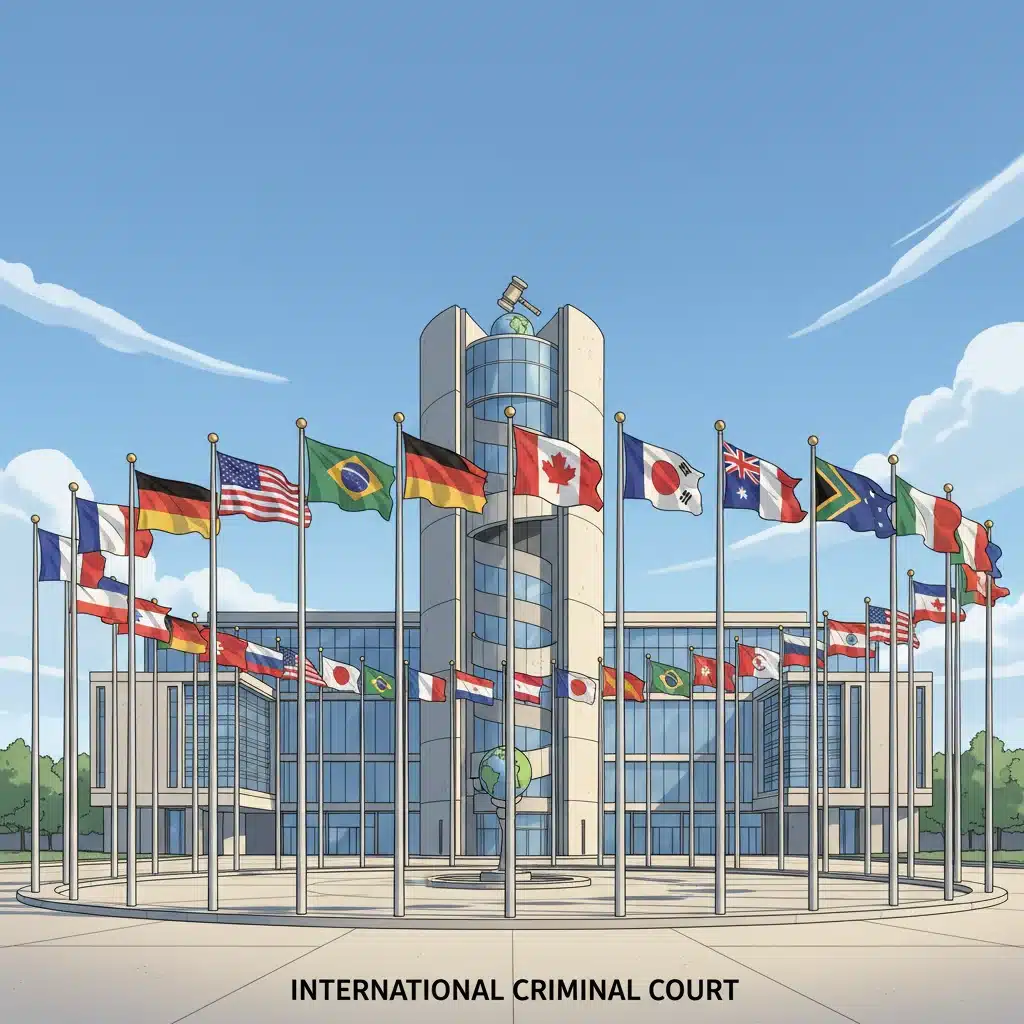
The 2026 International Criminal Court: US Engagement and the Pursuit of Global Justice
The year 2026 presents a critical juncture in the intricate relationship between the United States and the International Criminal Court (ICC). For decades, this relationship has been characterized by a complex interplay of support, skepticism, and outright opposition, reflecting deeply held principles of national sovereignty, international law, and the pursuit of global justice. As the world grapples with persistent conflicts, humanitarian crises, and egregious human rights violations, the role of the ICC, and specifically the nature of US ICC engagement, becomes increasingly pertinent. This article delves into the historical context, current challenges, and potential future trajectories of this vital dynamic, exploring how the US might navigate its stance towards the world’s only permanent international criminal court.
Historical Context: A Legacy of Ambivalence
To understand the potential for US ICC engagement in 2026, it is essential to revisit the historical arc of this relationship. The United States played a pivotal role in the conceptualization of an international criminal court in the aftermath of World War II, advocating for accountability for atrocities. However, when the Rome Statute, the treaty establishing the ICC, was adopted in 1998, the US, under the Clinton administration, ultimately chose not to ratify it. This decision stemmed from concerns about potential politically motivated prosecutions against US personnel, the court’s jurisdiction over non-state parties, and a perceived lack of accountability mechanisms within the ICC itself. This initial reluctance set the tone for a relationship often marked by a cautious distance.
The George W. Bush administration adopted an even more confrontational stance, actively seeking to undermine the ICC’s authority through measures such as the American Servicemembers’ Protection Act (ASPA), which prohibited cooperation with the court and authorized the use of force to free any American detained by the ICC. This period represented the nadir of US ICC engagement, creating significant friction with allies and raising questions about the US commitment to international justice.
A shift began to emerge during the Obama administration, which adopted a more pragmatic approach. While still not ratifying the Rome Statute, the US engaged with the ICC on a case-by-case basis, providing logistical support, intelligence, and financial assistance for certain investigations, particularly those involving genocide and war crimes not directly implicating US interests. This nuanced approach recognized the ICC’s potential as a tool for international accountability, even if the US remained outside its formal jurisdiction. This period demonstrated a recognition that selective US ICC engagement could align with broader US foreign policy objectives.
The Trump administration, however, reverted to a more hostile posture, imposing sanctions on ICC officials and their families, and revoking visas in response to the court’s investigation into alleged war crimes in Afghanistan, which could potentially involve US military personnel. This aggressive stance was widely criticized by human rights organizations and international allies, further complicating the prospects for constructive US ICC engagement.
The Biden administration has since signaled a return to a more conciliatory approach, revoking the Trump-era sanctions and expressing a willingness to re-engage with the ICC, albeit without committing to ratification. This recent shift underscores the inherent tension within US foreign policy: balancing the desire for global justice and accountability with concerns about national sovereignty and the protection of its own citizens.
The Geopolitical Landscape of 2026 and its Impact on US ICC Engagement
By 2026, the global geopolitical landscape will undoubtedly have evolved, presenting both new challenges and opportunities for US ICC engagement. Ongoing conflicts in various regions, the rise of new global powers, and the increasing interconnectedness of international legal frameworks will all play a role in shaping this dynamic. The persistent threat of mass atrocities, whether stemming from interstate conflict or internal repression, will continue to highlight the importance of accountability mechanisms like the ICC.
One significant factor will be the evolving relationship between the US and its traditional allies. Many European nations are staunch supporters of the ICC and have consistently advocated for stronger US ICC engagement. A more cooperative US stance could strengthen these alliances and present a united front against impunity. Conversely, continued US aloofness or hostility could strain these relationships and undermine collective efforts to uphold international law.
Furthermore, the growing influence of non-Western powers, some of whom are also non-parties to the Rome Statute, will add another layer of complexity. The US may find common ground with some of these nations in specific instances of egregious crimes, or it may find itself at odds with them over the ICC’s jurisdiction and legitimacy. The ability of the US to navigate these varied relationships while maintaining its own principles will be crucial for its broader international standing.
Technological advancements, particularly in areas like cyber warfare and artificial intelligence, could also introduce new categories of war crimes and crimes against humanity, posing novel challenges for international justice. The ICC’s ability to adapt to these evolving forms of criminality, and the willingness of the US to support such efforts, will be a key determinant of future US ICC engagement.

Arguments for Enhanced US ICC Engagement
There are compelling arguments for the US to consider a more robust form of US ICC engagement by 2026. Firstly, aligning with the ICC strengthens the international rule of law. By supporting the court, even from a non-state party position, the US reinforces the principle that those who commit the most heinous crimes must be held accountable. This sends a powerful message to perpetrators and can act as a deterrent, potentially preventing future atrocities. A consistent and supportive stance from the US could lend significant weight to the ICC’s efforts.
Secondly, enhanced engagement can serve US national interests. Promoting stability and preventing mass atrocities abroad often reduces the need for costly and resource-intensive interventions later. When the ICC effectively prosecutes war criminals and perpetrators of genocide, it contributes to long-term peace and security, which directly benefits US strategic interests. Furthermore, selective cooperation allows the US to influence the court’s direction and ensure its investigations are conducted fairly and impartially, addressing some of the initial concerns that led to non-ratification.
Thirdly, greater US ICC engagement bolsters US moral authority and leadership on human rights. The US has historically positioned itself as a champion of human rights and democratic values. A more constructive relationship with the ICC would demonstrate a commitment to these principles on a global scale, enhancing its credibility and ability to advocate for human rights worldwide. This aligns with the Biden administration’s stated foreign policy goals of re-establishing American leadership through diplomacy and multilateralism.
Fourthly, the ICC serves as a court of last resort, intervening only when national judicial systems are unwilling or unable to prosecute serious crimes. This principle of complementarity means that domestic courts retain primary jurisdiction. By supporting the ICC, the US is not necessarily ceding its own judicial authority but rather ensuring that justice is served when national systems fail. This approach could alleviate some of the sovereignty concerns that have historically hindered deeper US ICC engagement.
Finally, the US already engages with other international legal bodies and tribunals. The exceptionalism applied to the ICC can appear inconsistent and undermine the broader framework of international law that the US often champions. A more harmonized approach to international justice mechanisms would present a more coherent and effective US foreign policy.
Challenges and Concerns Regarding US ICC Engagement
Despite the arguments for greater engagement, significant challenges and concerns continue to shape the debate around US ICC engagement. The primary apprehension remains the potential for politically motivated prosecutions against US military personnel or officials. While the ICC’s jurisdiction is complementary to national courts, meaning it only steps in when national systems are unwilling or unable to prosecute, the fear persists that US citizens could be targeted unfairly, particularly given the global reach of US military operations.
Another concern revolves around the ICC’s perceived effectiveness and impartiality. Critics argue that the court has, at times, been inefficient, costly, or disproportionately focused on African nations. While these criticisms are often debated, they contribute to a narrative that questions the ICC’s legitimacy and capacity to deliver impartial justice, thereby dampening enthusiasm for greater US ICC engagement.
The issue of sovereignty is also a deeply ingrained aspect of US foreign policy. The idea of an international body having jurisdiction over US citizens, without the explicit consent of the US government through treaty ratification, remains a contentious point. This concern is not unique to the US, but it is particularly pronounced given the nation’s historical emphasis on self-determination and constitutional constraints.
Furthermore, the political climate within the US itself plays a crucial role. Any move towards closer US ICC engagement, especially ratification, would likely face significant opposition from certain political factions who view the ICC as an infringement on national sovereignty and a threat to US interests. Overcoming this domestic political hurdle would require substantial political will and public education.
The practicalities of information sharing and intelligence cooperation also present challenges. The US possesses vast intelligence capabilities, but sharing sensitive information with an international body raises concerns about security, confidentiality, and the potential for misuse, even with strong safeguards in place. These operational complexities need to be carefully addressed for any meaningful increase in US ICC engagement.
Potential Pathways for US ICC Engagement in 2026
Given the complexities, what might US ICC engagement look like in 2026? Several pathways exist, ranging from maintaining the current cautious cooperation to more significant, albeit still non-ratifying, forms of collaboration.
One likely scenario is a continuation of the current policy of “pragmatic engagement.” This involves providing support on a case-by-case basis, offering technical assistance, intelligence, and financial contributions to specific investigations that align with US interests and values, without formally joining the court. This approach allows the US to contribute to global justice while preserving its sovereignty concerns. This flexible form of US ICC engagement has proven effective in the past and is politically palatable.
Another pathway could involve enhanced diplomatic engagement. The US could increase its diplomatic presence at the ICC, participate more actively in the Assembly of States Parties as an observer, and engage in regular dialogues with court officials. This would allow the US to better understand the court’s operations, provide constructive feedback, and advocate for reforms that address its concerns, thereby fostering a more transparent and accountable institution. Such diplomatic US ICC engagement would be a low-cost, high-impact strategy.
The US could also explore formalized agreements for cooperation. While ratification of the Rome Statute might remain off the table, the US could negotiate specific bilateral or multilateral agreements with the ICC to facilitate cooperation on issues such as witness protection, evidence sharing, and the apprehension of fugitives, particularly for non-US individuals. These agreements could be tailored to address specific US concerns while still advancing the cause of justice. This would represent a significant step up in the level of US ICC engagement.
Furthermore, the US could focus on strengthening national judicial systems in countries where the ICC has jurisdiction. By investing in capacity building for domestic courts, the US can help ensure that these nations are willing and able to prosecute serious crimes themselves, thereby upholding the principle of complementarity and potentially reducing the need for ICC intervention. This indirect yet powerful form of US ICC engagement supports the foundational principles of the court.
Finally, while unlikely by 2026, the long-term possibility of a re-evaluation of Rome Statute ratification cannot be entirely dismissed. Should the ICC demonstrate consistent impartiality, develop robust accountability mechanisms, and address key US concerns, a future administration might consider revisiting the issue. However, this would require a significant shift in both domestic and international political landscapes and a sustained period of positive US ICC engagement.

The Future of Global Justice and US Leadership
The year 2026 will undoubtedly be a pivotal moment for the future of global justice. The effectiveness of the International Criminal Court in prosecuting perpetrators of mass atrocities hinges significantly on the cooperation and support of powerful nations. The US, with its unparalleled influence and commitment to human rights, holds a unique position in this landscape. The nature of US ICC engagement will not only impact the court’s operational capacity but also send a powerful message about the international community’s collective resolve to combat impunity.
A more constructive and consistent approach from the US could encourage other non-state parties to engage more positively with the court, thereby strengthening the global framework for international criminal justice. It could also inspire greater confidence in the ICC’s impartiality and effectiveness, leading to broader international legitimacy. The US has an opportunity to demonstrate its leadership not just through its power, but through its adherence to principles of justice and accountability that transcend national borders.
The debate surrounding US ICC engagement is not merely about legal technicalities; it is about the fundamental question of how the international community responds to humanity’s gravest crimes. As the world becomes increasingly interconnected, the consequences of inaction or indifference to atrocities reverberate globally. The US, by carefully balancing its national interests with its moral obligations, can play a transformative role in shaping a future where accountability for mass atrocities is not an exception but a global norm. The decisions made regarding US ICC engagement in the coming years will have lasting implications for international law, human rights, and the pursuit of a more just and peaceful world.
Conclusion
The relationship between the United States and the International Criminal Court in 2026 remains a complex, multifaceted issue. While historical ambivalence and persistent concerns about sovereignty and potential prosecutions continue to shape the US stance, there are compelling arguments and practical pathways for enhanced US ICC engagement. A more collaborative approach, whether through pragmatic cooperation, intensified diplomacy, or formalized agreements, could significantly bolster the international rule of law, serve US strategic interests, and reinforce its moral leadership on human rights. The future of global justice depends, in part, on the willingness of powerful nations like the US to constructively engage with institutions designed to hold perpetrators of mass atrocities accountable. As the world moves towards 2026, the opportunity for the US to redefine its relationship with the ICC and contribute more effectively to the pursuit of justice on a global scale is clear and present.